



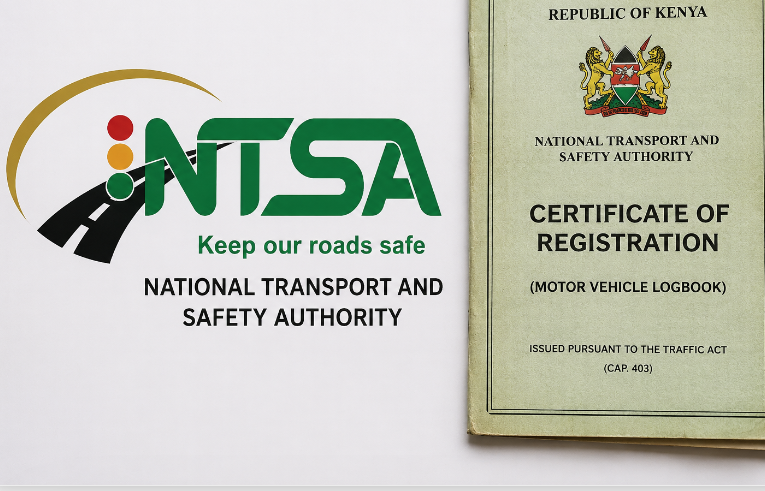
Kenyan motorists are set for a major change in how they own, transfer and manage vehicle registration documents as National Transport and Safety Authority introduces electronic logbook system.
The new digital system, commonly referred to as the e-logbook, will officially take effect on June 10, marking the end of the traditional paper-based Certificate of Registration for newly processed transactions.
The transition is part of the government’s wider push to digitise public services and reduce bureaucracy through the e-Citizen platform.
In announcing the rollout, NTSA said the move is aimed at addressing long-standing challenges associated with physical logbooks, including document forgery, delays in ownership transfers, and the inconvenience of repeated visits to government offices.
“As part of this ongoing transformation, the authority is pleased to announce plans to replace the current paper-based Certificate of Registration (logbook) with a secure, convenient digital version (eLogbook),” NTSA said.
Under the new system, motorists will no longer receive paper logbooks after vehicle registration or ownership transfer.
Instead, vehicle owners will access their logbooks digitally through their personal NTSA TIMS and e-Citizen accounts.
Through the online portal, users will be able to view, verify, download and manage their vehicle registration documents at any time.
The authority says the e-logbook will offer instant digital issuance immediately after registration or transfer, eliminating the waiting period that has traditionally taken days or even weeks before motorists receive physical documents.
Ownership changes will also reflect instantly in the system, reducing the risk of outdated records and disputes over vehicle ownership.
The digital transition is expected to significantly change Kenya’s second-hand motor vehicle market, which has for years been plagued by fake logbooks and fraudulent transactions.
One of the biggest selling points of the e-logbook is enhanced security.
According to NTSA, the new documents will come with tamper-proof digital encryption technology designed to make forgery nearly impossible.
The authority says the system will protect motorists, banks, insurers and vehicle buyers from fake ownership documents that have become common in the market.
For years, unsuspecting Kenyans purchasing second-hand vehicles have fallen victim to fraudsters using forged logbooks to sell stolen or illegally acquired vehicles.
With the new system, NTSA says buyers, financial institutions and insurance companies will be able to instantly verify the authenticity of a vehicle’s ownership details through a simple digital scan.
The authority believes this will eliminate manual verification processes that have often delayed transactions and exposed buyers to fraud.
The e-logbook is also expected to benefit banks, Saccos and insurance firms.
Financial institutions will now be able to directly verify vehicle ownership and lien status online before approving loans secured against vehicles.
NTSA says this feature is expected to speed up vehicle financing approvals and reduce paperwork for borrowers.
Insurance companies are also expected to benefit from instant verification of vehicle details, helping improve accuracy in policy issuance and claims processing.
Unlike physical logbooks that can easily be misplaced, damaged or stolen, the e-logbook will be stored securely in the cloud.
Motorists will therefore retain access to their ownership documents even if they lose their phones, laptops or other personal devices.
Vehicle owners will be able to access their logbooks 24 hours a day through the NTSA TIMS portal or mobile application without needing to carry physical documents.
The system will also allow users to download copies of their logbooks free of charge whenever needed.
This effectively eliminates the Sh2,600 replacement fee that motorists have traditionally paid when replacing lost or damaged physical logbooks.
Another major change will be the digitisation of ownership transfers.
Traditionally, vehicle transfers in Kenya have involved lengthy paperwork, physical visits to NTSA offices and manual document stamping.
Under the new system, ownership transfers will be completed entirely online.
NTSA says the change will reduce delays, improve convenience and minimise opportunities for corruption in manual processing.
The e-logbook system will also introduce automated alerts and reminders for motorists.
Vehicle owners will receive notifications for insurance renewals, inspection deadlines and other compliance requirements.
The authority says this feature is intended to help motorists remain compliant and reduce cases of uninsured or unroadworthy vehicles on Kenyan roads.
Ahead of the rollout, NTSA has scheduled public sensitisation forums from June 2 to June 4.
The sessions will be conducted virtually to educate motorists, dealers, insurers, financial institutions and other stakeholders on how the system will operate.
Motorists are also encouraged to visit the official NTSA website for updates, brochures and additional information about the e-logbook system.
Despite the shift to digital registration documents, NTSA has clarified that existing physical logbooks will remain valid even after the June 10 rollout.
Motorists who currently possess paper logbooks have been advised to keep them safely because they will continue serving as legal registration certificates for their vehicles.
However, the authority noted that in some situations vehicle owners may be required to surrender physical logbooks during replacement or conversion processes.
The rollout of the e-logbook system marks one of the most significant reforms in Kenya’s transport sector in recent years.
For many motorists, the success of the system will depend on how smoothly NTSA manages the transition and whether the digital platform remains reliable, secure and accessible to millions of vehicle owners across the country.