



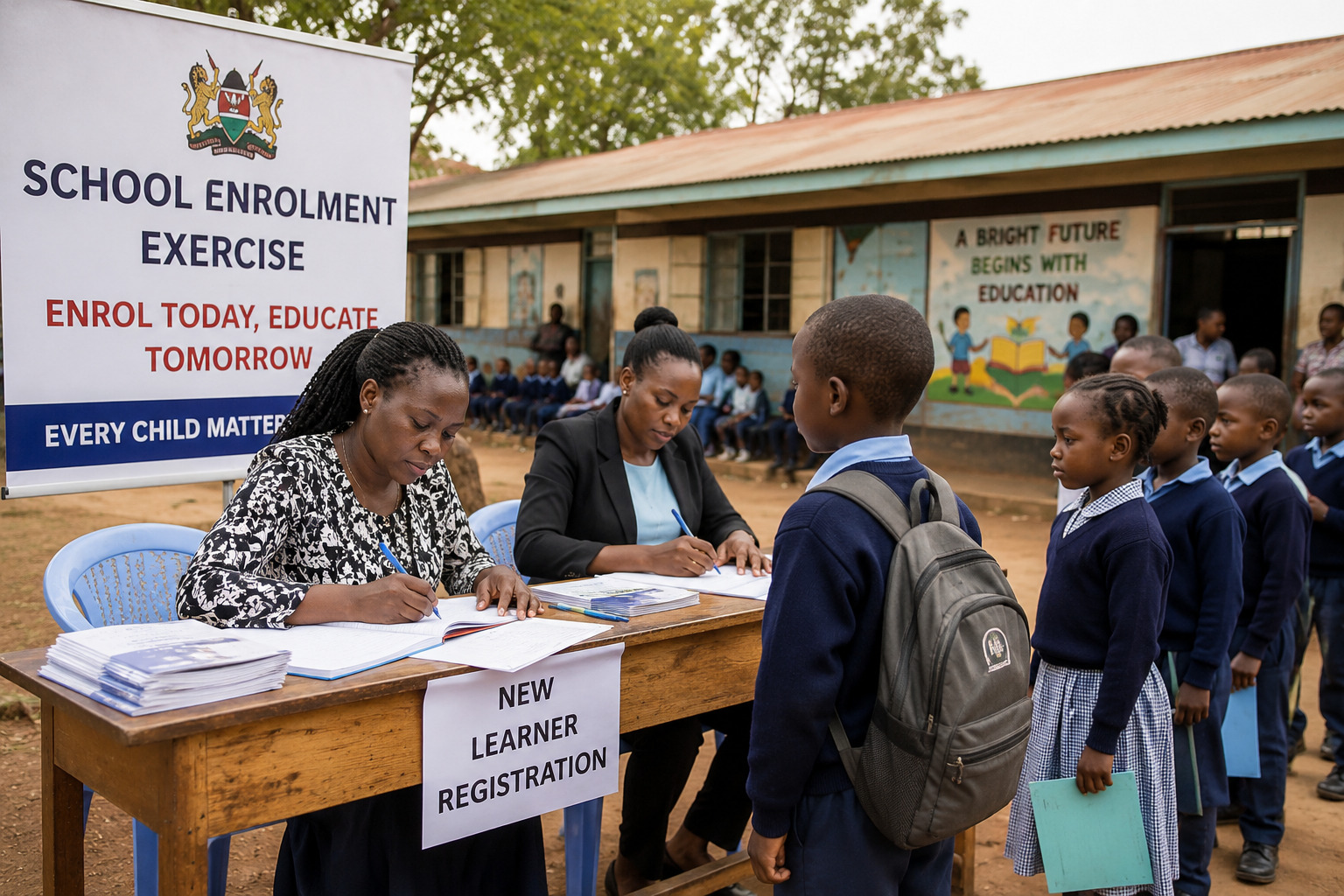
The proportion of out-of-school children in Kenya stands at 4.7 per cent, with about five in every 100 school-going children missing out on education nationally.
A new study shows that more boys than girls are out of school across the country, raising the question as to whether society has overemphasised girls’ education at the expense of boys’ education.
According to the report by Usawa Agenda on Gender Equality in and through Education in Kenya, one in every five refugee children of school-going age is out of school.
Nationally, boys of school-going age are more likely to be out of school than girls. However, among refugee children, girls face a higher risk of being excluded from education.
The report established that 14 in every 100 children of pre-school age are out of school nationally, compared to 57 in every 100 refugee children of the same age.
Among children of primary school age, three in every 100 are out of school nationally, with girls outperforming boys in foundational literacy and numeracy.
At the secondary school level, five in every 100 children are out of school, compared to six in every 100 refugee children of the same age.
The survey, conducted between June and July 2025, interviewed more than 41,000 household heads and over 49,000 children in 1,527 primary and comprehensive schools to examine factors contributing to gender gaps in school access.
Findings show that family structure plays a significant role in determining whether a child attends school, with children in female-headed households generally more likely to be out of school.
The study established that a girl raised by a single mother is 4.9 per cent more likely to be out of school compared to 3.8 per cent for a girl living in a single-father household.
It further found that a boy living in a female-headed household is 5.7 per cent more likely to be out of school. The likelihood drops to 4.5 per cent for boys raised in single-father households.
However, the pattern changes in refugee communities, where both boys and girls are more likely to be out of school in male-headed households than in female-headed households.
The study found that a girl in a male-headed refugee household is more than twice as likely to be out of school compared to her counterpart in a female-headed refugee household.
In refugee communities, the likelihood of a girl being out of school stands at 16.8 per cent in female-headed households, but rises sharply to 34.7 per cent in male-headed households.
Overall, the findings indicate that children in single-mother households in Kenya and those in single-father refugee households face greater barriers to accessing education.
The report also examined how the education level of household heads influences school attendance, with the trends shifting slightly across different education categories.
More boys than girls remain out of school in most households, except those headed by people with a university degree, a post-secondary certificate, or those who dropped out of secondary school.
Among households headed by people with at least a university degree, boys and girls are almost equally likely to be in school, with only 1.9 per cent of both genders out of school.
The report further shows that children living in households headed by adults without formal education face the highest risk of missing school.
“A child in a household headed by an adult without formal education is almost 10 times as likely as his/her counterpart in a household headed by at least a degree holder,” the report states.
It further notes that in homes where the household head has no formal education, girls’ enrolment is 2.3 percentage points higher than that of boys.
In households headed by people with post-secondary certificates, boys’ enrolment is slightly higher than girls’ by 0.6 percentage points.
The report emphasised the need to keep the girl child in school, noting that an out-of-school teenage girl is 12 times as likely to fall victim to early pregnancy as her in-school counterpart.
The findings underscore how household conditions, parental education levels and family structure continue to shape access to education across different communities in Kenya, with refugee populations facing some of the steepest barriers to school enrolment.
“I welcome everyone to start using the evidence herein to inform their own positions on ongoing debate in the education sector and contribute to shaping the national and global educational priorities as the agenda for gender equality in and through education gathers pace,” Usawa Agenda executive director Emmanuel Manyasa said.