


Djibouti has commenced construction of a $160 million (Sh20.7 billion) fuel terminal expected to strengthen energy security in the region, as the East African Community mulls a refinery in Tanga.
Kenya, Uganda and Tanzania’s are harmonising plans to construct a joint petroleum refinery, an idea being driven by Nigerian billionaire Aliko Dangote.
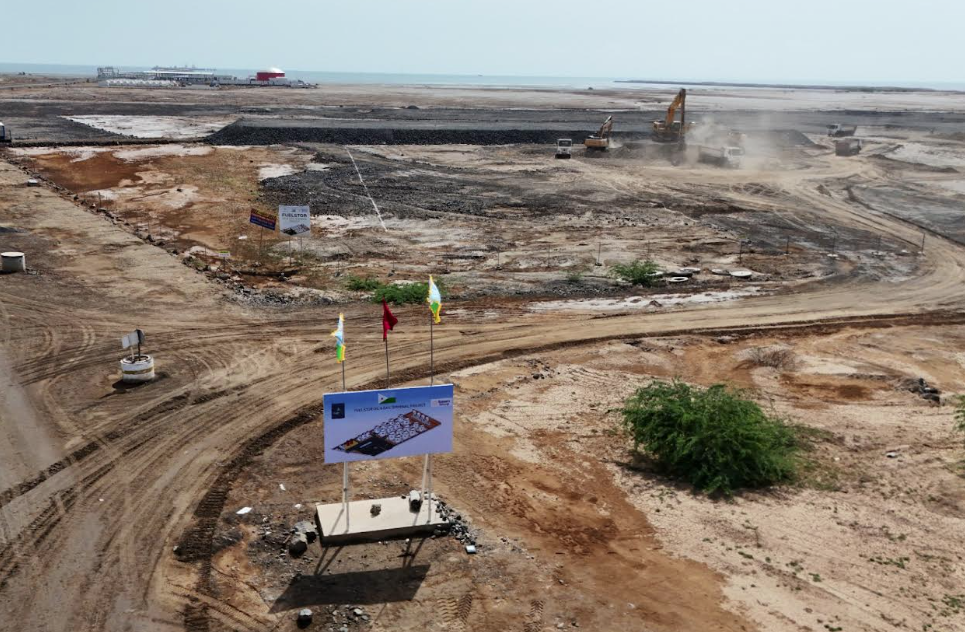
As the three EAC member states debate on their joint project, construction works at the Fuelstor Terminal in Djibouti have already kicked off.
The project, located in the strategic Damerjog corridor and being done with the backing of the Salaam Group, is being hailed as a milestone in Djibouti’s energy infrastructure.
Salaam Group is an investor company that provides investment banking solutions for the electric, banking, and energy sectors, and is one of the fastest-growing companies in Africa.
It comes at a time when African economies are grappling with supply chain disruptions and volatile oil markets, recently fuelled by the Middle East crisis.
The groundbreaking ceremony on Tuesday attracted senior government officials, industry players and international partners, underscoring the project’s regional significance as East African countries seek more resilient fuel supply networks.
Beyond being a conventional storage facility, Fuelstor is being developed as an integrated logistics and trading platform aimed at supporting increasing regional demand for petroleum products, liquefied petroleum gas (LPG), edible oil and other essential commodities.
It is expected to improve energy supply and strengthen regional trade and economic growth.
The East African economies remain vulnerable to global geopolitical tensions that often trigger spikes in shipping costs and fuel prices.
Countries such as Kenya, Uganda, Rwanda, South Sudan and Ethiopia heavily rely on imported refined fuel products transported through regional ports and corridors.
“This project represents a defining milestone for Fuelstor and a significant step forward for the region’s energy and logistics landscape,” said Fuelstor general manager, Houssein Ahmed Houmed, during the launch.
“Fuelstor Terminal is uniquely positioned to become a key gateway connecting global supply markets to growing demand across East Africa,” he added.
Analysts say investments in strategic storage infrastructure could help stabilise supplies and improve regional preparedness during global market shocks.
Fuelstor’s location in Damerjog gives it strategic access to Ethiopia and the broader East African hinterland through multimodal transport systems linking ports, roads and regional trade corridors.
The terminal is being developed on 22 hectares and will have an estimated storage capacity of 400,000 metric tonnes, positioning Djibouti as a key energy redistribution hub in the Horn of Africa and East Africa.
Djibouti has increasingly positioned itself as a strategic maritime and logistics gateway linking Africa to the Middle East, Asia and Europe.The country already hosts critical port infrastructure serving landlocked Ethiopia, one of Africa’s fastest-growing economies.
The Fuelstor project is expected to reinforce further Djibouti’s role as a stable trade corridor and logistics center for regional energy flows. Industry experts note that expanded storage capacity can help reduce supply interruptions and ease pressure during periods of international instability or delayed shipments.
Construction of the facility is being undertaken by Somagec, an international engineering firm known for executing large-scale industrial and maritime infrastructure projects.
The investment is also expected to generate hundreds of jobs during both construction and operational phases, while supporting skills transfer and local economic growth.
As East Africa’s economies continue to industrialise and urbanise, demand for fuel and energy products is projected to rise over the coming years.
Fuelstor says the project reflects a long-term vision of building resilient and scalable infrastructure capable of supporting future regional trade and energy needs.
During the just-concluded Africa Forward Summit in Nairobi, Kenya’s President William Ruto noted that East African countries want to reduce dependence on imported petroleum products and avoid disruptions caused by international conflicts and global shipping routes.
He said the proposed refinery, expected to cost between $16 billion and $20 billion, is a joint initiative aimed at boosting regional energy security and industrialisation.
“We do not want to be held hostage anymore by the Strait of Hormuz. We do not want to be held hostage by wars that other people start,” he said. “We have our own resources here, and we are saying we are going to use our African resources to industrialise our region,” he said.