

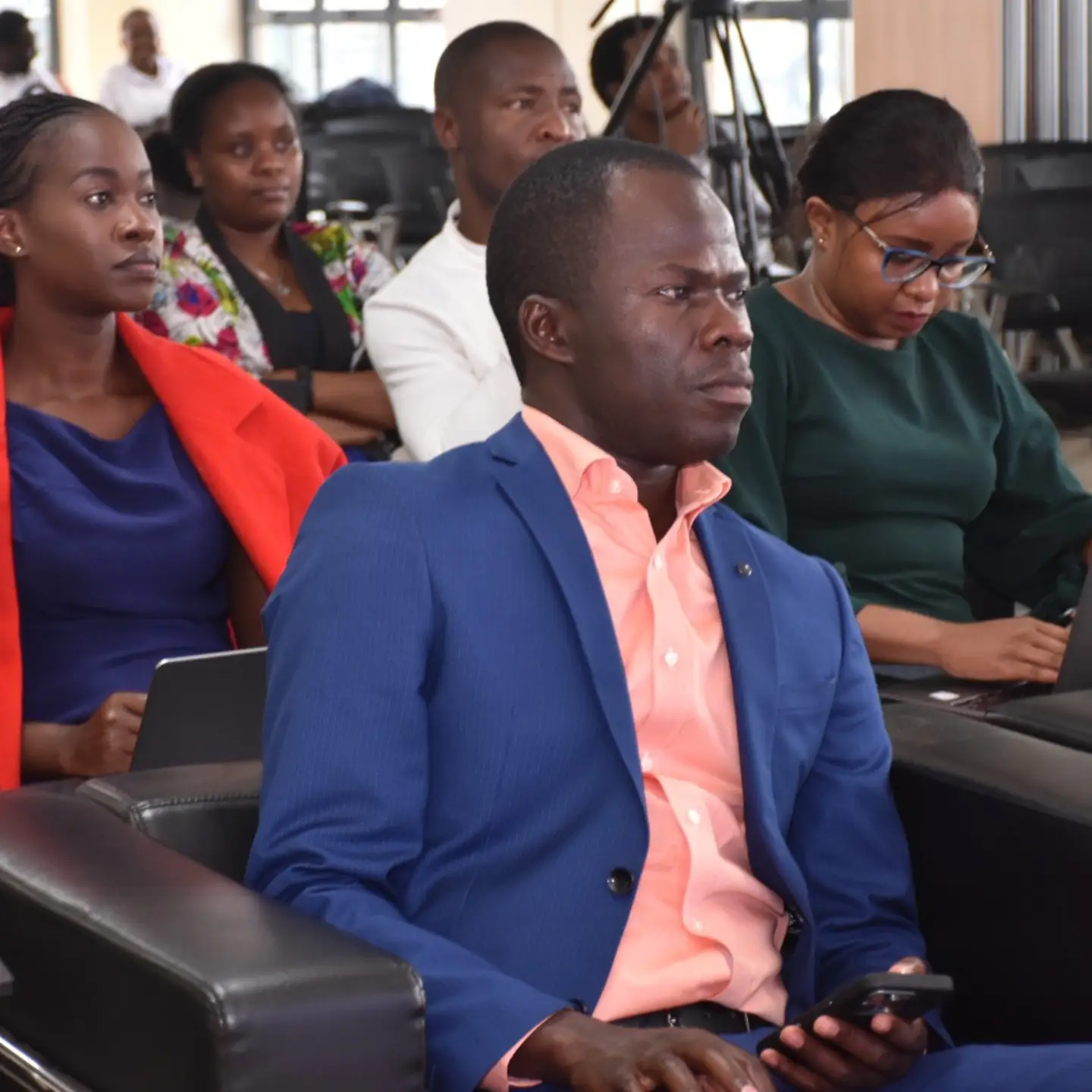
The call was made during the fourth annual Universal Acceptance (UA) Day held at United States International University-Africa, Nairobi.
Stakeholders said businesses stand to benefit from a more inclusive internet that supports all domain names and email addresses, regardless of language, script or length.
Universal Acceptance is a technical standard that ensures all valid domain names and email addresses work seamlessly across websites, applications, payment systems and government platforms.
Currently, some businesses using newer domain names such as “.africa” or local-language email addresses still face difficulties because certain online systems fail to recognise them.
Experts said this limits digital inclusion, e-commerce opportunities, and access to global markets.
Speaking during the event, Andrew Mwanyota, CEO and chief evangelist of Kenya Network Information Centre, said Universal Acceptance is key to bringing the next billion people online.
“As many citizens of the world get online, we still have another one billion people who are yet to connect. Universal Acceptance allows us to bring them online by making the internet multilingual,” said Mwanyota.
“The language barrier has locked out many people from fully participating in the digital economy. We must ask ourselves whether people can access websites and email services in local languages and scripts,” he added.
Mwanyota also noted that digital literacy remains a major challenge, saying internet access alone is not enough if people cannot effectively use online services in languages they understand.
Stakeholders said the move towards a multilingual internet could significantly benefit Kenya’s growing digital economy, especially in e-commerce, fintech, innovation and cross-border trade.
According to experts, enabling businesses to use local-language digital identities would strengthen online branding for small and medium enterprises while improving accessibility for millions of internet users across Africa.
Internet Corporation for Assigned Names and Numbers (ICANN) regional engagement manager Bob Ochieng said language remains one of the biggest barriers to internet access.
“At the end of the internet, there is always a person communicating in a particular language. In Africa alone, we have more than 3,000 languages and dialects.We must work together to bridge these divides and make the internet meaningful for everyone, especially for those in the last mile of connectivity,” said Ochieng.
This year’s UA Day focused on increasing awareness, strengthening technical adoption, and integrating Universal Acceptance into academic curricula and digital systems.
The programme included awareness sessions on the benefits of being UA-ready, demonstrations on adoption challenges and solutions, and discussions on regional strategies for promoting Universal Acceptance across Africa.
The event was sponsored by Internet Corporation for Assigned Names and Numbers and organised by Kenya Network Information Centre, which manages Kenya’s “.ke” domain. Other partners included UNESCO and Kenya ICT Action Network.
Experts noted that as digital trade continues to grow globally, Universal Acceptance will become increasingly important in supporting innovation, cybersecurity, financial inclusion, and digital communication.