


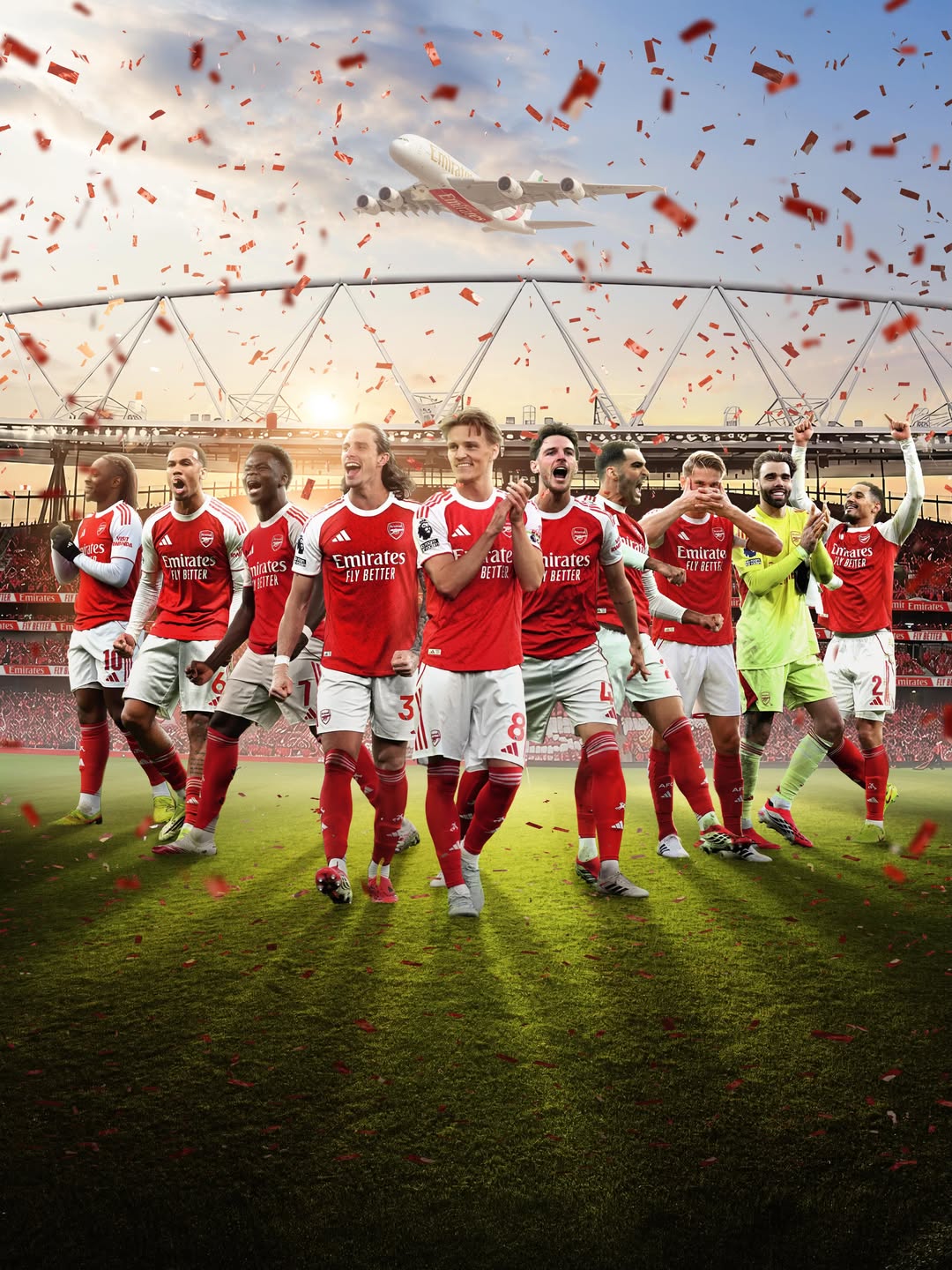
Sharp-eyed fans of Champions League football may have noted an unusual coincidence during this season’s semi-finals, which pitted Paris Saint-Germain against Bayern Munich and Atlético Madrid against Arsenal.
Visit Rwanda sponsors all four clubs’ sleeves, training shirts, perimeter boards and backgrounds. The remarkable coincidence will be repeated in the finals, which have been called the Visit Rwanda derby.
Additionally, Arsenal are the Premier League winners after a 22-year journey, and they will lift the trophy while donning Visit Rwanda.
This is not a mistake; rather, it is the Rwanda Development Board’s planned drive to encourage tourism and foreign direct investment through commercial diplomacy.
Commercial diplomacy, as opposed to more traditional kinds of diplomacy, focuses on business and economic concerns and the Visit Rwanda trademark on football shirts is a crucial component of that commercial diplomacy.
The Rwandan government considers Visit Rwanda to be a kind of tourism advertising. Similar to a billboard, the goal is that those who follow these football clubs would see the tagline and, consciously or unconsciously, think about Rwanda.
However, Rwanda’s skeptics have pointed out that as a low-income country that still relies on foreign aid, it should not be spending money to help European football clubs. However, one thing these critics ignore is that, these sponsorships are investments yielding substantial returns for Kigali.
Welcome to the complex realm of nation-branding. Nation branding refers to how countries intentionally shape and manage their worldwide reputation in order to attract tourists, investment, talent and influence. It is an effective summary of a country’s intangible competitive assets: its vision, intellect, distinct character, people and promise to the market.
The concept is associated with the existence of a “great global market” in which nations, cities and regions strive to attract the most visitors, investors, customers, students, events and so on. Think about phrases like “German engineering” or “Italian design”, they simply show how reputation adds value in global markets.
And nation branding is inextricably tied to soft power; countries with strong cultural and moral appeal find it simpler to form coalitions and drive global agendas.
As a result, without a strong and favourable reputation or nation-brand, no country can constantly compete for customers, visitors, investors, immigrants, as well as the respect and attention of other countries and the international media. Evidently, the sheer existence of a country will not attract tourists or investment; individuals must be given compelling reasons to choose to do business with that country.
Nation branding is built on six interconnected dimensions that shape a country’s global image: governance perceptions of political stability; transparency and global responsibility; reputation of exported national products and services; attractiveness of natural, cultural and urban tourist destinations; investment and immigration; culture and heritage and finally, its people stereotypes and direct experiences with citizens. Together, these elements explain why nation branding is intricate and cannot be reduced to a single campaign or message.
Building a nation’s brand is a deliberate long-term process that needs collaboration among governments, companies, cultural institutions and civil society.
It normally begins with an analysis of current views, stereotypes and worldwide reputation, followed by the identification of fundamental values, identities and distinctions.
This is followed by selecting messages and channels that are suited to important audiences, as well as gradually aligning policies, activities and communications. One of the most difficult problems is maintaining continuity. Successful nation branding often transcends political cycles and becomes long-term state policy rather than short-term marketing campaigns.
And, in a world where small states compete for the attention of audiences who are not necessarily familiar with them, national brand is national identity made tangible, robust, communicable and useful.
A good nation brand provides a significant competitive advantage and is the single most valuable piece of intellectual property that any nation owns. Knowing how to maintain, develop and use this asset is critical for transforming emerging nations’ intangible capital into economic progress.
In a word, nation branding ensures a faster and surer return on the investment which countries, their donors and foreign investors are making in their development. In a society driven by capitalism, it is tempting to infer that true competitive advantage can only be obtained by economic, political, or military might.
However, as in any busy marketplace, there is room on the global stage for brands that play by slightly different rules; there is room for niche brands and brands that compete primarily on cultural excellence rather than economic muscle, as Rwanda has demonstrated and maybe, just maybe, Magical Kenya can burrow a tip!