


Kenya has intensified its push for Public-Private Partnerships (PPPs), unveiling a robust pipeline of 51 active projects worth about $13 billion (Sh1.7 trillion), cutting across different sectors.
Of these, 10 are under implementation, and 41 are in the pipeline and at various stages in the PPP project cycle,
This, even as Treasury warns that it will be strict in approving ministry and state agencies’ major infrastructure projects, with CS John Mbadi saying all major projects must be considered for PPPs and the National Infrastructure Fund.
Mbadi painted a grim picture of the country’s fiscal position, revealing that nearly half of ordinary revenue is currently going toward debt repayment, where the country is projected to spend about Sh1.5 trillion on debt servicing in the 2026-27 financial year.
Another Sh1 trillion will go toward public sector salaries and Sh420 billion allocation to counties, warning that the country’s budget flexibility is rapidly shrinking.
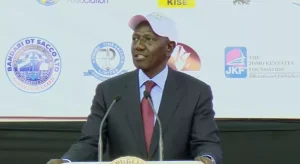
“We don’t have space. Our budget is tight,” Mbadi said during the high-level Kenya PPP symposium in Nairobi, yesterday.
The treasury boss said the government is turning to PPPs and innovative financing models such as securitisation and the newly established infrastructure fund to reduce dependence on borrowing and taxpayer-funded infrastructure development.
Public Investment and Assets Management PS Cyrell Odede said the country had moved “beyond ambition into delivery,” positioning PPPs as a central pillar of Kenya’s development strategy.
“Today, our national PPP pipeline comprises 51 active projects across more than eight sectors, with 10 projects already under implementation.These numbers tell an important story that Kenya has moved beyond ambition into delivery,” he said.
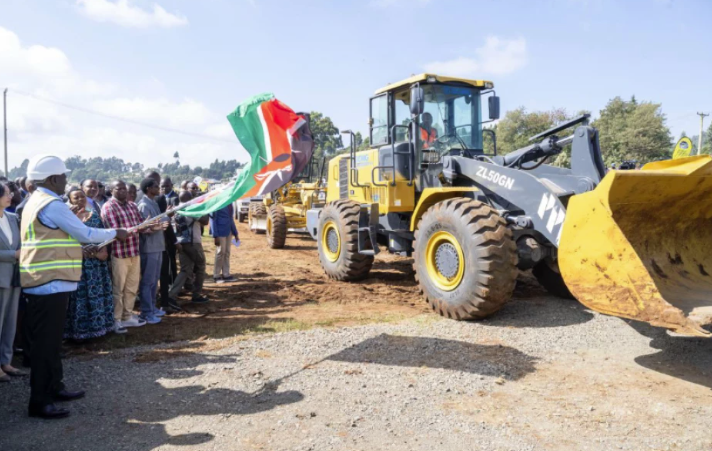
The projects span key sectors including roads, energy, water, food security, digital infrastructure and urban development. Among flagship projects highlighted were the Nairobi-Nakuru-Malaba highway corridor and the Mombasa-Nairobi A8 transport corridor.
The PS said the government had strengthened the country’s PPP legal and institutional framework to improve investor confidence, transparency and project efficiency.
“The opportunity is here. The framework is in place. The momentum is real. The question before all of us is simple, how quickly can we move together?”
Kenya Investment Authority (InvestKenya) CEO John Mwendwa said the country has recorded a sharp rise in Foreign Direct Investment inflows, with investment growth projected to more than double between 2024 and 2025.
“Our investment numbers have always hovered around $1.5 billion, but we are now seeing more than 100 per cent year-on-year growth based on incoming foreign direct investment trends,” he said.
According to InvestKenya, PPPs have mobilised over $1 billion (Sh129 billion) in private capital ($1.1 billion, since 2013), with more than $100 million mobilised in the last financial year alone.
Mwendwa said InvestKenya is was working closely with investors, commercial banks and development partners to build a credible pipeline of investment-ready projects while easing bottlenecks affecting project approvals and implementation.
“We are partnering with investors and the private sector to ensure life becomes easier when it comes to permits and government processes,” he said, “The deal cycle in sub-Saharan Africa remains too long. We must deploy capital faster.”
Private sector lobby group Kenya Private Sector Alliance (KEPSA) urged stronger collaboration between government and business to close Kenya’s estimated $12 billion (Sh1.54 trillion) annual infrastructure financing gap.
World Bank Group and the International Finance Corporation (IFC) have since backed Kenya’s PPP progress, citing successful projects such as the Nairobi Expressway as evidence that privately financed infrastructure could be delivered at scale.
According to IFC, Kenya now possesses one of the continent’s most advanced PPP frameworks, supported by deep domestic capital markets and growing investor sophistication.
“Kenya is at a critical juncture of its PPP journey. The goal now is not simply to do more PPPs, but to deliver better, more bankable projects at scale,” said Muneer Ferozie, regional manager and head for PPPs.
Menawhile, the government has expressed confidence that the new de-risking measures, including the Project Facilitation Fund, viability gap financing and blended finance arrangements with multilateral lenders, will improve project bankability and attract top-tier global investors.