

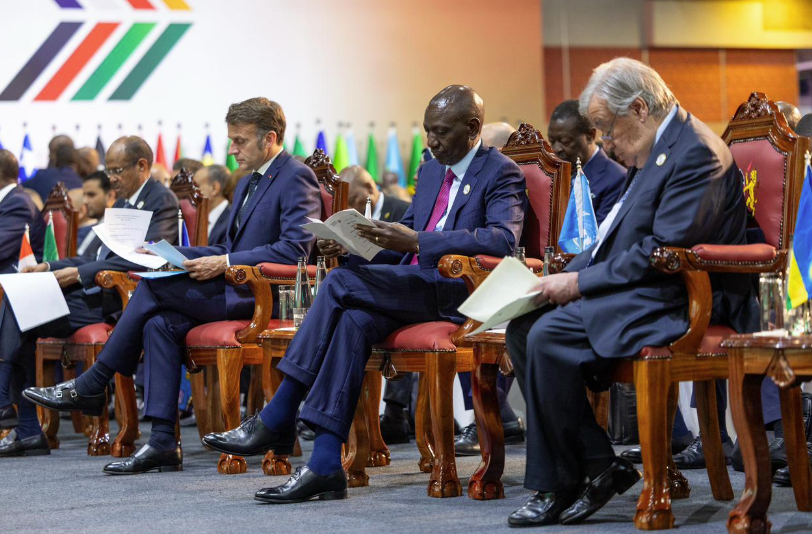
Kenya is set to receive the lion’s share of a sweeping $27 billion (about Sh3.5 trillion) investment package unveiled by French President Emmanuel Macron in Nairobi.
The landmark funding announced at the Africa Forward Summit in Nairobi has been described as one of the biggest Western economic re-engagement drives in Africa in recent years.
It signals a major shift in France’s relationship with Africa, moving away from traditional aid-driven cooperation toward large-scale investments, industrial partnerships and private-sector-led growth.
Macron said the new partnership would focus on “co-investment, industrial transformation and building resilient economies,” as France seeks to deepen trade and commercial ties with African countries.
This comes amid growing competition from China, the United States, Russia, Gulf nations and emerging Asian economies.
Out of the $27 billion package, about $16.4 billion will come from French public and private institutions, while another $10.5 billion will be mobilised through partnerships between African and French investors.
The French leader said the investments are expected to create more than 250,000 jobs across Africa and France over the coming years.
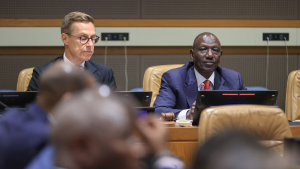
Kenya emerged as one of the biggest beneficiaries of the new France-Africa economic push, with President William Ruto announcing that Kenya and France had signed 11 investment deals worth nearly Sh150 billion on Monday alone.
The agreements span green energy, transport, infrastructure, digital technology, agriculture, logistics and urban development, reinforcing Kenya’s growing position as East Africa’s economic and industrial hub.
A major portion of the French investments will target renewable energy, electricity transmission, climate financing and green industrialisation.
Kenya is expected to benefit significantly due to its globally recognised leadership in geothermal energy and clean electricity generation.
The country already produces more than 90 per cent of its electricity from renewable sources, including geothermal, hydro, wind and solar power.
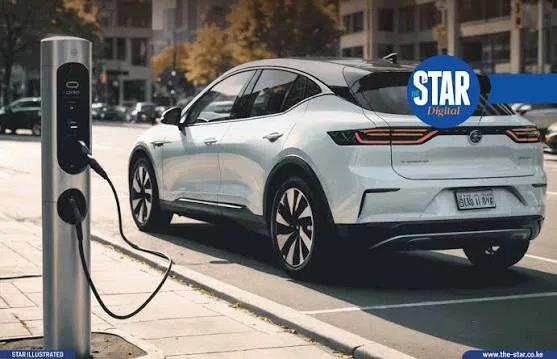
The new agreements are expected to support geothermal expansion projects, electricity transmission lines, electric mobility systems, battery storage technology and climate-smart industrial parks.
French companies are also expected to participate in Kenya’s fast-growing electric mobility ecosystem, including electric buses and green manufacturing projects as Nairobi positions itself as a continental clean energy and industrial hub.
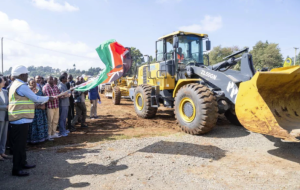
Among the biggest Kenya-specific announcements was a €700 million (about $760 million) investment by French shipping giant CMA CGM to modernise operations at the Port of Mombasa.
The investment is expected to expand cargo handling capacity, modernise logistics systems and strengthen Kenya’s role as the main trade gateway for East and Central Africa.
The project could significantly improve regional supply chains serving Uganda, Rwanda, South Sudan, eastern Democratic Republic of Congo and parts of Ethiopia, while also supporting trade under the African Continental Free Trade Area framework.
Additional French-backed financing is expected to support rail logistics, smart transport systems, clean public transport and urban mobility projects in Nairobi and other major cities.
France also used the Nairobi summit to announce fresh support for artificial intelligence, digital infrastructure, data centres, startup financing and innovation hubs across Africa.
Kenya is expected to secure investments in AI research, fintech growth, cloud infrastructure, fibre optic expansion and digital public infrastructure, further cementing Nairobi’s position as one of Africa’s leading technology and innovation centres.
Agriculture and food security also featured prominently in the agreements announced during the summit.
Part of the funding will support climate-smart agriculture, irrigation systems, fertiliser value chains, food processing and agri-tech partnerships aimed at improving food security and export competitiveness.
Kenya is expected to benefit through investments targeting horticulture, dairy, coffee, avocado exports, cold-chain logistics and agricultural value addition.
President Ruto used the summit to push for a new Africa-Europe relationship anchored on investment, industrial growth and trade rather than debt-heavy aid programmes.
He argued that Africa should increasingly be viewed as a strategic investment destination with abundant renewable energy resources, a youthful workforce and expanding consumer markets.
The Nairobi summit also comes at a critical geopolitical moment for France as Paris seeks to rebuild influence in Africa following diplomatic and military setbacks in parts of West Africa, including Mali, Burkina Faso and Niger.
Hosting the summit in Kenya, the first France-Africa summit held in an English-speaking African country — is widely seen as a strategic shift by France toward fast-growing and reform-oriented economies beyond its traditional Francophone sphere.
Trade and international relations experts say the scale of the commitments signals France’s intention to reposition itself as a long-term investor in Africa’s industrialisation, green transition and digital transformation agenda, with Kenya at the centre of that strategy.