



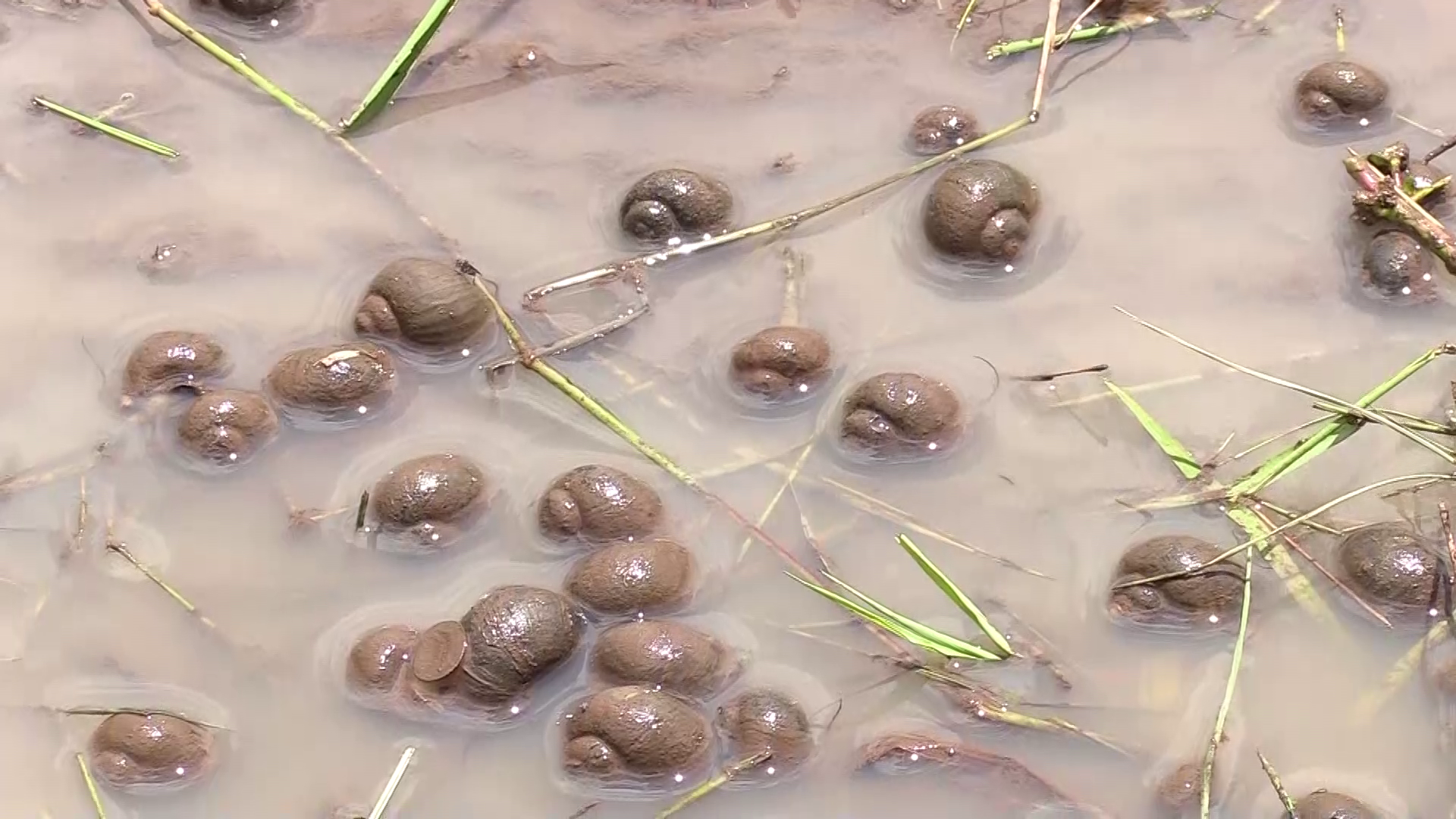
Rice farmers in the Mwea have raised concerns that the fast-spreading invasion of the golden apple snail is the biggest threat to rice production.
The infestation has triggered alarm across the Mwea Irrigation Scheme, with farmers calling for urgent and coordinated interventions to stop the destruction of rice fields.
Mwea, which accounts for over 80 per cent of Kenya’s rice production, over 90 per cent of the scheme has been affected, with farmers reporting losses of up to 60 per cent.
Many report that the snails are multiplying rapidly and feeding aggressively on young rice seedlings, leaving large sections of farms bare and significantly reducing yields.
Farmer John Munene noted that efforts to control the pest have largely failed despite attempts to use both traditional and chemical methods.
“These snails reproduce quickly and are difficult to control once they infest your farm,” he said.
He said even chemicals supplied through government-backed programmes have had little effect, with some farmers reporting that the snails continued to thrive despite treatment.
Munene said many local farmers have resorted to using banned pesticides sourced from neighbouring countries out of desperation, raising serious concerns about food safety and environmental health.
Karimi Nyaga, another farmer, said newly transplanted rice is particularly vulnerable, with snails feeding on shoots overnight and leaving fields devastated by morning.
“If you don’t spray your fields after transplanting the seedlings from the nursery, the snails destroy them overnight. If you transplant the seedlings and don’t drain the fields, they won’t even grow roots,” he said.
Nyaga lamented that farmers’ years-long complaints have fallen on deaf ears, leaving them with huge losses despite high production costs.
He said desperation has driven farmers to use uncertified agro-chemicals, reportedly imported and sold secretly, exposing water sources and soils to contamination linked to a high prevalence of chronic illnesses in the area.
The crisis adds to a growing list of challenges facing farmers, including poor road infrastructure, periodic water shortages and persistent attacks by quelea birds.
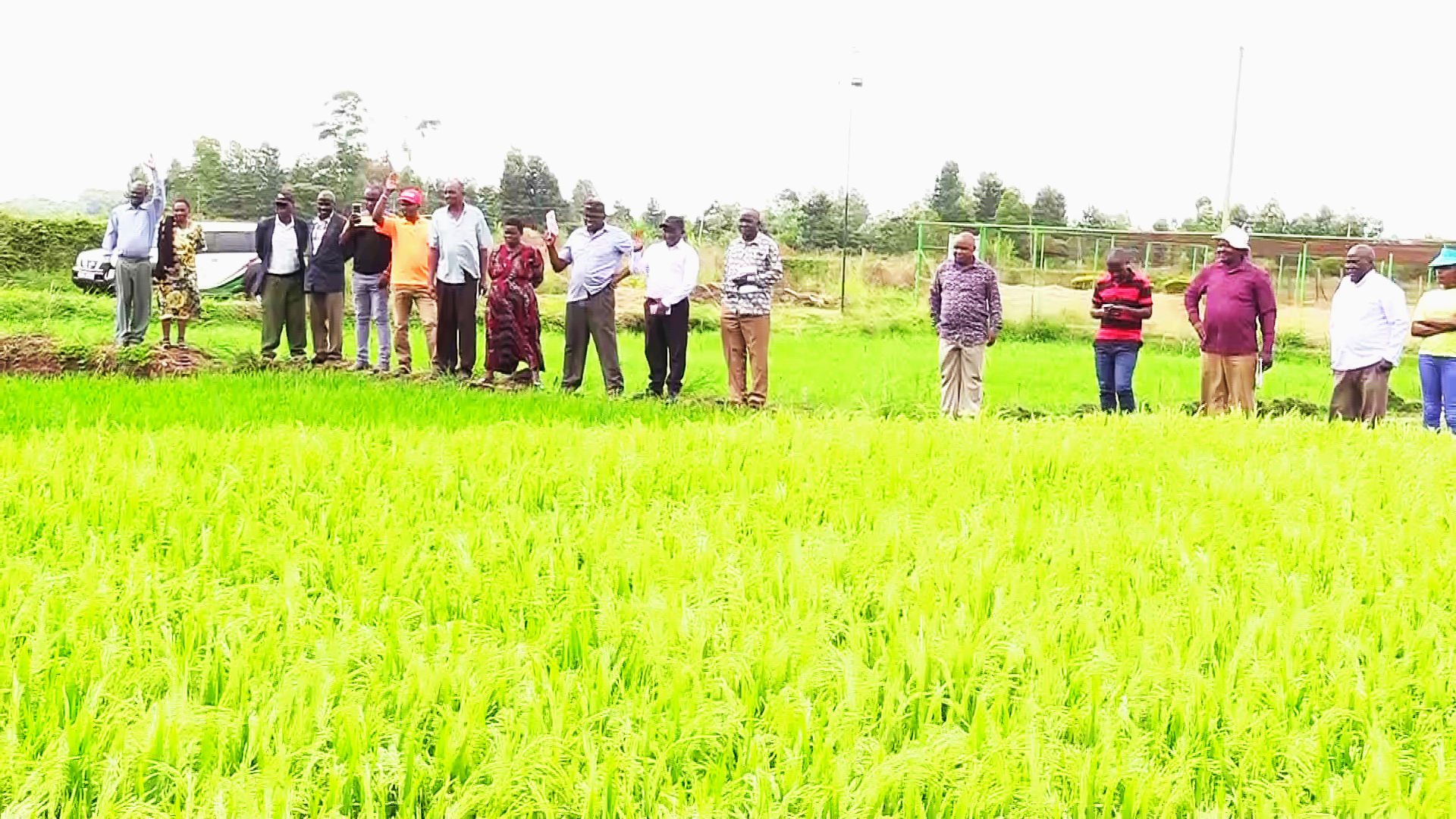 Farmers in the rice paddies in the Mwea Irrigation Scheme in Kirinyaga county/ ALICE WAITHERA
However, growers insist the apple snail menace surpasses all other threats due to its speed of spread and the scale of damage it causes.
Kirinyaga deputy speaker Jinaro Njamumo warned that the invasion is threatening the future of rice farming in the area.
He said farmers are increasingly anxious as the infestation spreads across more paddies, with many losing sleep over the potential collapse of their livelihoods.
Njamumo also criticised the national government for years of neglect, arguing that inadequate support has left farmers exposed to both economic losses and health risks.
He expressed concerns that continued use of unsafe pesticides could contaminate rice and harm consumers.
Farmers have urged both county and national governments to step up interventions, provide safe and effective pest-control solutions, and invest in long-term research.
They believe the snails were initially introduced into the scheme as a biological control measure to manage weeds, but the species has since become invasive, threatening food security and the local ecosystem.
The Golden apple snail (Pomacea canaliculata), is globally recognised as one of the most destructive invasive species in wetland agriculture.
It is listed among the world’s 100 worst invasive alien species due to its rapid reproduction, adaptability and voracious appetite.
A single female can lay hundreds of eggs at a time, often in bright pink clusters above water surfaces.
Under favourable conditions, these eggs hatch within weeks, causing exponential population growth.
The snails feed primarily on tender rice seedlings, often wiping out entire fields shortly after planting.
In major rice-producing regions in Asia, including the Philippines, Vietnam and Thailand, infestations have caused yield losses of up to 50 per cent in severely affected farms.
Farmers have been encouraged to adopt integrated pest management strategies, such as periodically draining farms to expose snails, using barriers to prevent movement between paddies and introducing natural predators where feasible.