


Government employees will only be allowed to receive cash gifts and rewards, of up to Sh20,000 once a year from any single source in newly proposed reforms.
This is after the Office of the Attorney General moved to propose strict cap on rewarding of state officials for the duties undertaken in an effort to curb conflicts of interest and strengthen accountability in public service.
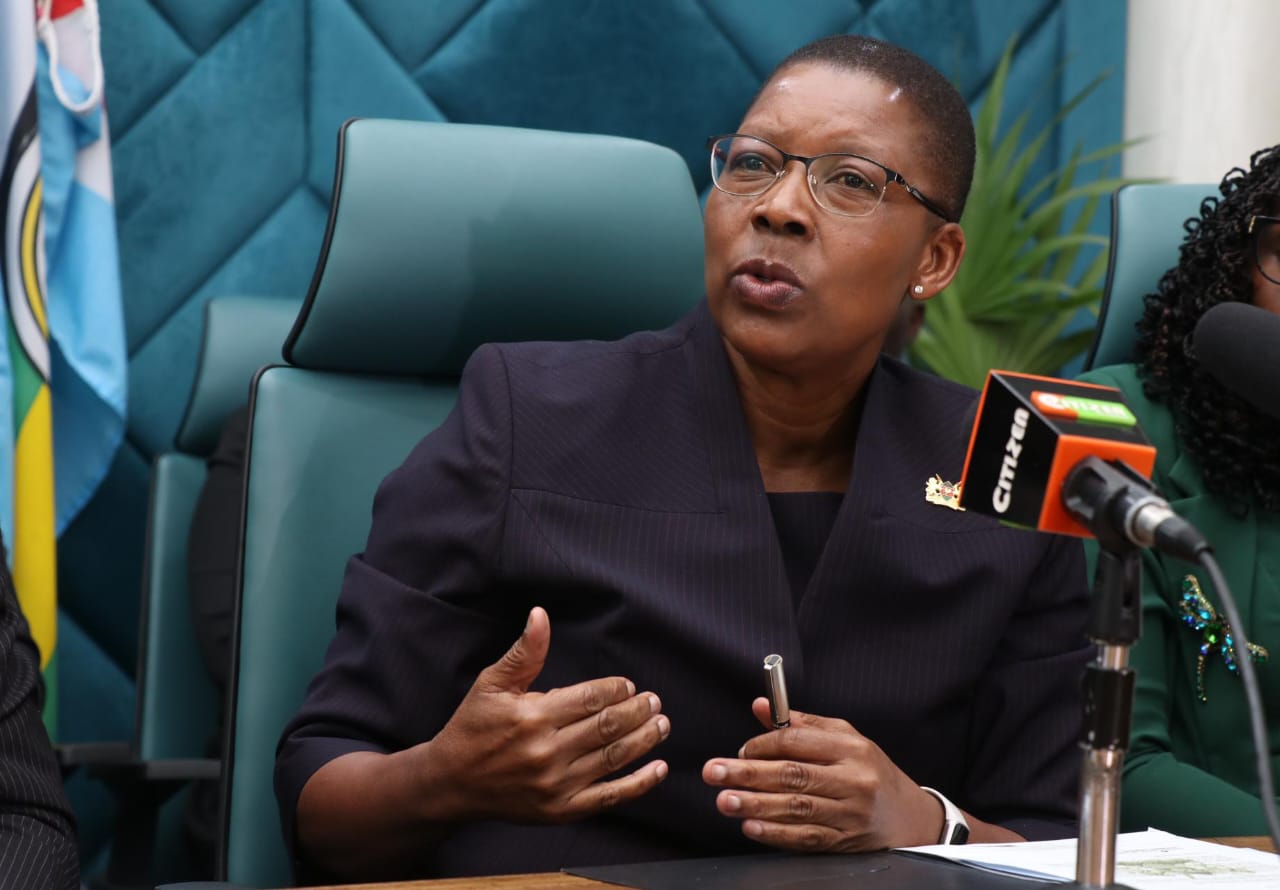
The reforms, spearheaded by Attorney General Dorcas Oduor, are contained in the draft Conflict of Interest Regulations, 2026, currently under parliamentary scrutiny.
If adopted, the rules will significantly tighten ethical boundaries for public officers, limiting not only the value but also the frequency of gifts they can accept.
In the proposed legislations, public servants will only be allowed to receive gifts worth up to Sh20,000 once a year from a single individual or organisation.
Any additional or higher-value gifts must be surrendered to the government. AG said the move is designed to eliminate undue influence in public decision-making while standardising how benefits are handled across ministries, departments and agencies.
“These regulations provide clarity and uniformity in conflict-of-interest management and enhance transparency in public administration,” said Oduor.
Crafted in consultation with the Ethics and Anti-Corruption Commission, the framework introduces tighter disclosure rules and stronger enforcement measures aimed at sealing loopholes in public sector integrity.
Under the new regime, public officers will face expanded compliance obligations, including mandatory declaration of any private interests that could influence their official duties.
“Regulation six deals with disclosure of conflict of interest, and in summary, a public officer must declare any personal or private interest that could influence their official work by filing and submitting the required Form A provided in the Schedule,” Oduor told the National Assembly Delegated Legislation Committee.
“And further to that, it is not just private interest, but private interest that could affect the public officer’s decision-making or activity.”
They will also be required to formally record all gifts and benefits received, seek prior approval before engaging in secondary employment, and step aside from decision-making processes where a conflict of interest arises.
The measures are designed to standardise ethical conduct across government while reinforcing transparency and accountability in public administration.
Principal Secretary for the state department of justice, human rights, and constitutional affairs within the Office of the Attorney General, Judith Pareno, said public servants must inform their reporting authority, on the amount of money or their interest, who is then required to take action to prevent or resolve the conflict.
“When disclosures can be made, they include prior to a meeting, proceeding or discussion, after a meeting, proceeding or discussion, and before the limits of the transaction in question are confirmed,” noted Pareno.
Failure to comply could trigger disciplinary action, fines, or imprisonment under the parent law. Despite broad support, lawmakers flagged ambiguities that could complicate enforcement.
Key concerns include how to interpret “complimentary treatment”—such as hospitality during official travel and how to distinguish legitimate corporate social responsibility initiatives from disguised personal benefits.
“There is room for interpretation that could be exploited or inconsistently applied,” Kiambu Constituency MP John Machua is noted, urging tighter definitions before final approval.
Officials defended the flexibility in the rules, arguing that rigid definitions may not capture the complexities of real-world scenarios.
“For example, hospitality offered during official duties or in high-risk environments may be legitimate, but must be transparent and appropriate to the officer’s role,” the Attorney General explained.
The AG told the Samuel Chepkonga Led-Delegated Legislation Committee, that the proposed regulations give effect to the Conflict-of-Interest Act, 2025, anchoring them within Kenya’s wider anti-corruption push under Vision 2030 and the National Ethics and Anti-Corruption Policy.