



THE Port of Mombasa is set to gain on transit cargo to South Sudan following a move by the private sector to address logistics bottlenecks on the route.
This includes bringing down the costs on container deposits which are at a high of $5,000 (Sh646,250) per container, compared to Kenyan-bound goods and Uganda which are averaging $1000 (Sh129,250).
Container deposits are primarily charged by shipping lines (container owners) to importers and clearing agents to secure against container loss, damage or delayed return (detention), with deposits often managed through clearing and forwarding agents.
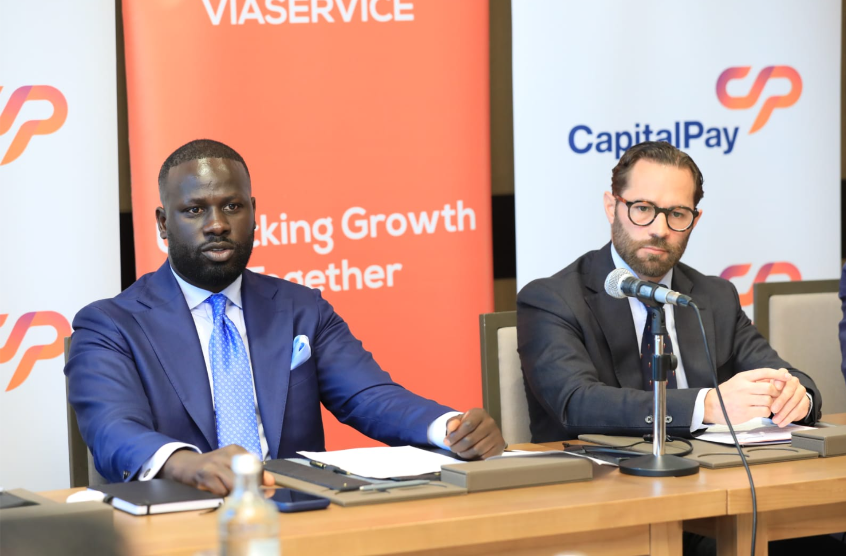
To help address this challenge and ease cost of doing business through Mombasa for South Sudan traders, Viaservice Kenya Limited and Capital Pay International Limited have signed a strategic business partnership to streamline containerised cargo moving through Mombasa and the Northern Corridor.
The collaboration is expected to reduce operational costs for traders, improve cargo visibility and speed up container movement along the Northern Corridor, which continues to face completion from the Central Corridor that connects the hinterland to the Dar es Salaam Port.
Under the agreement, Viaservice will deploy its innovative digital trade facilitation and financing solution—Viaservice Container Solution (VCS), designed to remove one of the biggest non-tariff barriers facing cargo destined for South Sudan—the requirement by shipping lines for high cash deposits on containers.
These deposits, often running into thousands of dollars, are meant to guarantee the safe return of containers but have long strained working capital for traders and clearing agents operating along the corridor.
By digitising the process and replacing the cash deposit requirement with a technology-driven guarantee system, the platform will allow shippers and freight forwarders to clear containers at the port without tying up large amounts of capital.
Industry players say the move could unlock more trade through the Port of Mombasa, which serves as a critical gateway not only for Kenya but also for several land-linked economies in the region.
“By addressing container deposit challenges through the Viaservice Container Solution, we are creating a more efficient, transparent and accountable system that directly benefits shippers, freight forwarders and shipping lines,” Viaservice MD John Mathenge said.
The partnership also integrates Capital Pay’s digital financial management system with the Viaservice platform, enabling real-time cargo monitoring and improved tracking of containers moving across the supply chain.
Logistics experts say poor visibility of cargo and complex administrative processes have historically slowed trade flows between Kenya and South Sudan, often leading to delays, disputes and additional costs for importers and exporters.
Through the integrated digital platform, traders will be able to track their containers in real time, improving transparency and reducing the risk of cargo loss or mismanagement.
Viatrans’ global head of trade facilitation, Morgan Lepinoy, said the initiative is part of a broader push to bring global digital trade practices to emerging markets.
“Our ambition is to remove structural barriers that slow trade down. Through this collaboration we are strengthening the South Sudan corridor with a transparent, reliable and scalable system,” he said.
For shipping lines, the system is also expected to improve container turnaround times by ensuring containers are tracked and returned more efficiently.
Faster turnaround reduces congestion at ports and improves vessel scheduling, factors that can significantly influence the competitiveness of regional logistics hubs.
Capital Pay International Limited CEO Garang Malek said the partnership will lower the financial burden on traders, while improving accountability in the cargo handling process.
“For South Sudan shippers and freight forwarders, this partnership means reduced costs, improved accountability and real-time visibility of their cargo,” he said.
South Sudan is one of the fastest-growing trade partners within the Northern Corridor and the second biggest destination for transit cargo through the Port of Mombasa after Uganda.
However, logistics challenges, including complex customs processes and high operational costs, have continued to slow trade growth.
The new system is expected to simplify the cargo clearance process, reduce paperwork and improve coordination among stakeholders including shipping lines, freight forwarders, clearing agents and traders.
If successfully implemented, the partnership could help unlock additional cargo volumes moving through Mombasa while strengthening the broader East African logistics ecosystem.
While Mombasa is the primary gateway, handling roughly 80 per cent of South Sudan’s imports, the country has been exploring Dar es Salaam as a competitor due to high costs on the Northern Corridor.
Industry stakeholders believe the move could also encourage further adoption of technology-driven solutions in regional supply chains, helping East Africa position itself as a more efficient and competitive trade hub.