


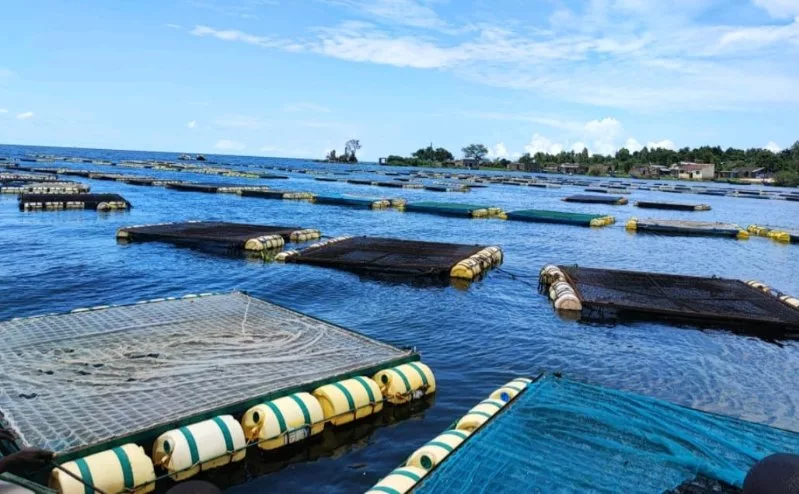
Kenyan fish farmers have taken their fight against new aquaculture charges to the Court of Appeal, arguing that the fees could threaten the survival of small and medium-scale fish enterprises and undermine thousands of livelihoods.
The Lake Victoria Aquaculture Association (LVA) has challenged a High Court ruling that upheld the Fisheries Management and Development (Aquaculture) Regulations, 2024, which introduced a Sh50,000 licensing fee and a five per cent ad valorem levy on fish landed by commercial aquaculture operators.
The association is seeking to overturn the judgment delivered on June 29 by Justice Roselyne Aburili, who dismissed its petition challenging the regulations.
In its memorandum of appeal, LVA has raised several grounds against the High Court decision, including the finding that the association did not have the legal standing to bring the petition in its own name.
It has also challenged the court’s conclusion that there was sufficient public participation before the regulations were adopted.
At the centre of the appeal is the Sixth Schedule, which sets out the Sh50,000 licence fee and the five per cent levy.
LVA maintains that the schedule was added after the initial consultation process had already concluded and that farmers and other stakeholders who would bear the financial burden were not adequately consulted.
The association has further questioned the legality of the charges, the extent of the national government’s powers to impose them, their implications for devolution and whether the five per cent levy amounts, in effect, to a tax.
It is also challenging the High Court’s assessment of the economic consequences of the charges on small and medium-scale aquaculture businesses. LVA wants the Court of Appeal to declare the regulations unconstitutional and invalidate them, including the disputed Sixth Schedule.
The High Court had rejected the association’s original petition after finding that it had not demonstrated the constitutional violations it alleged.
But according to LVA, the dispute has since taken another dimension following a Government-led attempt to resolve the disagreement outside court.
After the initial legal challenge, Blue Economy and Maritime Affairs Cabinet Secretary Hassan Ali Joho formed a ministry-industry task force bringing together government officials, representatives of the Council of Governors, LVA and other stakeholders.
The team was tasked with reviewing the contested regulations and coming up with recommendations that could address concerns raised by the industry.
The consultations eventually resulted in a joint communiqué setting out what the parties described as an agreed way forward.
LVA says it took part in the process in good faith and expected the recommendations to be implemented, paving the way for an end to the dispute.
However, the association says the recommendations contained in the communiqué have not been acted upon several months after the consultations ended.
In a letter dated August 27, LVA secretary Pete Ondeng told State Department for Fisheries Principal Secretary Betsy Njagi that the association’s main concern was now finding a workable mechanism for implementing the joint communiqué.
Ondeng said the document was the product of a consultative process initiated by Joho and involved government and industry representatives.
The association has also sought a meeting with Joho to discuss the impasse but says its efforts to secure an audience with the CS have not succeeded.
LVA chairman Ochieng’ Mbeo said the association’s decision to return to court should not be interpreted as an attempt to pick a fight with the government.
He said the farmers had initially gone to court in December 2024 only after exhausting other avenues of resolving their concerns.
“Nearly two years into the dispute, it is difficult to understand why a government-initiated process that brought the state and industry players together has failed to produce implementation of the agreed recommendations,” Mbeo said.
The association warns that the disputed charges could have far-reaching consequences for the sector, including higher prices for locally produced fish, reduced investment and innovation and the closure of smaller businesses.
LVA says the aquaculture industry directly supports more than 100,000 jobs and provides livelihoods for more than 500,000 households.
“The proposed licensing fees are unsustainable and could force many out of business,” Mbeo warned.
Based in Kisumu, LVA represents stakeholders across the aquaculture value chain in the Lake Victoria region.
The association argues that the levy creates a policy dilemma for the government, which has identified aquaculture as an important component of its Blue Economy agenda.
According to LVA, imposing charges that farmers consider excessive could weaken the very industry the Government is seeking to expand.
“Farmers are already dealing with rising feed and other production costs, limited access to credit, inadequate extension services and competition from relatively cheaper imported fish, the association says.
LVA maintains that adding the disputed fees to these existing pressures could make fish farming less profitable, deter new investment and innovation and ultimately affect fish prices and national food-security efforts.
Despite pursuing the matter at the Court of Appeal, the association says it has not closed the door on negotiations.
In its latest communication to the Fisheries PS, LVA requested an opportunity to meet the CS and present proposals on how the joint communiqué could be implemented.
“We remain confident that, with the necessary policy direction and goodwill, a practical resolution can be found,” Ondeng said.
The appeal therefore places the government under pressure to address both sides of the disputes the legal challenge to the charges and the industry’s demand for implementation of recommendations reached through a process initiated by the state.
For LVA, the question is now whether Kenya can pursue its ambition of making aquaculture a major pillar of the blue economy while imposing regulations that farmers say could make fish farming financially unsustainable.