

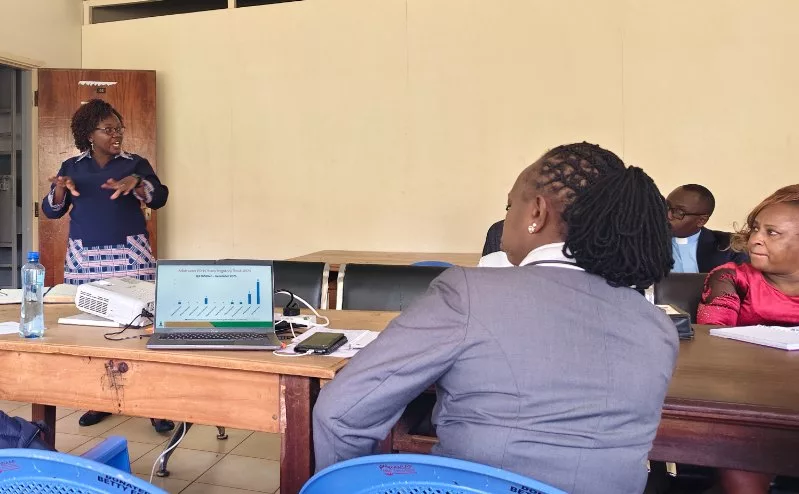
Health stakeholders in Murang’a have raised concern over the rising number of teenage pregnancies, calling for stronger measures to protect girls from early pregnancy.
About 3,019 teenage pregnancies were recorded in the county in 2025, with a further 1,481 cases reported between January and June 2026.
County Reproductive Health coordinator Caroline Macharia said the figures were particularly concerning because they included children aged between 10 and 14.
Speaking during a stakeholders’ meeting on the Triple Threat at the County Commissioner’s office on Tuesday, Macharia warned that early pregnancies could derail girls’ education and expose them to serious health and social challenges.
Twenty-nine pregnancies were recorded among girls in that age group in 2025, with Murang’a South, Kandara, Gatanga and Ithanga among the areas reporting high numbers.
“The high rate at which the pregnancies have been rising is concerning. Some of the young girls are facing severe complications during delivery,” Macharia said.
Murang’a South subcounty alone recorded about 600 teenage pregnancies during the year, according to the county health department.
Macharia warned that adolescent mothers face heightened risks, particularly when they do not begin antenatal care early or fail to attend clinics regularly.
“Some of the cases we have been handling on teen pregnancies are so risky and can even lead to maternal deaths.
The solution is to protect young girls from getting pregnant before they are ready,” she added.
She called for early identification of girls at risk, counselling and improved access to age-appropriate reproductive health information.
She also urged health workers to ensure pregnant adolescents receive timely care.
The county official observed that early pregnancy can also interrupt schooling and leave affected girls facing financial and social difficulties.
Nationally, adolescent pregnancy remains a significant public health concern.
The 2022 Kenya Demographic and Health Survey found that 15 per cent of girls aged 15 to 19 had ever been pregnant, although the prevalence differed across counties.
Stakeholders at the meeting also linked some teenage pregnancies, particularly those involving younger children, to sexual and gender-based violence.
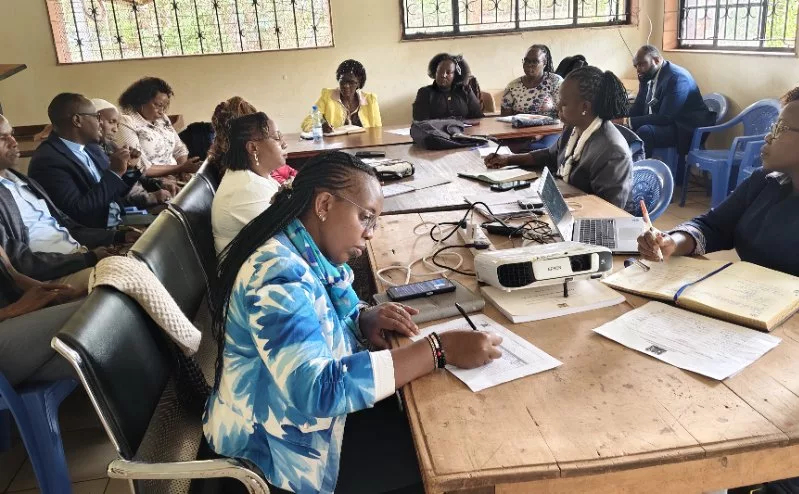
Stakeholders during a Triple Threat meeting at the County Commissioner’s office in Murang’a town on September 29, 2026/ ALICE WAITHERA
Police representative Mercy Mumo pointed to a significant gap between pregnancy cases recorded at health facilities and related cases reported to the police.
She attributed the difference partly to reluctance by parents and victims to report suspected offences.
Mumo noted that under-reporting could make it difficult for authorities to establish the scale of sexual exploitation of children.
“Those responsible for these cases need also to be brought to book. Some of the cases are as a result of sexual and gender-based violence like defilement,” Deputy County Commissioner Dorcus Mwangi said.
Mwangi, who chaired the meeting, urged parents and communities to take greater responsibility for protecting children from situations that could expose them to sexual abuse and early pregnancy.
She stressed that suspected offences against children should not be handled as private family disputes where criminal conduct is involved.
Under the Sexual Offences Act, sexual penetration involving a child below 18 constitutes defilement, with the law prescribing different penalties depending on the age of the child.
Mwangi said pregnancies involving girls aged 10 to 14 should therefore raise concern and prompt authorities to establish whether the children may have been sexually abused.
She urged community leaders, religious organisations and schools to strengthen programmes that equip children and parents with information on preventing abuse and accessing help.
Schools and churches, she added, should provide safe environments where children can seek guidance and where suspected abuse can be identified and referred to the appropriate authorities.
Mumo encouraged families to report suspected cases promptly to allow police to investigate and pursue those responsible.
“We need parents to understand that when a child is affected, it is not just a family issue. Reporting helps us to investigate and take appropriate action,” she said.
The stakeholders called for closer coordination between health facilities, schools, police, children’s protection agencies, parents and community organisations to improve early identification and support for affected girls.
They also urged parents to maintain open communication with their children and seek help from teachers, health workers, children’s officers and security agencies when they suspect a child is at risk.
The meeting noted that preventing teenage pregnancies requires addressing the factors that contribute to them, including sexual violence, school dropout, inadequate parental supervision and barriers to appropriate adolescent health and counselling services.
“Protecting children requires all of us to work together because no single institution can address the problem on its own,” Macharia said.