


Kenya could attract significant private investment in avocado, mango, medical manufacturing, and coastal tourism over the next five years if policymakers quickly remove existing constraints.
This is the outlook by the World Bank as contained in the latest Country Private Sector Diagnostic (CPSD) 2.0.
It takes an investor’s perspective in identifying sectors where relatively targeted public-policy changes could unlock private capital.
Unlike a broad assessment of the entire economy, the diagnostic deliberately narrows its focus to sectors with the potential to generate investment, jobs and wider economic activity.
According to the survey, the two fruit value chains offer perhaps the clearest opportunity to turn Kenya’s agricultural strength into higher-value exports.
Agriculture remains one of the country’s largest economic activities, but much of its potential is still concentrated at the production rather than processing stage.
“Investment in aggregation, cold storage, processing, packaging, logistics and export infrastructure could allow farmers and companies to capture more value beyond the farm gate,’’ the bank says.
Official data already shows the scale of the opportunity.
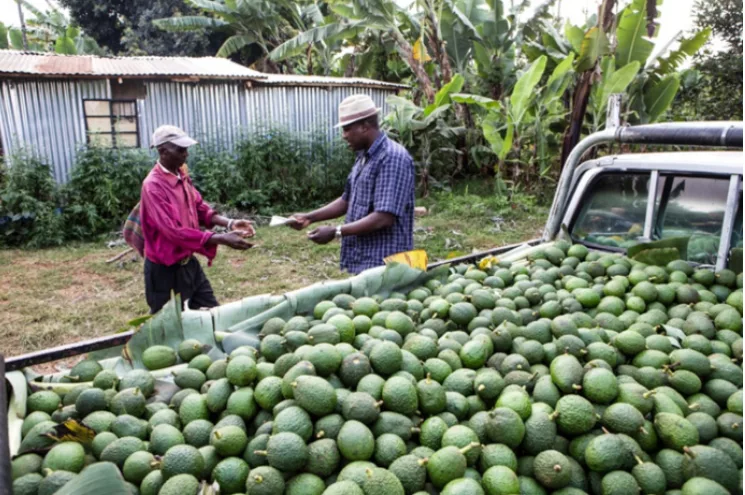
Kenya’s avocado exports were worth about Sh19 billion in 2023, according to the Agriculture and Food Authority (AFA), with export volumes reaching 114,073 tonnes.
Mango exports, by comparison, stood at 9,548 tonnes worth Sh1.46 billion.
More recent World Bank trade data shows Kenya exported 129.7 million kilogrammes of avocados worth about $160.8 million in 2024.
The Netherlands, the United Arab Emirates, Spain, France and Germany were among the leading destinations.
The lender says that the challenge is to convert this growth into a deeper value chain through processing and stronger links between smallholder farmers and investors.
The broader horticultural export market is also expanding.
KNBS data shows fresh fruit exports increased from 117,300 tonnes worth Sh18.4 billion in 2021 to 225,400 tonnes worth Sh41 billion in 2024.
In earlier Kenya private-sector diagnostics, the bank similarly identified avocado and mango alongside other agribusiness value chains as areas where processing, smallholder linkages and export promotion could create investment opportunities.
The second major opportunity lies in health-product manufacturing, where Kenya is attempting to reduce its dependence on imported medicines and medical supplies.
The World Bank and Ministry of Health have already been examining how private capital can be attracted into domestic medical-consumables production.
Their discussions have focused on procurement, regulatory processes and market access, three areas that directly affect whether manufacturers can scale.
The opportunity extends beyond Kenya’s domestic market.
The World Bank’s Africa Initiative for Medical Access and Manufacturing, AIM2030, includes Kenya among countries targeted for expanded medical manufacturing capacity.
The initiative aims to mobilise private investment, strengthen regulatory systems, develop skills and build regional supply chains.
“Successful execution could create a manufacturing ecosystem spanning pharmaceuticals, diagnostics, medical devices, packaging, laboratories and logistics while providing a platform for exports into the wider African market.”
Tourism is the fourth opportunity, particularly along the Indian Ocean coast, where the diagnostic sees room for private investment to deepen and diversify the tourism offering.
The sector is already recovering strongly, with state data showing accommodation and food services expanded by 15.6 per cent in 2025.
International arrivals through JKIA and Moi International Airport increased 6.1 per cent to 1.96 million, while hotel bed nights also rose to 11.56 million.
Coastal tourism is increasingly moving beyond the traditional beach-hotel model.
“Cruise tourism, marine activities, cultural tourism, eco-tourism and higher-value hospitality offer opportunities to increase visitor spending and spread economic benefits to coastal communities.”
Kenya’s cruise industry recorded 140 per cent growth by the end of 2025, according to the Kenya Tourism Board.
Mombasa is emerging as a turnaround port after a cruise vessel began offering longer stays involving passenger disembarkation and embarkation.
The World Bank says the selection followed quantitative and qualitative analysis, consultations with investors and companies, and interviews with policymakers, technical experts and development partners.
The approach reflects a shift in the World Bank’s newer CPSD 2.0 methodology, which is designed to identify practical policy measures that can be implemented in the near term rather than producing a long list of broad reforms.
The global lender says the new diagnostics put greater emphasis on concrete, actionable interventions capable of catalysing private investment and employment.
The four opportunities, however, come with a common message: identifying investment potential is easier than converting it into actual capital.
The diagnostic’s investor-focused approach places the burden on public policy to address constraints that raise business costs, delay approvals, restrict market access or increase uncertainty.
That means better infrastructure and logistics, predictable regulation, efficient licensing and standards, access to finance and stronger links between producers and markets.
The stakes are broader than attracting individual projects.
The World Bank says CPSDs are intended to identify sectors capable of generating jobs, domestic revenue and sustainable, inclusive growth.