
The hearing-impaired community in Murang’a has called for greater inclusion in education, employment and public services to address communication barriers and discrimination.
The group said the lack of sign language skills among parents, teachers and service providers continues to isolate deaf people and limit their access to essential services.
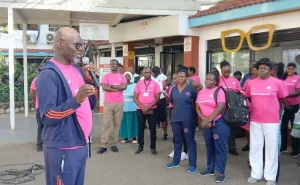
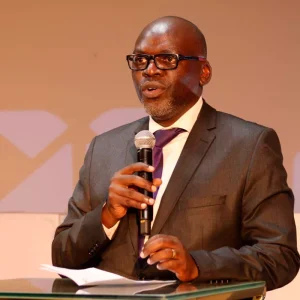
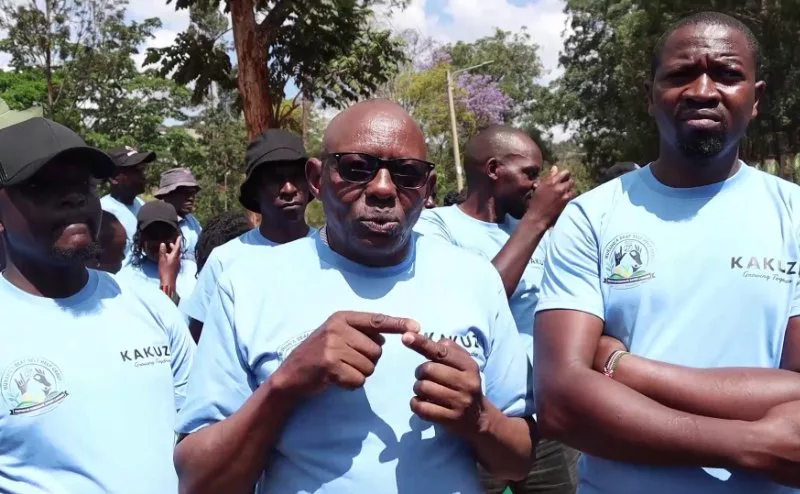
Speaking during a walk through Murang’a town to mark International Deaf Awareness Week, Murang’a Deaf Self Help Group chairperson John Kirubi said the event was aimed at creating awareness about the challenges faced by people with hearing impairment.
Kirubi said deafness is often overlooked because it is not immediately visible, unlike some other forms of disability, leading to stigma and discrimination.
He urged the community to learn how to communicate with deaf people and stop treating them as incapable.
He said many had acquired education and possessed skills that could benefit society.
“Sometimes when you tell someone that you cannot hear, they walk away because they do not know how to communicate with you. We are asking society to accept us so that we can live together,” Kirubi said.
He also raised concern over cases where deaf people are hidden at home, saying such practices deny them the opportunity to participate fully in society.
Teacher and sportsman Samuel Muriithi called for increased government support for schools serving learners with hearing impairment, particularly through the provision of learning materials aligned with the Competency-Based Curriculum.
Muriithi said learners lacked textbooks, including materials translated into Kenya Sign Language (KSL), making it difficult for teachers and pupils to effectively implement the curriculum.
“We are asking the government to help us with the syllabus and learning materials so that we can teach our subjects using KSL.
We also need inclusion in schools, boarding facilities and employment,” he said.
He further called for greater support for deaf people in sports and their inclusion in government budgeting and planning processes to ensure resources set aside for people with disabilities reach them.
The 2019 Kenya Population and Housing Census recorded 102,527 persons with disabilities in Murang’a, representing 9.7 per cent of the county’s population.
Of these, 4,402 were recorded as having hearing disabilities, including 1,858 men and 2,544 women.
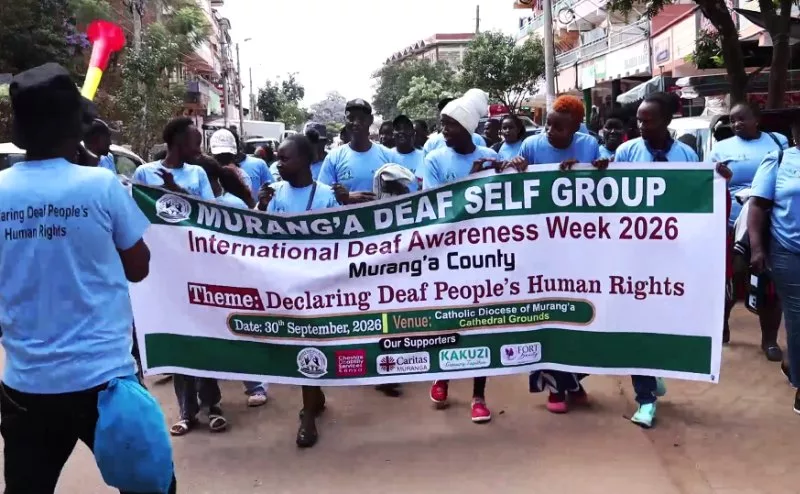
Members of Murang’a Deaf Self Help Group during a walk in Murang’a town to mark International Deaf Awareness Week on September 30, 2026/ ALICE WAITHERA
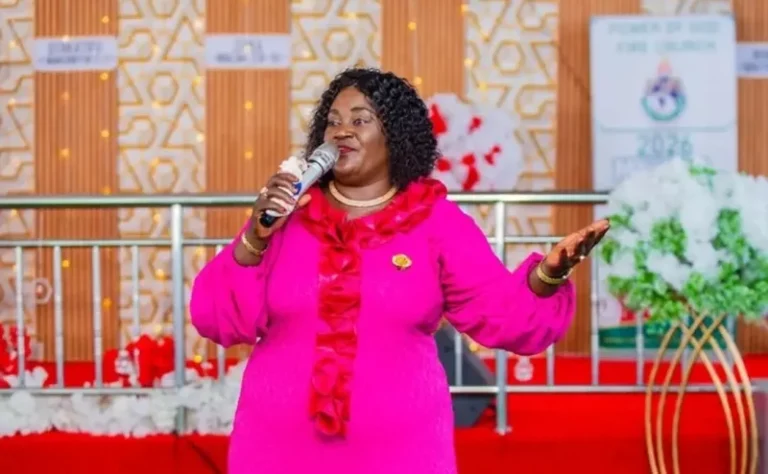
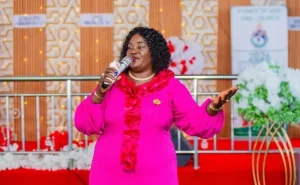
Nominated MCA Esther Kamindo, who represents people with disabilities in the Murang’a County Assembly, urged the government to make assistive devices such as hearing aids more affordable to enable more people to access them.
Kamindo said although the constitution provides for the rights of people with disabilities, implementation remained a major challenge, with many opportunities still inaccessible to them.
She also called on Kenyans to maintain peace during the electioneering period, warning that people with disabilities are among those who suffer most when violence breaks out.
“People with hearing and visual impairment, as well as those who use wheelchairs, are also human beings and have a right to education and respect like everyone else,” Kamindo said.
Long-serving teacher in a school for learners with hearing impairment Lucy Wairimu said communication remained one of the biggest challenges facing deaf people, particularly when they return home from school.
Wairimu said some parents were unable to communicate with their deaf children because they did not understand sign language, resulting in frustration and isolation within families.
She called on the Ministry of Education to integrate sign language into the school curriculum so that more Kenyans can communicate with deaf people and reduce the barriers they face in the community.
“The government should make sign language part of the curriculum in all schools so that when these people are out in the community, they are able to communicate easily,” Wairimu said.
She also urged public and private institutions to provide sign language interpreters, saying the absence of such services prevents deaf people from accessing essential services and can create difficulties when seeking assistance from institutions such as police stations.