


Muslim religious leaders in Garissa have urged the government to establish dedicated passport offices in Wajir and Mandera, saying access to essential services should be central to Kenya’s long-term development agenda.
The leaders, under the Supreme Council of Kenya Muslims (Supkem), said President William Ruto’s proposed Vision 2060 should go beyond economic transformation and infrastructure to include deliberate measures to bring government services closer to citizens.
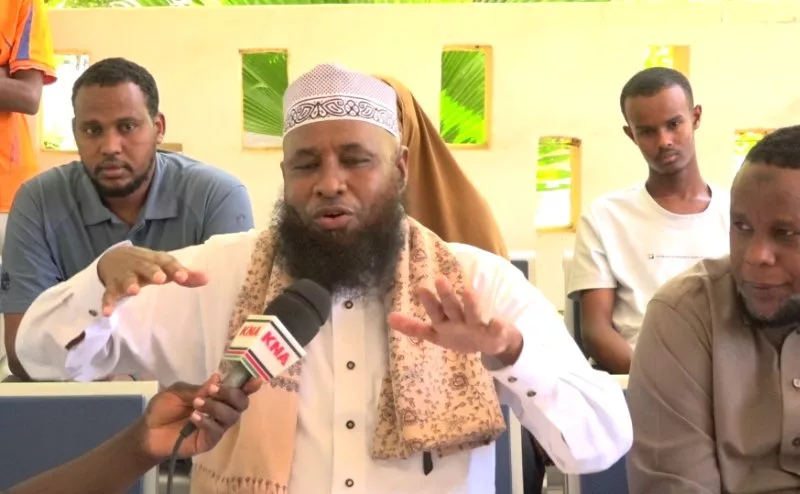
Led by Garissa Supkem secretary general Hassan Abdi, the clerics welcomed the reopening of the Garissa Immigration and Passport Office but urged the government to extend similar services to Wajir and Mandera.
Ruto reopened the Garissa office on February 6, 2025, after regional passport services had been halted in 2014.
Abdi Sheikh Ali, deputy officer in charge of the Garissa regional office said they have processed 16,000 passports since the office was reopened.
The government said the move would reduce the time and costs residents incurred travelling to other parts of the country.
Last week, Ruto described Vision 2060 as a 30-year national development charter intended to succeed Vision 2030 and transform Kenya into a prosperous, first-world nation. He announced that nationwide public consultations on the blueprint would begin on August 12.
Hassan said the consultations presented an opportunity for communities in historically underserved areas to raise practical issues affecting their daily lives.
“We should not discuss Vision 2060 only in terms of roads, industries, technology and economic growth. We must also ask ourselves how government services can be brought closer to wananchi,” he said.
Hassan said residents of northern Kenya had for years travelled long distances to obtain passports, with some going as far as Nairobi and Embu.
“For more than 10 years, we suffered, with our people being forced to seek these services in places such as Nairobi and Embu. This came with its own inconveniences in terms of time and money spent,” he said.
Hassan said the reopening of the Garissa office should not mark the end of efforts to decentralise passport services.
“Our request is that the government extends the same service to our brothers and sisters in Wajir and Mandera so that we can ease the congestion currently being witnessed in Garissa,” he said.
National Inter Religious Council of Kenya chairman Sheikh Abdullahi Salat said passport services were particularly important to Muslims travelling for religious pilgrimages, including Hajj and Umrah.
“The passport office is one of the offices that is frequented the most by our people. They go there seeking this document, especially when preparing to travel for pilgrimage,” Salat said.
He said establishing offices in Wajir and Mandera would save residents time and money.
“Meaningful development must be felt at the grassroots, with citizens able to access essential government services without having to travel hundreds of kilometres,” he said.
The leaders want the proposal included in the Vision 2060 consultations, arguing that decentralisation would promote equal access to government services and ensure development is felt beyond major urban centres.