


KENYA Power has tightened negotiations for new power purchase agreements (PPAs) to secure cheaper electricity and shield consumers from costly long-term contracts.
It at the same time warned of a grid strain on rising electricity demand, projected to rise sharply over the next two years, putting pressure on supply and increasing the need for additional generation capacity and investments in system stability.
Latest data shows peak demand is expected to grow by about five per cent annually, rising from 2,439 megawatts (MW) in 2025 to 2,553MW in 2026 and 2,680MW by 2027.
The utility said effective generation capacity stood at 3,239MW as of January 2026, comprising 1,006MW of geothermal, 810MW of hydro, 559MW of thermal, 426MW of wind, 210MW of solar and 200MW of imports, among other sources.
To meet rising demand, Kenya Power expects additional generation of 61MW from KenGen’s Olkaria 1, 35MW each from OrPower’s Menengai and Globeleq’s Menengai projects, and a further 200MW through imports from Ethiopia by December 2026.
With domestic peak demand rapidly catching up to or occasionally exceeding effective power generation capacity, driven by growing economic activity and government connectivity programmes, Kenya Power has started entering into new PPAs with power producers to increase supply.
The utility however says it will only enter into contracts that offer value for money for consumers, with price, technical feasibility and the actual cost of developing generation projects among the key issues being scrutinised.
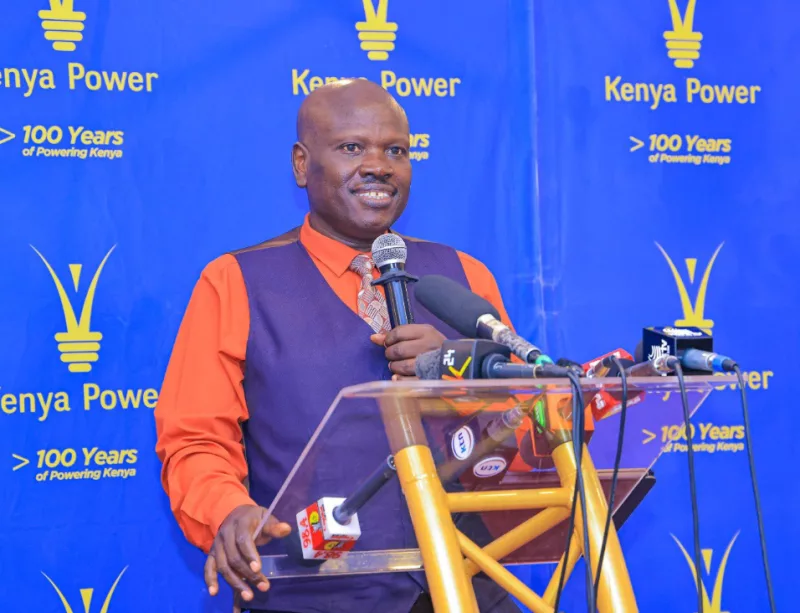
Kenya Power managing director Joseph Siror said the company was making progress in engagements with power developers following the lifting of the moratorium on new IPPs in November last year.
Speaking during a media briefing on the state of the electricity grid in Nairobi yesterday, Siror said the utility was prioritising generation projects that can provide reliable power while keeping costs manageable.
“The main issue is not the numbers, the main issue is for Kenyans to get value for their money,” Siror said.
He said Kenya Power was conducting detailed assessments of proposed projects, including where they would connect to the national grid and whether the existing network could accommodate the additional generation.
The utility is also scrutinising the financial assumptions submitted by developers before agreeing to tariffs.
Developers are required to provide detailed financial information on their projects, allowing Kenya Power to establish whether the proposed costs are reasonable.
The utility can subsequently compare the estimates with the actual costs incurred during procurement and construction, with any significant reduction in project costs expected to be reflected in the eventual tariff.
Kenya Power is also pushing for changes to compensation arrangements for electricity generated by IPPs but not taken up by the grid.
Under the proposed arrangements, developers could be allowed to generate additional electricity beyond their contracted volumes, continue generating after reaching their annual threshold or have their contract periods extended to compensate for lost generation opportunities.
He said the objective was to prevent consumers from paying for electricity that was never consumed.
“We don’t want to enter into a 20-year contract that is onerous on the side of the developer,” Siror said, adding that Kenya Power wanted agreements that offered a win-win situation without allowing developers to make excessive profits at the expense of consumers.
The National Assembly lifted the moratorium on new PPAs on November 12, 2025, paving the way for Kenya Power to negotiate fresh contracts after years of restrictions on additional generation capacity.
The new contracting framework requires IPPs to disclose their shareholders and beneficial owners, while new renewable energy projects are expected to be procured competitively.
The reforms also seek to limit the cost of electricity, with wholesale power prices capped at $0.07 (Sh9.06) per kilowatt-hour under the new guidelines.
Kenya Power is particularly keen on adding more baseload generation, including geothermal and hydroelectric power, which could provide greater stability to the grid compared with intermittent renewable sources.
Kenya Power currently has more than 20 IPPs in its portfolio across wind, solar, hydro, geothermal and thermal generation, with most of the existing contracts expected to expire around 2034.
The renewed focus on PPAs comes as Kenya seeks to expand generation capacity to meet rising electricity demand, where peak demand is expected to reach 2,680MW by next year from 2,553MW this year.
President William Ruto’s recently said the country requires more than Sh1 trillion to raise installed power capacity to at least 5,000 megawatts, from the current 3,213MW.
“Kenya has so much potential for baseload generation, with 9,000MW of unexploited geothermal potential and 1,200 MW of hydro currently being developed. The more we invest in hydro power and geothermal power, the better it is for our grid,” said Siror.