


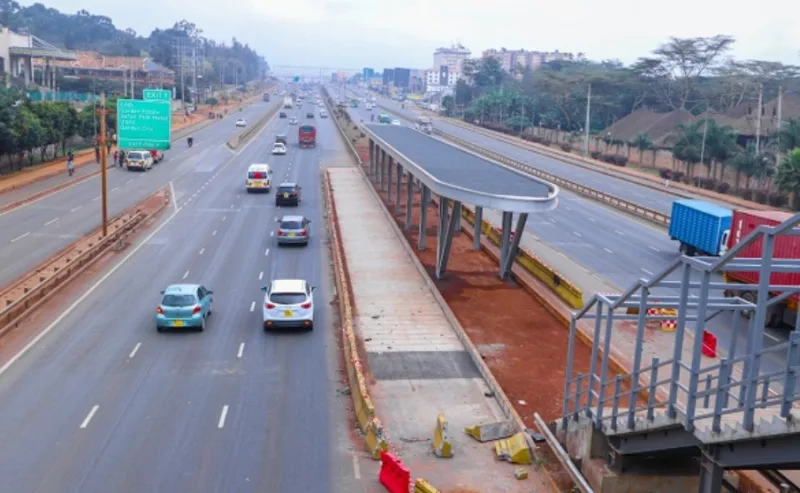
AN audit report has exposed delayed payments and unresolved contractor claims as the main impediments delaying the execution of Nairobi’s Bus Rapid Transit (BRT) programme.
This comes with mounting interest costs running into billions of shillings for the stalled Thika Superhighway project.
According to the Auditor-General, the Nairobi Metropolitan Area Transport Authority (NaMATA) has accumulated Sh2.5 billion in trade and other payables, which includes short-term debts owed to suppliers for inventory, raw materials and supplies bought on credit.
This is more than double the Sh1.563 billion reported a year earlier, placing the authority under severe financial strain and raising questions about its ability to deliver the capital-intensive mass transit programme.
The audit for the year ended June 30, 2025 shows that Sh2.449 billion, or 98 per cent of the outstanding debt, had remained unpaid for more than three years.
A significant portion is owed to the contractor undertaking the design and construction of BRT facilities along the Thika Superhighway Corridor.
The contractor suspended works on January 11, 2022 after NaMATA failed to make payments, effectively freezing a project expected to transform public transport along one of Nairobi’s busiest corridors.
The project was awarded at a contract price of Sh5.575 billion. Although Sh3.108 billion worth of work had been certified as completed, the value of work in progress remained unchanged over successive financial years.
The prolonged delay has also significantly increased the project’s cost. The Auditor-General found that Sh1.039 billion of NaMATA’s outstanding payables represented interest accrued on delayed payments for certificates issued for the Thika Road BRT project.
The authority is also facing Sh745.1 million in contingent liabilities arising from contractor claims linked to delayed approval of drawings, delayed land acquisition and suspension of works.
Together, the interest and claims amount to Sh1.784 billion, equivalent to about 32 per cent of the original contract price.
The Auditor-General warned that the accumulated costs had undermined the economic case for the project.
“In the circumstances, there is no value for money in the BRT Project arising from interest on delayed payments,” the Auditor-General said.
NaMATA attributed the delays largely to inadequate development budget allocations, saying funding had not been commensurate with the cost of the capital project. It cited the country’s tight fiscal position and constrained resource envelope as major factors behind the financing shortfall.
The situation has created a vicious cycle in which inadequate funding delays payments, delayed payments trigger interest and contractor claims, and the additional costs further increase the amount required to complete the project.
The financial problems also raise questions over the viability of NaMATA’s broader BRT plans. The authority is expected to develop several corridors across the Nairobi metropolitan area, including Lines 2, 3, 4 and 5.
BRT Line 2, covering the Simba corridor, is planned to have 10 stations, 100 buses and dedicated lanes capable of carrying up to 15,000 passengers per hour in each direction.
NaMATA’s financial position further underscores the challenge. Although it reported a Sh370.7 million surplus for the year, its financial statements show a severe mismatch between assets, cash and obligations.
Total assets stood at Sh4.56 billion, but current assets were only Sh32.5 million against current liabilities of Sh2.516 billion, leaving the authority with limited readily available resources to meet its obligations.
The audit also raises concerns about institutional capacity. NaMATA had an approved establishment of 215 employees but only 94 were in post, leaving a gap of 121 positions.
The Auditor-General warned that staff shortages could result in officers handling multiple roles and undermine service delivery.
The authority is also yet to establish a retirement benefit scheme, with employee deductions and employer contributions amounting to Sh4.98 million not remitted to a pension scheme, a failure the Auditor-General termed a breach of the law.
Governance concerns have compounded the financial problems. NaMATA’s board had 14 members, exceeding the maximum nine provided under the Mwongozo Code of Governance for State Corporations.
Some members also served on multiple committees, increasing board remuneration costs.
Established to coordinate an integrated and sustainable public transport system across Nairobi and neighbouring metropolitan counties, NaMATA now faces difficult questions over how its flagship project has failed yet it continues to run other transport initiaatives in the city.
This includes a one-month pilot sheduled public transport system in cordination with PSVs, where the govenment subsidised fares.
With the Thika BRT project stalled since 2022, taxpayers are carrying a growing financial burden while Nairobi remains without the mass transit system that was expected to ease congestion and improve public transport.