



The Government will convene the first National Productivity Conference in June 2026 as part of efforts to improve efficiency in the public sector and shift focus from wage bill control to productivity enhancement.
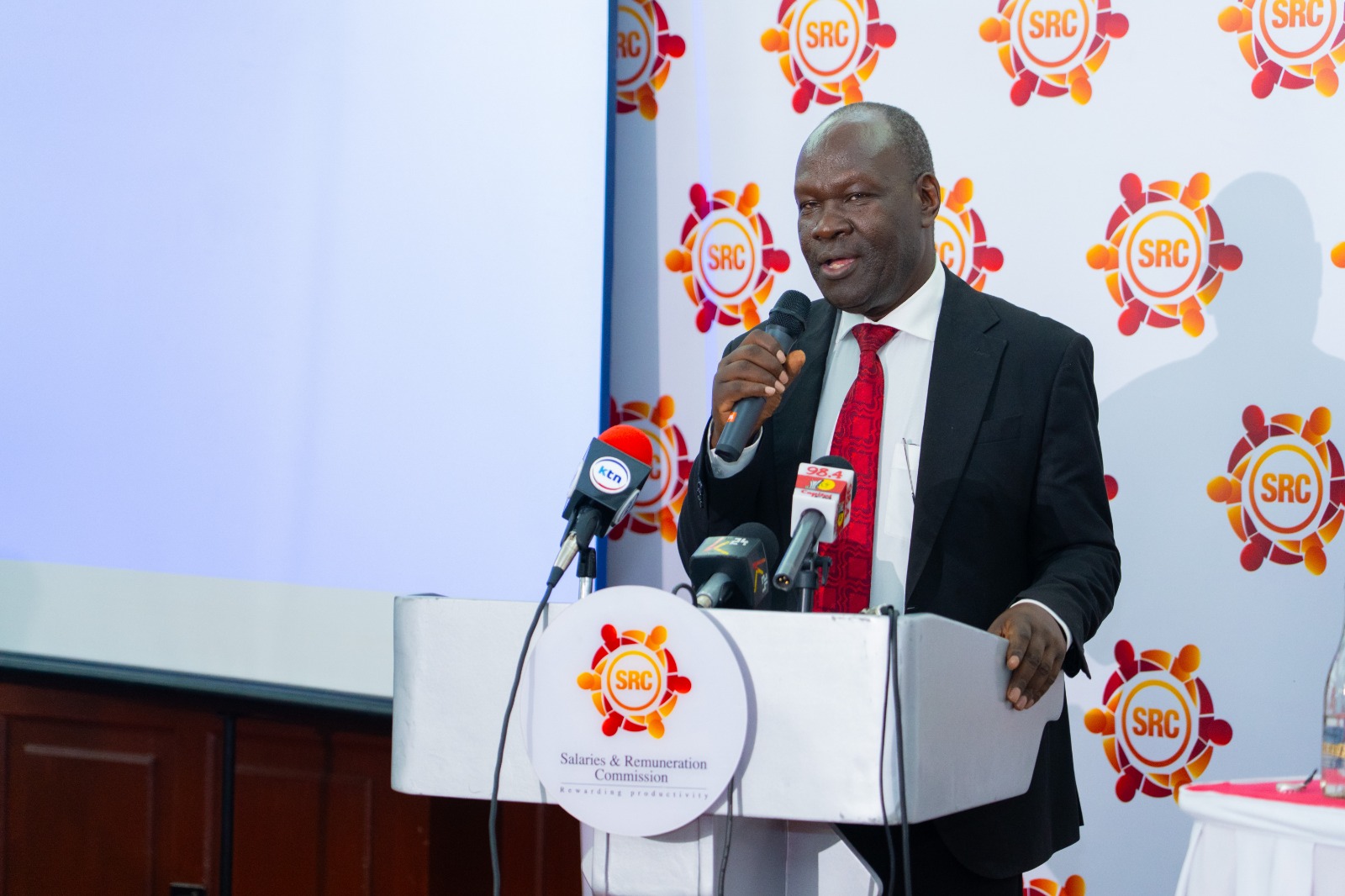
Speaking during a media briefing in Nairobi, leaders from key public service institutions said the conference will bring together stakeholders from the Executive, Judiciary, Legislature, county governments, state corporations, private sector and international partners, to discuss ways of improving labour productivity in Kenya.
The Salaries and Remuneration Commission (SRC) chairperson Sammy Chepkwony said the country must shift from focusing solely on wage bill containment to improving productivity across the public service.
“We realised public servants are being demotivated. The country also cannot stop growing because we must continue hiring teachers, nurses, doctors and security officers, to meet public demand,” Chepkwony said.
He disclosed that Kenya’s wage-bill-to-revenue ratio, a critical barometer of fiscal health, stands at 41 per cent in 2025, above the statutory Public Finance Management threshold of 35 per cent, though significantly improved from 55 per cent in 2020.
According to data presented during the briefing, Kenya’s labour productivity remains low compared to global standards.
Chepkwony said Kenya currently records an average productivity of about 7,750 US dollars per employee annually, compared to Singapore’s 117,500 US dollars.
“Kenya ranks 142 out of 189 countries globally in productivity and 21 out of 52 in Africa. This shows that our biggest challenge is not necessarily the wage bill, but low productivity,” he said.
He added that studies indicated private sector employees in Kenya were on average 3.3 times more productive than public sector workers, attributing the disparity to differences in work culture, incentives and performance management systems.
Chepkwony said the Conference was convened following a resolution by the National and County Government Coordinating Summit chaired by President William Ruto.
“The Summit requested the SRC, in collaboration with the Intergovernmental Relations Technical Committee, to ensure that this Conference takes place so that the country can begin focusing more on productivity rather than only wage bill control,” he said.
He noted that previous reforms aimed at reducing the wage bill had recorded gradual progress, with expenditure reducing from about 25 per cent in 2021 to lower levels in the current Financial Year.
However, he said the gains had slowed down, prompting the need for a new strategy centred on productivity.
“For a long time, public servants have been rewarded for simply reporting to work and staying in the office until evening, regardless of the outcomes achieved. We now want to shift the conversation towards rewarding results,” he said.
The Conference will also feature presentations from experts from countries, including Ghana, the United Kingdom and Singapore, to share best practices on productivity management.
Director of Governance and Public Service Reforms and Re-engineering at the Executive Office of the President, Ruben Chirchir, assured participants of full government support, saying the public service was undergoing reforms aimed at improving service delivery.
“We are talking about serving Kenyans differently. The entire culture of public service must change because citizens now expect services instantly,” he said.
Chirchir said the government was focusing on digitisation and modernisation of service delivery systems to reduce bureaucracy and improve efficiency.
“We must change the tools we are using, so that Kenyans can access services from their homes without necessarily visiting government offices,” he added.
Public Service Commission Chairperson, Francis Meja, described the Conference as timely, noting that Kenya had moved from discussions centred on wage concerns to broader conversations on national productivity.
The Conference is expected to culminate in the development of policy recommendations and recognition of institutions and public servants demonstrating excellence in productivity and performance.