


This World Cup has been bigger than any before. With more teams, more matches and record audiences, the expanded tournament has generated billions of dollars on and off the pitch.
While football’s global showpiece has created huge financial opportunities, not everyone has profited equally.
From Fifa to broadcasters and betting firms, there have been clear winners, while fans, hotels and even host cities have found the financial returns harder to come by.
Fifa – winner
World football’s governing body has emerged as the biggest financial beneficiary of the tournament. After generating a record $7.6bn (£5.6bn) from Qatar 2022, Fifa is expected to surpass that figure in the United States, Canada and Mexico, helped by the expanded 48-team format.
Marion Laboure, senior strategist at Deutsche Bank Research, says Fifa is “without question” the tournament’s biggest winner, with revenues over the current four-year cycle approaching $13bn.
Fifa earns money through broadcasting rights, licensing, hospitality, sponsorships and ticket sales. It has also expanded into the secondary ticket market through its official resale platform, charging a 15 per cent fee to both buyers and sellers.
With Fifa already considering expanding future World Cups to 64 teams, bringing in countries such as China and India would open up even larger television audiences and commercial opportunities.
Fans – losers
For supporters, attending the World Cup has come at a steep price. High ticket costs, fuelled by Fifa’s dynamic pricing model that raises prices as demand increases, have attracted widespread criticism.
Even US President Donald Trump said he “wouldn’t pay” when asked about tickets reportedly reaching $1,000 for the United States’ opening match against Paraguay.
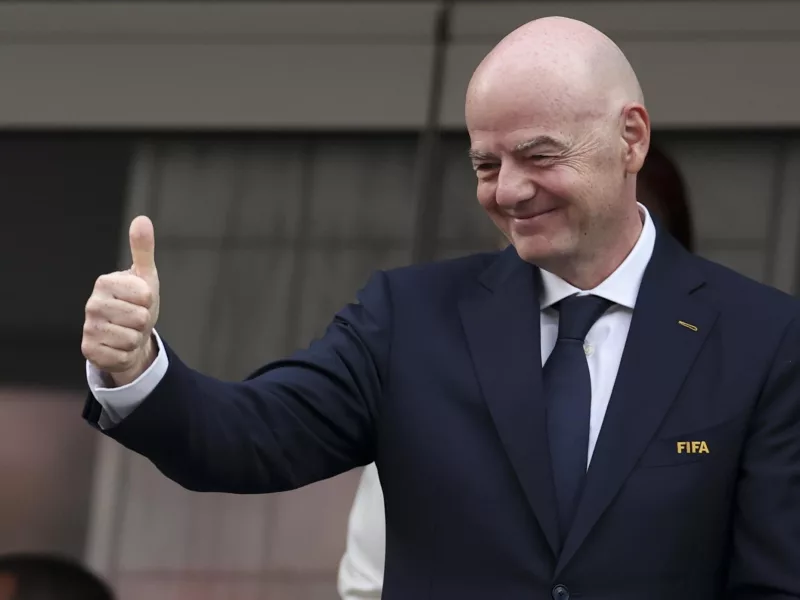
Official tickets for the final at New Jersey’s MetLife Stadium were priced at $32,970, while resale listings climbed beyond $2m. Fifa president Gianni Infantino defended the prices, arguing they were comparable to other major sporting events in the United States.
The financial burden has extended beyond tickets. Fans have also faced higher costs for flights, hotels, food and transport. One of the biggest controversies involved New Jersey Transit, where a 30-minute return train journey to MetLife Stadium rose from the usual $12.90 to $150 during the tournament. Public backlash forced a price reduction, although fares remained well above normal levels.
Broadcasters and sponsors – winners
Broadcasters have invested heavily to secure television rights, but record audiences and strong demand from advertisers mean they are also expected to make substantial returns.
Fifa introduced hydration breaks during the tournament, insisting the decision was made purely for sporting reasons. However, the 90-second stoppages have also created valuable advertising opportunities, particularly in the United States, where sports broadcasts traditionally feature frequent commercial breaks.
Fox Sports, which reportedly paid $485m for US broadcast rights, sold sponsorship around the hydration breaks. Analysts estimate that a standard 30-second World Cup advertisement on Fox costs between $200,000 and $300,000, rising to as much as $750,000 during high-profile US matches in the knockout stages.
Experts estimate hydration-break advertising alone could generate around $250m in the United States, reinforcing expectations that the breaks will become a permanent feature of future tournaments.
Fans watching on the BBC or ITV in the United Kingdom were largely unaffected, as the BBC carries no advertising and ITV is restricted by broadcasting regulations on commercial airtime.
Official sponsors have also benefited from football’s biggest stage. Companies such as Adidas and Coca-Cola have enjoyed extensive global exposure, while Adidas has reportedly spent around £50m on its “Backyard Legends” campaign featuring Lamine Yamal, Jude Bellingham and Lionel Messi.
Ironically, some unofficial brands also gained attention after Fifa attempted to limit their visibility, including Levi’s, whose branding outside Levi’s Stadium in San Francisco was covered during the tournament.
David Beckham – winner
David Beckham remains one of football’s biggest commercial success stories despite retiring more than a decade ago.
The former England captain features prominently in advertising campaigns, including Adidas’ use of an AI-generated version of Beckham, while also promoting brands ranging from Home Depot to Bank of America.
His commercial influence extends beyond endorsements. Inter Miami, the Major League Soccer club he co-owns, is estimated to be worth $1.45bn, making it the league’s most valuable franchise. Beckham may never have won the World Cup as a player, but he continues to thrive commercially through football.
Host cities – losers
Host cities have welcomed large numbers of travelling supporters, boosting hotels, restaurants and local businesses during matchdays. However, economists argue that the longer-term economic gains are often overstated.
Fifa estimates the tournament will contribute $41bn to the global economy, including $17bn for the United States and the creation of 185,000 jobs, mainly in hospitality and accommodation.
Alexander Budzier of Oxford University argues those gains are largely temporary. Many regular tourists avoid host cities during major sporting events, while most of the jobs created are lower-paid hospitality roles.
He says major tournaments create employment but rarely generate lasting wealth. Because much of the infrastructure for the 2026 World Cup already existed, there has been little opportunity for the large-scale regeneration projects that often provide the greatest long-term legacy.
Hotels – losers
Many hotels have also struggled to meet expectations despite pre-tournament optimism.
Industry bodies in Canada reported bookings in June and July were below previous years, despite Vancouver hosting seven matches. They noted that demand was concentrated around individual matchdays rather than throughout the tournament.
In the United States, the American Hotel and Lodging Association accused Fifa of reserving too many hotel rooms for its own use, creating an inflated perception of demand. Fifa rejected the criticism.
According to Deutsche Bank Research, similar trends were seen during France 1998. By April, around 80 per cent of US hotel operators said bookings were below expectations, with many in New York and Seattle describing the World Cup as a “non-event” for their businesses.
Betting companies – winners
Sports betting firms are expected to be among the biggest commercial winners from the tournament.
Financial services company Macquarie estimates around $50bn will be wagered during the World Cup, equivalent to roughly $500m per match and making it the biggest gambling event in history.
The increase has been driven by the expanded format, which increased the number of matches from 64 in 2022 to more than 100 in 2026.
Flutter Entertainment, owner of Paddy Power, Betfair and Sky Bet, expects betting turnover to double compared to the previous World Cup, driven largely by growth in the United States and Brazil.
Analysts say in-play betting has overtaken traditional pre-match wagering, allowing fans to place bets as matches unfold. Meanwhile, prediction markets, which are not classified as gambling in many US states, have become increasingly popular, particularly among younger audiences.