



Kenya Union of Post Primary Education Teachers officials in the South Rift region have raised concerns over delayed and inadequate capitation to schools, saying the funding gaps are affecting learning programmes.
The union said inconsistent funding of education has negatively affected the quality of learning in many schools, with institutions struggling because of inadequate facilities and limited resources.
Bomet Kuppet executive secretary Paul Kimeto, who spoke on behalf of union officials from the region, said delayed and insufficient capitation funds had left many schools unable to operate smoothly because of financial constraints.
He said the funding gaps in learning institutions are becoming increasingly visible as schools continue to operate without adequate support for learners and teachers.
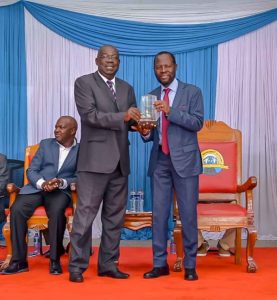
Kimeto spoke during the burial of Chepkitwal Secondary School principal Wilson Chirchir in Kiramwok, Bomet East subcounty, where he said school heads are facing mounting pressure in managing programmes because government funds are either delayed or insufficient.
“Time has come for the government to deal with capitation challenges once and for all because it has become a song every term, yet the problem remains the same,” he said.
Kimeto said schools heavily depend on capitation funds to support daily operations, including payment of suppliers, co-curricular activities and other learning programmes.
“Schools cannot run effectively without the timely release of capitation funds. Principals are being forced into difficult situations as they try to sustain learning programmes without disrupting academic calendars,” he said.
The Kuppet official urged the government to ensure funds are released on time and in full to allow smooth operations in schools.
His remarks come amid growing concern among education stakeholders over delayed disbursement of capitation funds to schools across the country.
On Friday, Julius Ogamba said the government has been releasing school capitation funds on time to support learning activities in public institutions.
Kimeto, however, urged the government to conduct a fresh assessment of the needs of learners and schools and increase capitation to reflect current realities.
“This situation, where very small amounts of money are sent to schools, does not help at all. There is a need for a fresh assessment of needs, which will definitely lead to the need to increase funding,” he said.
Kimeto further appealed to Education CS Julius Ogamba to work with the National Treasury to streamline the disbursement of capitation funds and avoid prolonged delays.
“Education is critical because our children hold the future of the country, and we cannot afford to interfere with the quality of education,” he said.