



The Kisumu National Polytechnic is stepping up efforts to establish itself as a regional powerhouse in blue economy training.
This is being achieved through the implementation of the Blue Skills for Transformation and Employment Project (B-STEP).
The initiative, rolled out under the Skills Initiative for Africa (Sifa), will culminate in the construction of a dedicated Blue Skills Training and Enterprise Centre (B-STEC) targeting learners from Kenya, the Lake Victoria basin and other parts of Africa.
The planned complex will host key facilities including administrative offices, lecture halls, a visitors’ centre, an aquaculture training hub, a restaurant and specialised units for both training and production.
The design is intended to blend practical skills acquisition with enterprise development across the blue economy value chain.
Training programmes will span traditional technical areas such as aquaculture, marine engineering, welding and fabrication, food processing, leather technology and water engineering.
The curriculum will incorporate emerging disciplines like aquaponics, recirculating aquaculture systems, blue entrepreneurship and innovative uses of water hyacinth.
The project also places emphasis on integrating modern technologies in fish production, value addition and post-harvest management, while promoting sustainable exploitation and restoration of aquatic ecosystems.
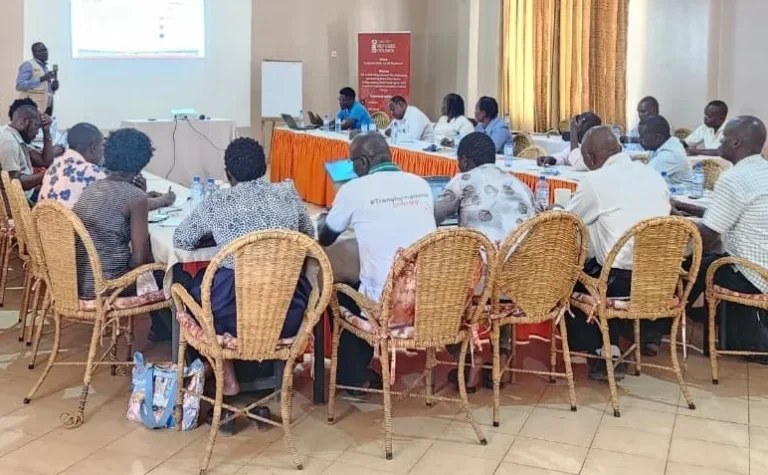
Technical and Vocational Education and Training PS Esther Muoria, who spoke during an evaluation meeting at the institution, said the programme reflects a broader shift towards aligning training with future-facing sectors.
She said the blue and green economies are increasingly shaping skills development priorities, underscoring the need for institutions to adapt.
Muoria said Kisumu’s proximity to Lake Victoria positions it strategically to drive blue economy training, adding the government is keen on ensuring learners are equipped with relevant, market-driven skills.
She said the centre is envisioned not only as a local training facility but as a regional hub capable of serving Africa with modern, industry-aligned programmes.
The PS further said the initiative will empower trainees to tackle environmental challenges, including the management of water hyacinth, by turning the invasive weed into commercially viable products.
Beyond classroom learning, the project adopts a “learning factory” model that integrates training with production and entrepreneurship, enabling institutions to generate revenue while offering learners real-world experience.
Valued at €3.36 million (about Sh560 million), the project is largely funded through a €3 million (about Sh457 million) grant from the European Union and the German Federal Ministry for Economic Cooperation and Development, with Kisumu National Polytechnic contributing €362,500 (about Sh55 million) in counterpart funding.
Although initially scheduled for completion in December 2025, the project has been extended to May 2028 following approval delays, with an implementation period of 30 months.
So far, more than 60 curricula have been developed and validated, while more than 600 trainees have been enrolled across six cohorts since 2024.
The polytechnic has also entered into partnerships with industry stakeholders, research institutions and fisheries agencies to ensure its training remains responsive to labour market needs.
Once completed, the facility is expected to create upwards of 2,000 jobs in areas such as eco-aquaculture, environmental restoration and blue enterprise, positioning Kisumu as a leading centre for blue economy skills development on the continent.