


A shortage of blood supplies in Bungoma county has raised concern over the safety of mothers and newborns, as health facilities struggle to meet rising demand for transfusions.
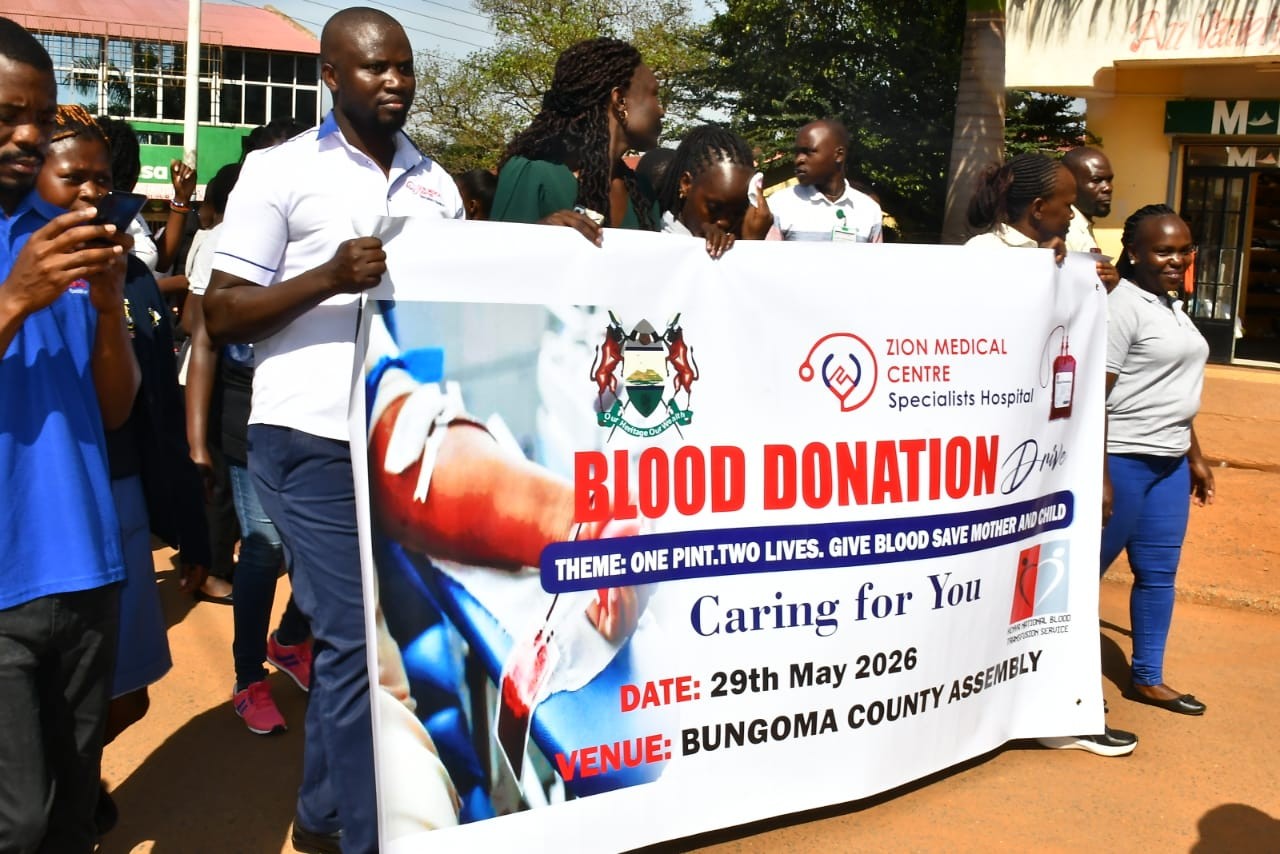
To address the deficit, the County Assembly of Bungoma has partnered with local health facilities in a blood donation drive to boost reserves and strengthen maternal and newborn healthcare services, the highest consumers of blood in hospitals across the county.
The assembly held a donation exercise on Saturday, collecting 100 pints of blood.
Assembly Clerk Charles Wafula, said the demand for blood remains high due to road accident victims along the Northern Corridor, expectant mothers experiencing complications, children suffering from anaemia and cancer patients requiring transfusions.
“Blood cannot be manufactured in a laboratory; it can only move from one human being to another. That is why the donation you are making today carries more weight than a resolution we pass in this House,” Wafula said.
Thomas Wekesa, in charge of blood services at Bungoma County Referral Hospital, said the county collects about 1,000 pints of blood against a monthly requirement of 1,400 pints, leaving a deficit of 400 pints.
He noted that most of the available blood is used in maternity wards, for accident victims and for patients with sickle cell disease.
“This is a good gesture by the assembly. The blood collected will go a long way in saving lives in the maternity ward and among those battling sickle cell disease, who require frequent transfusions,” Wekesa said.
Ministry of Health data shows that Western Kenya has a maternal mortality ratio of 319 deaths per 100,000 live births, with Kakamega and Siaya among the worst-affected counties.
Nationally, Kenya’s maternal mortality rate stands at 594 deaths per 100,000 live births, far above the Sustainable Development Goal target of 70 per 100,000 by 2030, according to a 2024 USAID report on preventing maternal and child deaths.
Wekesa called on residents, institutions and stakeholders to embrace voluntary blood donation to bridge the gap and ensure a steady supply of blood for patients in need of life-saving care.
“Our hospitals are always open to potential donors who come forward to donate blood,” he said.
He warned the ongoing shortage continues to put patients at risk, particularly expectant mothers facing childbirth complications, accident victims, children with severe anaemia and patients undergoing major surgery.
Medical Services Principal Secretary Dr Ouma Oluga also called for stronger, sustainable partnerships and collaboration to improve maternal and neonatal health services across the country, stressing the need to reduce preventable deaths.