


Cage fish farming is increasingly being viewed as the future of both Kenya’s fisheries industry and the global aquaculture sector, offering a sustainable solution to declining fish stocks while reducing the country’s dependence on imported fish.
Unlike traditional fishing methods, where fishermen cast nets into water bodies and rely on unpredictable factors such as weather conditions, fish availability and chance, cage aquaculture provides a controlled system for raising fish in large quantities. The method involves rearing fish inside enclosed net structures placed in natural water bodies such as lakes, rivers and oceans, allowing farmers to monitor growth and maintain optimal production conditions.
Experts say the technology is revolutionizing fish production by shifting the industry from the uncertainty of wild fish harvesting to a modern, regulated aquaculture model capable of producing high yields consistently. When properly managed and regulated, cage farming enables fish to grow to maturity in a controlled environment, resulting in increased productivity and a reliable fish supply.
Lake Victoria has become a major hub for cage aquaculture, hosting leading fish farming companies such as Rio Fish, Global Tilapia and Victory Farms. Among them, Victory Farms has emerged as a key player in East Africa’s aquaculture industry, accounting for approximately 40 percent of the sector’s growth since 2017 through the adoption of innovative technologies and efficient farming practices.
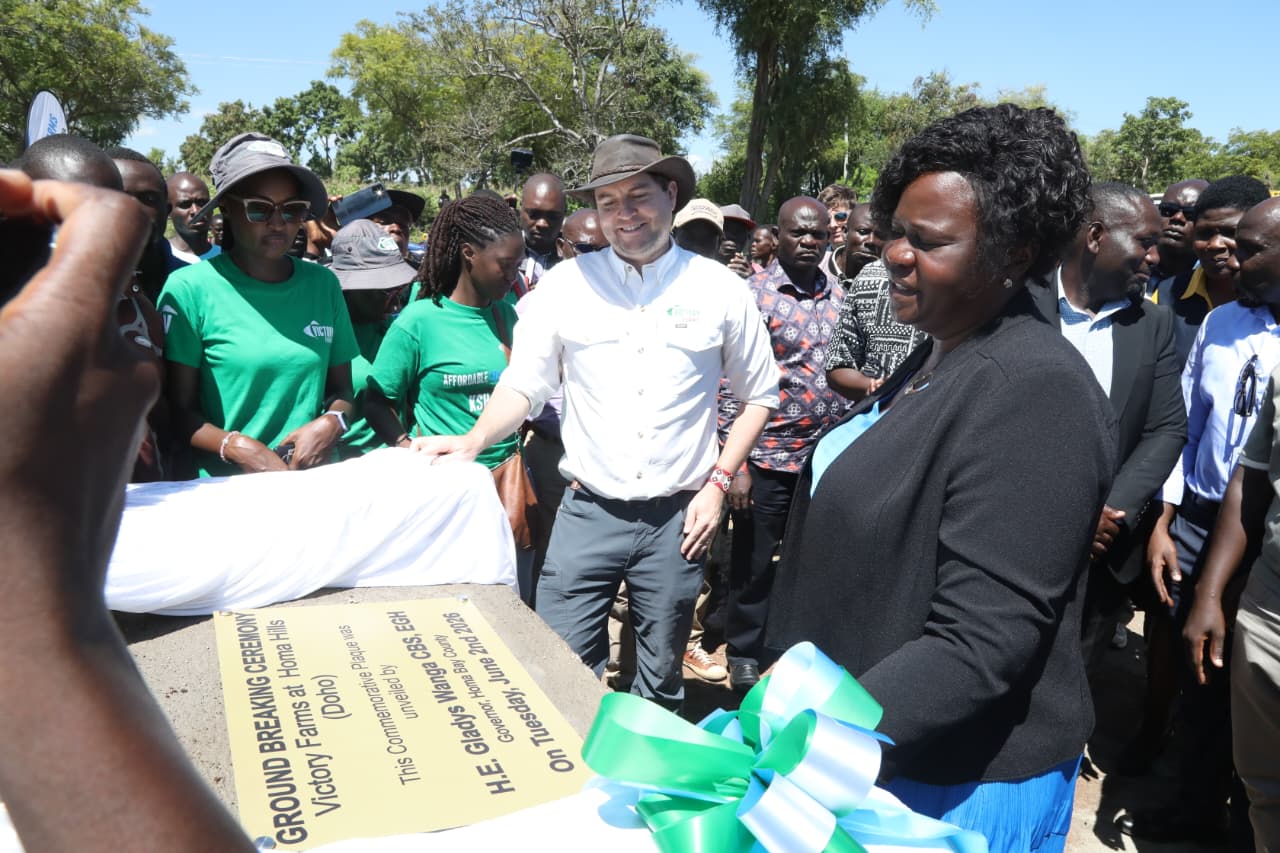
The company, whose operations are based in Rowo, Suba South, is now expanding its footprint within Homa Bay County. On Tuesday, Victory Farms officials joined community leaders in Homa Hills, Rachuonyo West, for a groundbreaking ceremony marking the start of construction of the company’s new global headquarters at Doho Beach.
The project follows the signing of a memorandum of understanding between the company and local residents, paving the way for a major aquaculture investment in the area.
The proposed facility will include a fish feed manufacturing plant, a modern hatchery and a fish research centre aimed at improving fish production through innovation and scientific research.
Victory Farms Founder and Chief Executive Officer Joseph Rehmann said Kenya has the potential to become self-sufficient in fish production and eventually eliminate the need for imports.
He noted that the company plans to establish a second fish feed mill at Doho Beach as part of a broader expansion programme expected to cost approximately 10 million US dollars.
According to Rehmann, increasing local fish production will help bridge the supply gap in the domestic market while creating opportunities for economic growth. He emphasized that Kenya can become a regional leader in tilapia production by embracing modern technologies and investing in research-driven aquaculture.
”The facility will create an environment where research and innovation can thrive, enabling the industry to adopt best practices and improve productivity,” he said.
Victory Farms Chief Development Officer Caesar Asiyo called on residents to embrace the project, saying it has the potential to transform livelihoods and stimulate economic growth in the region.
He assured community members that the company would maintain a strong partnership with local stakeholders to ensure the project’s success and sustainability.
Homa Bay Governor Gladys Wanga welcomed the investment, describing it as a major boost to the county’s economic development agenda.
The governor said the project is expected to generate more than 3,000 direct and indirect employment opportunities for local residents once fully operational.
Wanga further highlighted the importance of collaboration between investors, communities and government institutions, noting that such partnerships are critical in driving development and unlocking the county’s economic potential.
She reaffirmed her administration’s commitment to supporting investors and creating an enabling environment for business growth.
With investments in fish feed production, research, hatchery services and large-scale fish farming, stakeholders believe the Doho Beach project could position Homa Bay as a leading aquaculture hub while strengthening Kenya’s ability to meet its fish demand through local production.