


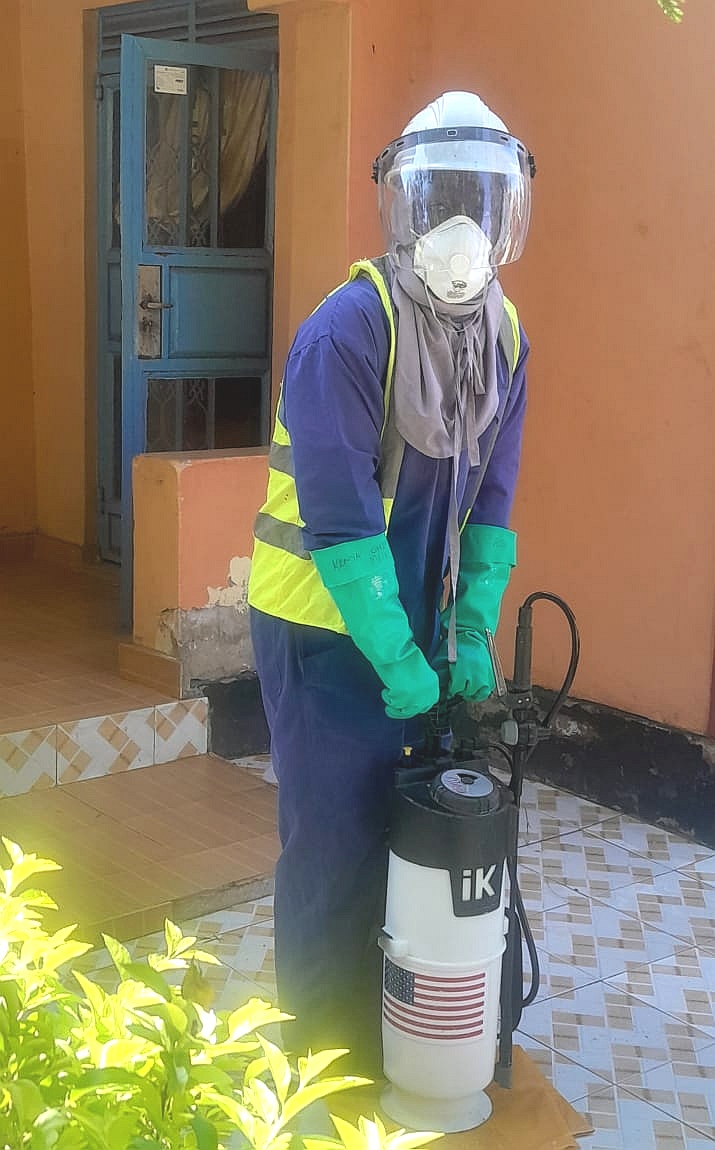
The Busia government has started spraying homes in a bid to combat malaria.
Indoor Residual Spraying (IRS) of mosquitoes, being conducted in collaboration with the Ministry of Health, began on March 9 and is expected to run for 18 days across the county.
Speaking in Amagoro, IRS officer Emmanuel Ojune said the initiative targets at least 10 households per day, with a mop-up planned in the final week to ensure no home is left behind.
“This programme is aimed at reducing malaria prevalence in our communities. Not every household can access mosquito nets or afford hospital treatment, so prevention remains our strongest weapon,” Ojune said.
Each sprayed household is marked with a special IRS sticker. Those who may be missed during the initial phase will be covered during the final week before the exercise concludes on March 27, Ojune said.
Despite the ongoing efforts, the exercise has faced notable challenges, including limited public awareness and mixed reactions from residents.
“We have realised that some people were not adequately informed about the rollout. However, the community must embrace this programme for their own benefit. Prevention is better than cure,” Ojune said.
In Aleless village, resident David Ariku expressed reservations about the effectiveness of the spraying despite allowing the exercise in part of his home.
“They sprayed my house last Thursday, but I declined my bedroom because of the strong smell. Even after spraying, mosquitoes are still many. I don’t understand what exactly the chemical eliminates,” he said.
Ariku also raised concerns over what he termed as inadequate public sensitisation, noting that conflicting information about the chemicals used has created confusion among residents.
“We were previously told the chemical could even kill snakes. The government needs to clearly explain what this spraying targets,” he added.
Even as concerns persist, health officials maintain that IRS remains a critical intervention in reducing malaria transmission, particularly in high-burden areas like Busia, where the disease continues to pose a serious threat to lives and livelihoods.
Health experts warn that malaria remains one of Kenya’s leading public health concerns, with millions of cases reported annually.
However, the burden is significantly higher in lake-endemic regions such as Busia where prevalence is estimated at nearly 40 per cent—almost six times the national average.
The county’s proximity to Lake Victoria, coupled with favourable weather conditions for mosquito breeding and high cross-border movement, has made it a malaria hotspot, necessitating aggressive interventions such as IRS.