



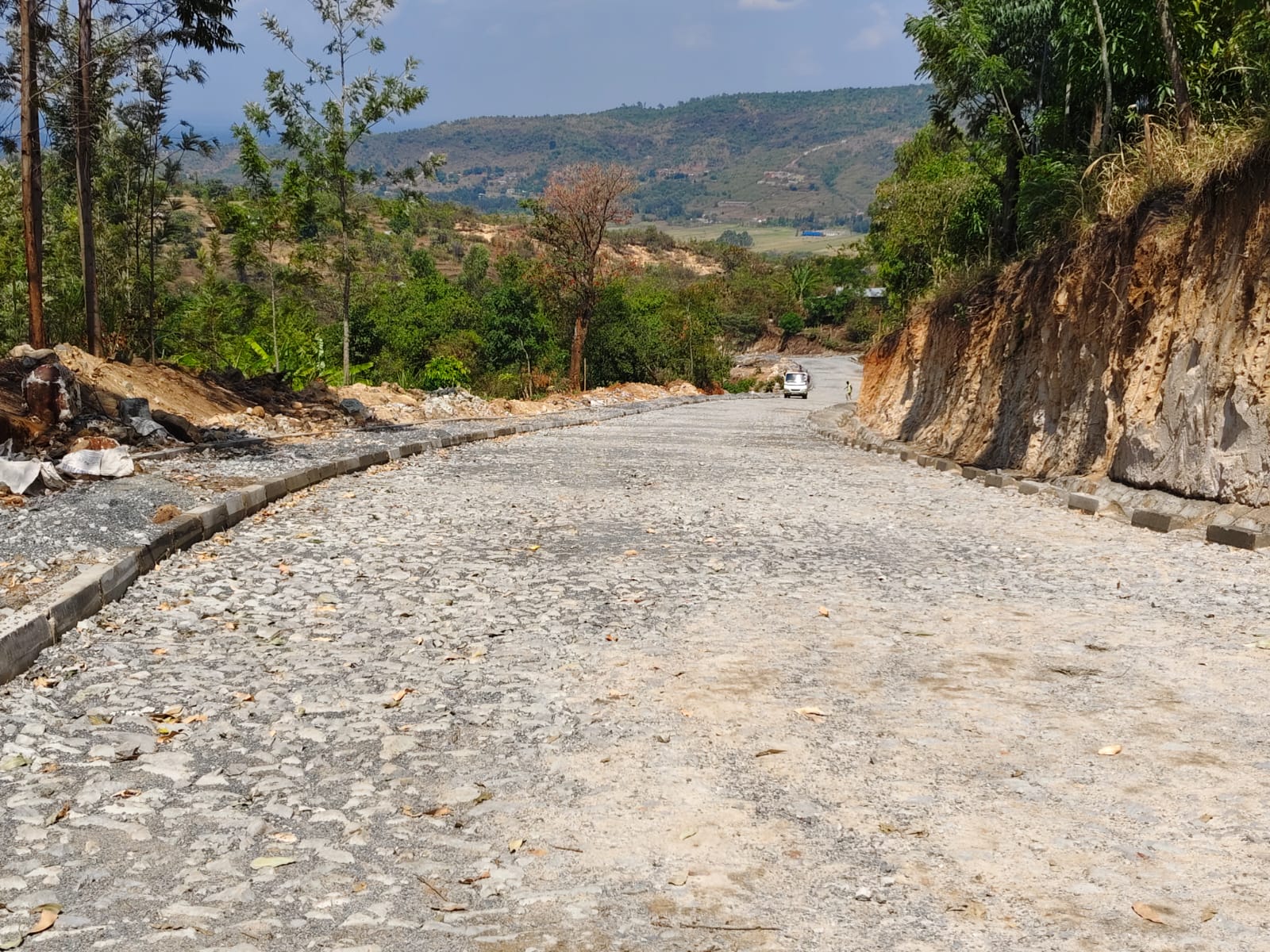
Residents of Kamwaha village in Kiharu constituency have welcomed the upgrade of a key road that cuts across the area.
They say it will unlock economic opportunities and ease years of suffering.
The 11.56-kilometre Kabuta–Mahua-ini road, currently under construction, connects farming zones to major transport corridors and trading centres. For years, the stretch was nearly impassable during the rainy season.
Deep potholes and slippery sections were blamed for frequent boda boda accidents and injuries. Jane Wambui says travelling to Kabuta shopping centre, about four kilometres from her home, used to be exhausting.
“I have a problem with my leg and walk slowly. It would take me many hours to get to Kabuta. I would fall and get injured,” she says.
She describes the transformation as life-changing, noting that the road passes near her farm and has opened up the once-isolated village.
“This road has changed our area from a poor rural village into something much better,” she said.
Wambui also recounts the difficulties expectant mothers faced when travelling to Murang’a town, about six kilometres away, for medical services.
During heavy rains, some women relocate closer to town weeks before their due dates for fear of going into labour while the road is impassable.
Joseph Mwangi says the road is vital because it links residents to Murang’a town, where they sell farm produce and access government services.
“The road was full of potholes and too rough for most vehicles. Transport was a nightmare,” he says.
In emergencies, villagers sometimes improvised stretchers to carry the sick to hospital.
The upgraded road links the Murang’a–Sagana road to the Murang’a–Kiria-ini road, improving connectivity across agricultural zones and easing movement between markets and service centres.
It has also been fitted with a footpath to allow pedestrians to walk safely.
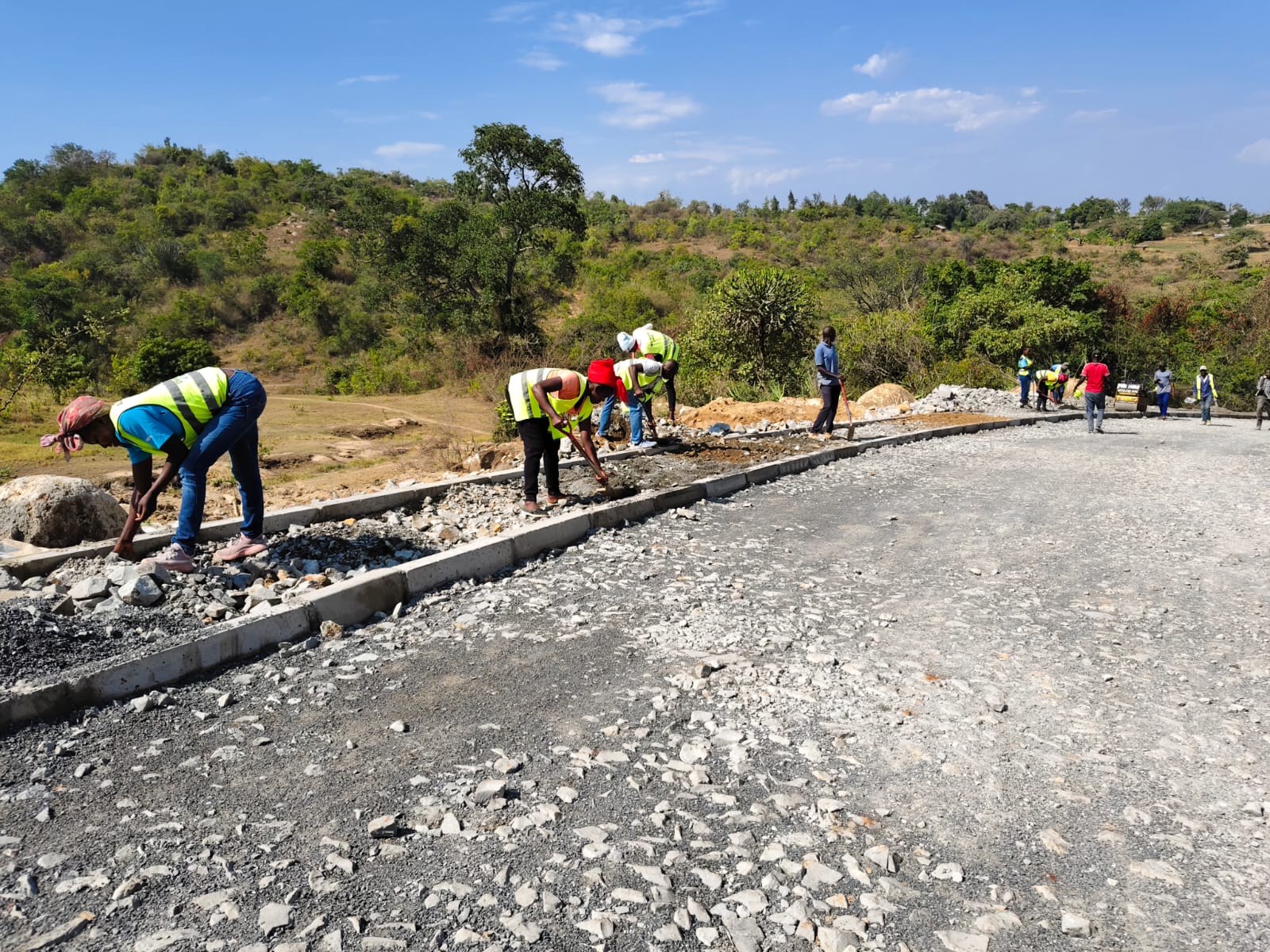 Workers working on the 11-km long Kabuta-Mahua-ini road in Kiharu constituency./ ALICE WAITHERA
Millicent Wanjiru, a trader, says travelling to Kagio market in Kirinyaga county to restock her business was previously risky and expensive. Boda boda riders often refused to take her home because of the poor road conditions, forcing her to carry crates of goods on her back.
“Now I can take a boda boda from Kabuta shopping centre to my home without any trouble. Business has become much easier,” she says.
Farmers in the area grow beans, French beans, maize, fruits and other horticultural crops.
John Kamau believes the improved road will reduce post-harvest losses and make it easier to transport both farm inputs and produce.
“With better access, we can move our harvests quickly to market and avoid losses,” he says.
Construction of the road began in 2024 and is being implemented in phases, with contractors working from Kabuta shopping centre and Kigetu-ini. The project is being undertaken by the Kenya Urban Roads Authority.
Murang’a county has an extensive road network that supports agriculture, trade and access to social services.
The county hosts a mix of national highways, county roads and rural access roads linking it to neighbouring counties such as Kirinyaga, Nyandarua and Nyeri counties.
Key national corridors such as the Murang’a–Sagana route enhance connectivity to the Nairobi–Nyeri highway and boost trade in coffee, tea, dairy and horticultural produce.
The county has benefited from 154 kilometres of the Sh30 billion, 540-kilometre Mau Mau roads project, which is ongoing and connects Kiambu, Murang’a, Nyandarua and Nyeri counties.
The government is also constructing the 68-kilometre Gataka-ini–Njabi-ini road at a cost of Sh3 billion.
The road is expected to facilitate inter-county trade between Murang’a and Nyandarua and act as a bypass to the Nakuru–Nairobi highway.