


Car importers are strongly opposed to the government’s plan to privatise key facilities at the Mombasa and Lamu ports
They have warned that the move threatens national security, creates monopolies and raises the cost of doing business.
Through the Car Importers Association of Kenya (CIAK), the importers and dealers, who are among the biggest users of the Mombasa port, have objected to the proposed Public-Private Partnership (PPP) arrangement covering several strategic sections of the port.
These include berths 11–14, container terminal 1 (berths 16–19) and parts of Lamu Port.
Kenya Ports Authority in its PPP plan says the government is seeking to strengthen port performance while ensuring long-term public value, noting capacity constraints and need for expansion which is costly.
In line with the 2021 PPP Act and supported by the National Treasury, KPA has commissioned a feasibility study for prospective partnerships.
It is seeking private parties for investment and management of the three berths at Lamu Port and the Lamu Special Economic Zone.
Further, it plans to lease Mombasa berths 11-14, and the Mombasa Container Terminal 1.
These investments are required to accommodate the increasing vessel sizes and ensure Mombasa remains competitive, with container handling projected to quadruple in the next 25 years, driven by strong economic growth in Kenya and transit economies.
In total, the planned expansions require over $440 million (Sh45.9 billion) according to KPA.
“Cooperating with the private sector can spur growth and reduce the financial burden for the government,” KPA says.
The PPP is expected to increase value of KPA cash flow by at least Sh44 billion from Sh335 billion to Sh379 billion.
CIAK however says privatisation would hand control of critical national infrastructure to private operators despite the port “already being run by competent public sector professionals.”
Chairman Peter Otieno said the problems currently affecting the port are largely due to infrastructure bottlenecks outside the facility rather than poor management.
“It is a misconception that KPA lacks the expertise to run the port. The congestion often cited as justification for privatisation arises from external challenges such as road congestion and clearing delays, not internal management failure,” he said.
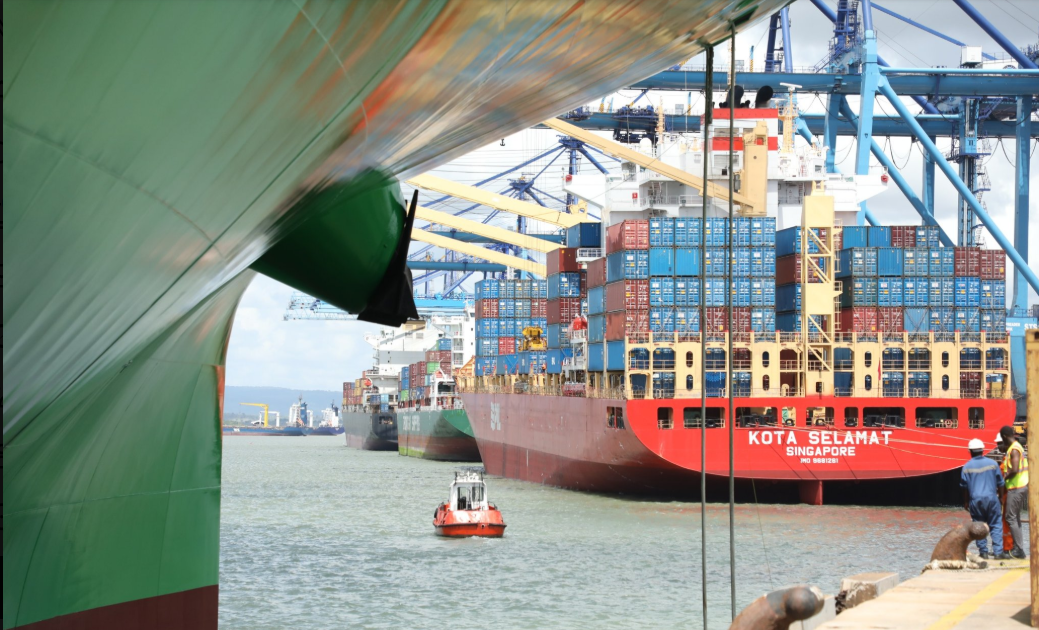
The port of Mombasa is East Africa’s largest maritime gateway and serves neighbouring land-locked countries in the region including Uganda, Rwanda, South Sudan and parts of the DRC.
According to CIAK, transferring operational control of key berths to private entities, especially international operators, could compromise the country’s economic sovereignty and national security.
Importers further argue that private operators are primarily driven by profit and may prioritise commercial interests over national priorities, such as security protocols and fair access for local traders.
The association also warned that port privatisation could lead to the emergence of private monopolies in the maritime logistics sector.
They note that in some countries where shipping lines operate port terminals, operators tend to prioritise vessels affiliated with their companies while sidelining competitors.
Such an arrangement, CIAK argues, could disadvantage smaller shipping agents, car importers and local logistics firms that depend on fair and transparent access to port facilities.
“This creates unfair competition where shipping lines that own berths prioritise their own vessels, squeezing out smaller players,” Otieno said.
Instead of transferring control of the berths to private investors, the association is urging the government to address “structural bottlenecks” in Kenya’s logistics chain.
This includes the limited road capacity linking the coast to the hinterland.
The Northern Corridor connecting Mombasa to the western border points of Busia and Malaba into Uganda and beyond remains heavily congested, despite the rapid expansion of the port over the past decade.
“The port has expanded from seven berths to more than twenty, but the road infrastructure serving it has remained largely the same for decades,” the association said.
CIAK is calling for the construction of a four-lane dual carriageway along the Northern Corridor to match the port’s growing capacity and improve cargo movement across the region.
The association has proposed a seven-point recovery strategy aimed at improving efficiency at the port without privatisation.
Key among the proposals is the adoption of “smart shore infrastructure” jointly by KPA and the Kenya Revenue Authority (KRA) to enable automated weighing, scanning and real-time transmission of cargo data to relevant agencies.
They also want cargo clearance operations fully transferred to container freight stations located outside the port.
CIAK has also proposed the creation of dedicated empty container yards by Kenya Railways and KPA to handle the storage and movement of empty units.
Shipping lines should also be compelled to deploy specialized vessels, commonly known as “sweepers” to regularly repatriate empty containers instead of leaving them in local depots for extended periods.