



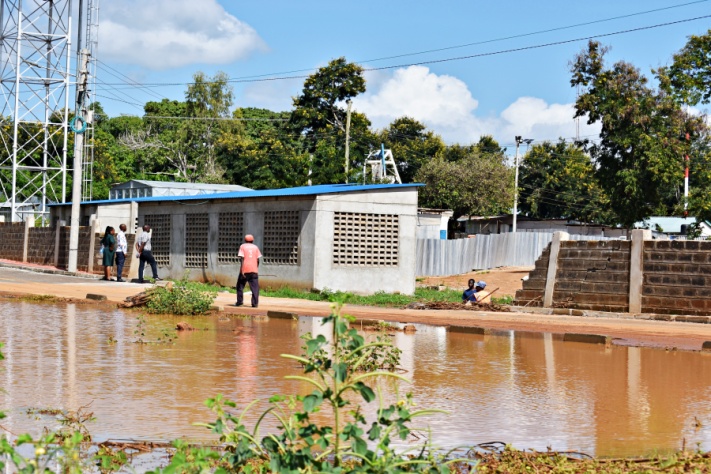
Floodwaters have breached a section of the perimeter wall of the Sh800 million Ithookwe Stadium on the outskirts of Kitui town.
The collapse occurred near Gate 6 following torrential rains on Monday night, leaving bricks and mortar debris scattered around the stadium grounds.
Workmen were seen collecting the rubble during a site visit on Wednesday, while security guards barred journalists from accessing the interior to assess the extent of the damage.
The stadium, which hosted last year’s Mashujaa Day national celebration led by President William Ruto, is yet to be officially opened. The President had pledged to reopen the facility once it was fully completed.
Former Kitui Governor Charity Ngilu, whose rural home neighbours the stadium, blamed the damage on poor design and workmanship.
She said the destruction could have been avoided had proper stormwater drainage channels been installed.
Tungutu chief in Kitui Central subcounty, Augustus Kasilia, also faulted the designers for failing to incorporate adequate drainage systems.
 Former Kitui Governor Charity Ngilu speaking to journalists when she stopped at the damaged section of the Ithookwe Stadium perimeter wall on Wednesday /Musembi Nzengu
 Tungutu chief Augustus Kasilia in his office on Wednesday /Musembi Nzengu
“They should have installed a sizeable drainage facility to channel the large volumes of stormwater. Otherwise, we risk seeing this multimillion-shilling facility go to waste only months after construction,” he said.
Chief Kasilia said the rains have not only damaged the stadium but also affected residents, washing away crops, damaging homes and rendering shops inaccessible.
“This stadium was constructed only recently, yet its wall has already been breached, and water has poured onto the playing pitch, causing significant damage inside and outside the facility,” he said.
With the rainy season expected to continue through May, the chief advised residents in flood-prone areas to relocate to safer ground to avoid possible fatalities.
He also highlighted losses in the surrounding farmlands, including washed-away crops and damaged farm infrastructure such as terraces.