
Kenya Reinsurance Corporation is turning to artificial intelligence to improve flood risk assessment as insurers face potentially heavy losses from climate-related disasters.
It has brought together 90 university students to develop an artificial intelligence-powered catastrophe modelling solution, aimed at strengthening flood risk assessment and improving decision-making in the reinsurance business.
The students, drawn from 30 universities across Kenya, are participating in the third Kenya Re AI4I Hackathon, which runs from October 7 to 9, 2026, under the theme “Redefining Reinsurance Business Processing with Agentic AI and Machine Learning.”
The initiative seeks to harness emerging technologies to improve how the state-owned reinsurer assesses risks, processes business and makes underwriting decisions, while building a pipeline of technology talent for the insurance industry.
Kenya Re Group managing director, Hillary Wachinga, said the programme was established to strengthen collaboration between universities and industry, nurture emerging talent and develop technological solutions to business challenges.
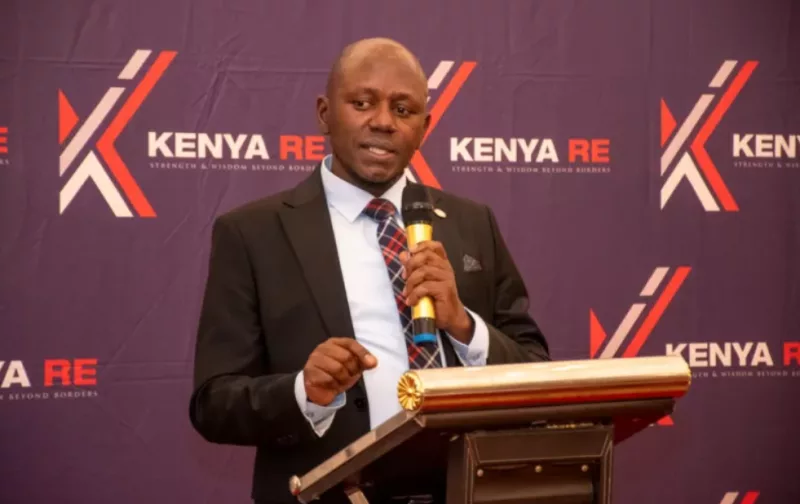
“The programme was established with a clear purpose to strengthen the connection between academia and industry, identify and nurture emerging talent, and harness new technologies to improve the way we do business,” Wachinga said in a speech delivered on his behalf by acting general manager for reinsurance operations, Paul Ahomo.
The students will apply artificial intelligence (AI) and machine learning to develop a flood catastrophe model for some of Kenya Re’s key markets.
The solution is expected to combine catastrophe data and analytical tools to help the corporation better understand flood exposure and potential financial losses.
Catastrophe modelling is particularly important in reinsurance because a single flood can affect multiple properties and businesses in the same geographical area, exposing insurers and reinsurers to substantial claims.
The models combine information on hazards, the vulnerability of affected assets, insured exposure and potential financial losses to support risk assessment, underwriting and risk management.
For reinsurers, improved modelling can help inform decisions on the risks they accept, the premiums they charge and the capital they need to cover potential claims.
However, the usefulness of such models depends on the quality of the underlying data and their ability to reflect actual risk conditions.
Kenya Re expects the hackathon teams to develop solutions that combine technical accuracy with practical business applications, usability and clear presentation of findings.
The corporation said technology was already delivering operational benefits, with elements of its underwriting process automated. Work is also underway to automate claims settlement and bank reconciliations.
The latest hackathon builds on two previous editions that Kenya Re says have helped it identify young technology talent.
Some participants from earlier competitions were offered internships to develop their projects within the corporation, with two subsequently absorbed into its workforce.
The programme also seeks to strengthen links between the insurance industry and technology developers, potentially creating opportunities for Insurtech partnerships.
The focus on flood risk comes as insurers and reinsurers need to assess how natural hazards can translate into concentrated losses across multiple policyholders. A more detailed understanding of the location and vulnerability of insured assets can help companies evaluate their exposure before disasters occur.
For Kenya Re, the challenge is to turn emerging technologies into tools that can be integrated into its daily operations and deliver actionable information for business decisions.
The three-day competition is expected to demonstrate how artificial intelligence and machine learning can transform complex catastrophe data into business intelligence for underwriting and risk management.
The corporation has not disclosed the expected cost of developing or deploying the flood modelling solution, the specific markets to be covered or the timeline for integrating the winning solutions into its operations.