


The government plans to rehabilitate the Turkwel Dam in Turkana county at a cost exceeding Sh500 million, a project expected to revive irrigation agriculture for about 1,600 local farmers.
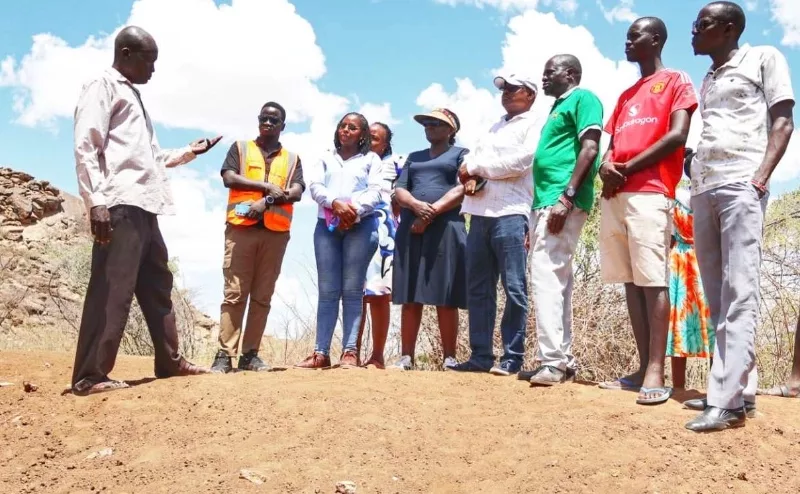
The county government, in collaboration with the National Programme Coordinating Unit (NPCU), is undertaking a baseline assessment of the facility to establish its current condition ahead of the proposed rehabilitation.
The initiative forms part of Phase II of the Turkwel Dam electricity project, which feeds power into the national grid, and will be executed under the Kenya Devolution Support Programme II (KDSP II).
The assessment in Turkwel ward is part of an ongoing review of County Investment Plans under KDSP II and seeks to determine the readiness of the proposed Level 2 project for implementation.
It will also evaluate prevailing environmental, social and infrastructural conditions at the site and identify safeguard measures required prior to the commencement of works.
Administration and disaster management chief officer Marian Lotieng said the exercise would establish the dam’s present state, identify operational bottlenecks and outline necessary technical interventions.
“We are proceeding with the assessment, which provides an opportunity to evaluate the current status of Turkwel Dam, identify challenges affecting its functionality, and establish measures to ensure the proposed rehabilitation is properly planned and executed,” she said.
Lotieng said the exercise would pinpoint outstanding environmental and social safeguards to be addressed as the project progresses.
County KDSP II Programme coordinator Gabriel Lodoso said the survey would establish a baseline to guide subsequent planning stages.
“The assessment provides essential field data and helps establish a clear baseline. This will guide key technical considerations as we move towards full rehabilitation,” he said.
The NPCU team, comprising Muthoni Kang’ara and Peris Nyawira, said the assessment would verify details in the county’s investment plans and confirm project readiness.
“The objective is to evaluate ground conditions and determine requirements for the proposed intervention. Findings will inform next steps, including technical and safeguard parameters,” Kang’ara said.
Turkwel village unit administrator Eleman David said the dam historically supplied water to three major irrigation schemes—Tisa, Napool, and Nanye—enabling community agriculture.
He explained the dam’s deterioration had severely disrupted farming due to inadequate water supply.
Once restored to full operational capacity, the facility is projected to benefit 450 farmers in Tisa, 350 in Napool, and 800 in Nanye.
The planned works coincide with preparations by Turkana farming communities for anticipated heavy rainfall, amid concerns over vulnerable irrigation infrastructure.
Francis Esibitar, chairman of the Tisa Irrigation Scheme, expressed concern over the dam’s vulnerability ahead of anticipated El Niño rains.
When complete, the rehabilitation is expected to restore the dam’s irrigation capacity and provide local farmers with a reliable water supply for agricultural production.