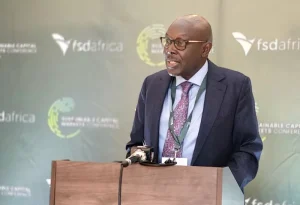




Kenya’s Sacco sector needs stronger governance, prudent investment decisions and better management of technology and cybersecurity risks, the Cooperative Alliance of Kenya (CAK) has said.
The warning comes amid concerns over investments promising unusually high returns, with CAK urging Sacco leaders to scrutinise such opportunities before committing members’ funds.
According to CAK, the national apex body for Kenya’s co-operative movement, Sacco leaders should exercise greater caution when deciding where to invest members’ money, particularly in schemes whose business models are difficult to establish.
CAK chief executive Daniel Marube said Saccos have evolved into major financial service providers and can no longer rely solely on traditional management practices.
“We are the aggregators of the financial savings of our people,” Marube said, stressing the responsibility of boards and managers to ensure members’ funds are invested prudently.
He cautioned Sacco leaders against investments promising unusually high returns, saying such offers should prompt further scrutiny.
“When our cooperatives are being enticed to investments which are giving very high interest rates, we need to dig further to find out where this interest is going to come from,” he said.
Marube said Saccos should avoid speculative ventures and schemes that could expose members to losses, noting that cooperatives are not pyramid schemes.
Kenya’s regulated Saccos had surpassed Sh1.25 trillion in total assets by mid-2026, according to data from the Sacco Societies Regulatory Authority.
Member savings and deposits stood at more than Sh884 billion, while gross loans had surpassed Sh971 billion, with a major focus on land, housing and development.
Saccos are also facing technology and cybersecurity challenges as members increasingly demand mobile and digital financial services.
Marube said Saccos needed to embrace technology governance rather than simply acquire software, with boards expected to understand the risks, regulations and controls associated with digital systems.
Some Saccos are struggling to keep pace with technological changes because of the cost of investing in systems, cybersecurity personnel and product development.
One approach being considered is shared technology infrastructure, where Saccos jointly invest in platforms, cybersecurity expertise and software development.
CAK said this could help reduce costs while enabling smaller societies to access technology that may be beyond their individual budgets.
The sector is also addressing leadership and human-resource capacity, with CAK national vice-chairman Silas Magut calling for continuous training of boards, chief executives and senior managers.
He said CAK was bringing together Sacco leaders and experts to strengthen skills and improve the sector’s response to emerging risks.
The need for stronger governance has also been highlighted by the financial difficulties at the Kenya Union of Savings and Credit Co-operatives (KUSCCO).
Shareholders voted to wind up the umbrella body on August 28, 2026, after it was declared insolvent, with member Saccos facing at least Sh11.6 billion in unrecoverable losses.
Ann Ngunjiri, a board member of Nyeri-based New Forties Sacco, formerly Nyeri Teachers Sacco, said training had highlighted the importance of protecting members’ data and strengthening internal systems.
She encouraged more Kenyans to join Saccos while urging societies to modernise their operations.
As Saccos continue to manage growing amounts of members’ savings, CAK said boards and managers needed to ensure funds were protected through prudent investments, strong internal controls and effective technology management.