
The National Treasury has will accelerate the formulating and tabling of the 2027/28 budget in Parliament in order to accommodate next year’s elections.
It has brought forward key fiscal milestones by nearly three months to accommodate the General Election set for August 10, 2027.
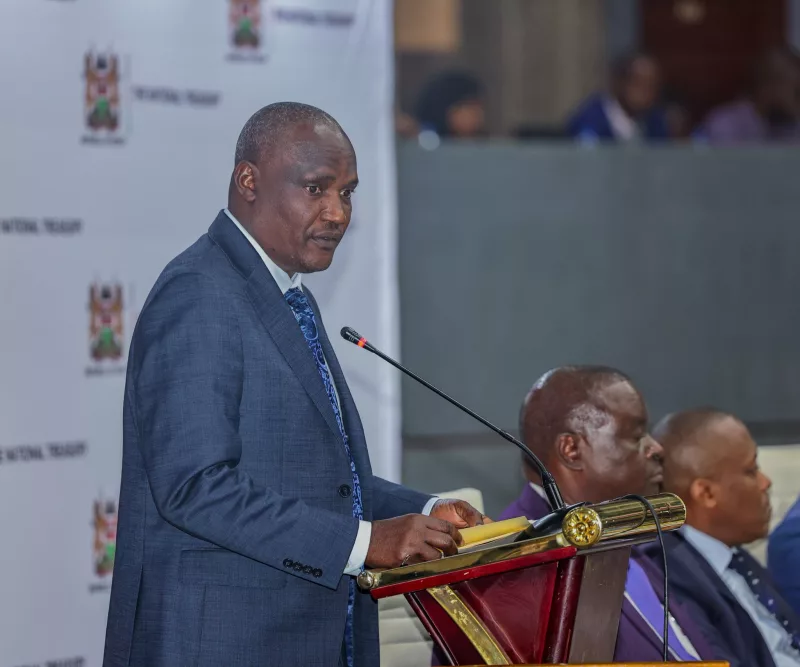
Under the revised timetable unveiled on Wednesday by Treasury Cabinet Secretary John Mbadi, Parliament will be required to conclude debate and approval of the Finance Bill, 2027 and the Appropriation Bill by the end of March.
This is expected to allow the government to complete the budget process months before Kenyans head to the polls.
The accelerated calendar marks a sharp departure from the conventional budget cycle used in non-election years, including the current 2026/27 financial year, when Mbadi presented the Sh4.82 trillion budget highlights in Parliament on June 11.
Lawmakers considered the Finance Bill and Appropriation Bill ahead of the start of the fiscal year on July 1.
The move follows long-standing practice under Kenya’s Public Finance Management framework, where election years require the national budget to be finalised well before the dissolution of Parliament to avoid legislative disruptions during the campaign period.
According to the revised schedule, the Draft Budget Review and Outlook Paper will be published by August 15.
It is expected to receive Cabinet approval by August 30. Sector Working Groups will then prepare spending proposals between September 7 and October 2.
The Draft Budget Policy Statement, alongside the Division of Revenue Bill and the County Allocation of Revenue Bill, will be submitted to Parliament by November 30 after Cabinet approval.
Treasury will table the Medium-Term Expenditure Framework and transmit the Finance Bill, 2027 to Parliament by January 29, while the Appropriation Bill is expected in the House by March 8.
Mbadi will then deliver the 2027/28 Budget Highlights in the National Assembly on March 18, nearly three months earlier than the traditional second Thursday of June budget reading.
Both the Finance Bill and the Appropriation Bill must be enacted by March
Ordinarily, Kenya’s budget preparation follows a year-long cycle beginning with the Budget Review and Outlook Paper, followed by the Budget Policy Statement, sector hearings, public participation and submission of spending estimates.
The Cabinet Secretary traditionally presents the Budget Statement to Parliament in the second week of June, after which the Finance Bill is debated and enacted before the beginning of the new financial year on July 1.
A top Treasury official told the Star that the compressed timetable is necessary to ensure there is a fully approved budget before Parliament winds down for the election period, eliminating uncertainty over government financing and county allocations.
Launching the 2027/28 Medium-Term Budget preparation process, Mbadi urged ministries, departments and agencies to adhere strictly to the revised deadlines to ensure timely preparation of expenditure proposals and revenue measures.
The Treasury has also called for continued public participation throughout the shortened budget cycle to maintain transparency in fiscal planning.
The accelerated budget process comes as the Treasury projects a narrower fiscal deficit of 3.6 per cent of Gross Domestic Product in the 2027/28 financial year, down from the projected 5.5 per cent in the current fiscal year, reflecting the government’s continued push for fiscal consolidation and lower borrowing.
Treasury Principal Secretary Chris Kiptoo said the tighter deficit target underscores the government’s commitment to restoring fiscal sustainability despite the political transition associated with the General Election.
The revised calendar will now require lawmakers, county governments and spending agencies to complete scrutiny of Kenya’s next national budget several months earlier than usual.