
Nema has been given one week to submit a comprehensive plan showing how it will payout a Sh2 billion compensation awarded by the courts for victims of lead poisoning at Owino Uhuru estate in Jomvu, Mombasa county.
The order came from Mombasa Environment and Land Court judge Bellinda Akello who ordered National Environmental Management Authority director general to furnish the court with the detailed plan on Monday July 13.
The plan should include exact structural impediments preventing immediate payment of the Sh2 billion compensation package as ordered by the Supreme Court, and the administrative or budgetary steps taken by Nema to satisfy the decree since judgment was entered.
“The said affidavit must explicitly detail a clear, verifiable and legally binding commitment and/or payment plan on how the decree holder’s fruits of judgment will be realised,” the judge said in her ruling on Monday.
The court also opened a window for an out-of court settlement, to promote alternative channels of dispute resolution.
“This court hereby creates a window for consensus and invites all parties to consider negotiation and settlement out of court. The parties are at liberty to execute and file a signed consent note detailing a realistic payment schedule, which if filed shall be adopted as an order of this court.”
Center for Justice, Governance and Environmental Action welcomed the judge’s encouragement of an out-of-court settlement if it results in a credible, enforceable and time-bound payment framework.
However, the lobby group emphasised that any negotiated settlement must fully protect the rights and interests of the affected families and cannot become another mechanism for indefinite delay.
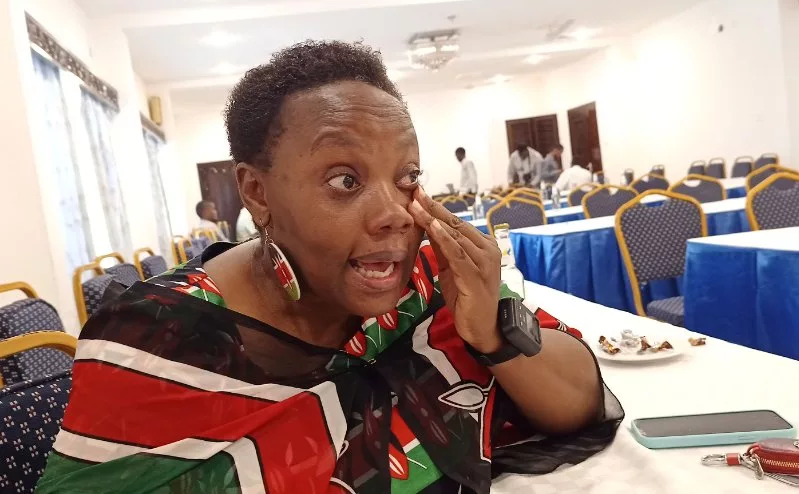
“CJGEA now calls upon Nema leadership to comply fully with the court’s directions, engage constructively in any settlement discussions, and finally bring this long-running matter to a just conclusion,” executive director Phyllis Omido said.
The court expressed disgust at the way the parties have handled the garnishee proceedings where Center for Justice, Governance and Environmental Action sought to have Nema’s 22 accounts frozen over the non-payment of the compensation.
“Garnishee proceedings carry severe, near-irreversible financial implications. They demand precision. Instead, the court has been treated to an array of unacceptable excuses and a highly casual approach to a lawful court order, from claims of absolute ignorance of the order nisi to dismissal prayers on technicalities of variant digit configuration,” she lamented.
The court issued a last warning to Nema saying should the director general fail to file the mandated affidavit, or should the parties fail to present a mutually agreed payment structure on the next date (October 12, 2026), the application to make the garnishee order nisi absolute shall be granted automatically on the return date without further hearing, and the funds held by the garnishee bank shall be attached and released to the applicant (CJGEA) forthwith.
“Let it be known to the 4th respondent (Nema) and its leadership that this deferment is not an acquittal, nor is it an indulgence of bureaucratic lethargy. It is a transitional accommodation. This serves as the absolute final warning,” the judge said.
Omido said the matter has dragged for more than a decade in the corridors of justice while the victims of the lead poisoning continue to suffer irreversible consequences of one of Kenya’s most devastating cases of industrial pollution.
“Although the court deferred making the garnishee order nisi absolute, it delivered a clear and unequivocal warning that Nema has reached the end of the road,” Omido said.
For nearly a decade, the Owino Uhuru community have carried the health burden of environmental contamination while enduring years of litigation and delays in enforcing a judgment already entered in their favour.
“The court has now made it unmistakably clear that public institutions cannot postpone compliance with lawful court orders indefinitely. We expect Nema to act with urgency, transparency and good faith,” Omido said.
The Owino Uhuru litigation has become one of Kenya’s most significant environmental justice cases.
The case, filed by CJGEA in 2016 on behalf of the Owino Uhuru community, exposed the devastating human consequences of lead contamination on children, women and families.
It has also tested the willingness of public institutions to uphold constitutional rights to a clean and healthy environment and to provide effective remedies when those rights are violated.
Omido said CJGEA’s pursuit of justice for the Owino Uhuru community has extended far beyond support in the courtroom.
“In addition to leading the litigation since 2016, we have undertaken sustained advocacy to secure implementation of the court’s judgment through engagement with government institutions, oversight bodies and public finance authorities,” she said.
Omido said CJGEA has embarked on an intensive advocacy campaign that included formal correspondence with Nema, demand notices, complaints to the Commission on Administrative Justice (Office of the Ombudsman), engagement with the Solicitor General, the Ministry of Environment, and the National Treasury, as well as continuous follow-up to ensure that compensation for the victims was prioritised.
Omido said as the matter returns to court on October 12, CJGEA will persist in its advocacy until the Owino Uhuru community receive the compensation awarded to them and their constitutional right to an effective remedy is fully realised