

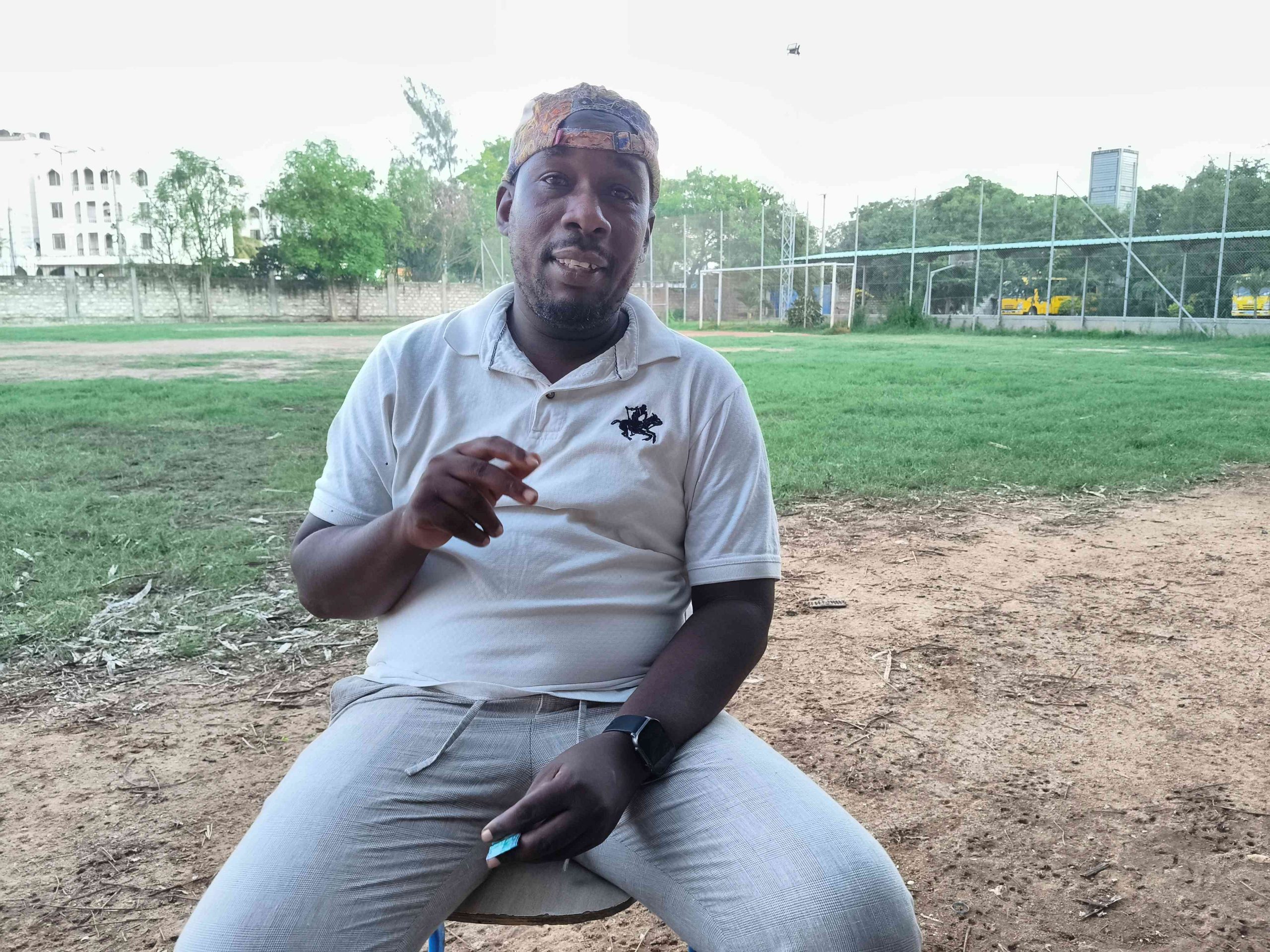
Shem Lumumba, now fondly known as Coach Oti, once dreamt of becoming a football star, following in the footsteps of players like Victor Wanyama.
He committed himself fully to that ambition. Every morning at around 5am, he would head out for roadwork and individual training at the beach in Kisauni, Mombasa county?
In the evenings, Lumumba never missed team training sessions. He also tried to maintain a proper diet, although he admits this was often difficult.
“At least I tried to copy what the professionals in Europe did,” he says.
His talent began to shine in Kisauni and across the county, where he was seen as a rising football prospect.
But Lumumba’s dream was abruptly cut short by a serious knee injury while he was in Form 1 at Aga Khan High School.
Despite the setback, he refused to give up on football. Instead, he chose a different path — helping others achieve what he could no longer pursue himself.
He began coaching young boys in his community, guiding them informally, without having any formal coaching training at the time.
Today, he proudly notes that at least three of his former trainees are now playing in Europe.
Born Shem Lumumba in 1986 in Mlaleo, Kisauni, Coach Oti grew up in a tough environment where structured youth football did not exist.
“Life was not rosy during my time. There were no academies or structured teams for young boys. You either played with older boys or you did not play at all,” he says.
This environment forced him to mature quickly as he constantly competed against older and physically stronger players.
His playing career suffered a major blow in 2002 when in Form One, he suffered a fibula injury in high school. The injury recurred every time he attempted to play, leaving him fearful and frustrated.
“I almost got depressed,” he admits, and attended counselling sessions at school for emotional support.
In 2003, he transferred to Kisauni High School in Form 2. Being closer to home and surrounded by familiar faces rekindled his interest in football.
He observed raw talent around him, but also noticed a lack of guidance and discipline.
“I saw many talented boys who were not taking football seriously. I felt I could help them achieve dreams they did not even realise they had,” he says.
During a school games session, he asked players about their ambitions. Many expressed dreams of playing in Europe, even if only briefly. That moment convinced Lumumba that his own dream could live on through others.
Around the same period, the “Nimechill” campaign promoting responsible behaviour among youth was popular. Inspired by it, he formed a team called Chill Boys.
The team struggled with basic necessities such as balls, kits and training grounds. To solve this, he saved small amounts of money from his father’s shop and eventually bought two footballs.
Players were asked to wear white jerseys or T-shirts to maintain some level of uniformity.
As the team grew and began winning matches, it changed its name from Chill Boys to Kisauni Heroes, to Newcastle, and later in 2009 to Good Hope Soccer Academy.
“There have been many challenges, but I have used them as stepping stones,” Coach Oti says.
Initially, he coached without any formal qualifications and without access to proper facilities. The only available pitch was dominated by senior players, forcing his team to train very early in the morning or late in the afternoon.
“We had one ball and almost 30 players. I was coaching without credentials at the time,” he says.
As his work became more visible, he was advised to pursue coaching courses, though cost was a barrier. He eventually got financing.
He enrolled in both physical and online programmes, including Ubabalo Whole Life Coaching, KNVB WorldCoaches, ASEC Basic, KFF E Licence and FKF certifications.
This training improved his understanding of player development and management.
Initially, he focused only on youth teams, releasing players at around ages 17 or 18 to senior clubs. However, many were not given enough playing time or returned home frustrated.
“I realised many coaches are focused on winning, not developing players,” he says.
He also discovered that his players’ style of play often did not fit that of senior teams.
To address this, he established Good Hope FC as a senior extension of his academy, allowing continuity in development.
The team entered county leagues under the Mombasa County Football Association before progressing to FKF competitions.
They currently play in the FKF Division Two, Northern Zone A League, standing fourth with 35 points from 18 matches.
They have recorded 10 wins, five draws and three losses, scoring 31 goals and conceding 13. The squad is notably young, with most players aged between 16 and 18.
Coach Oti believes this continuity system helps players adapt easily to senior football.
He prefers working with younger players, noting that they are more consistent in training than senior players, many of whom struggle with financial pressures.
He also faces resistance from parents who still prioritise formal education over football.
“I have had cases where parents even called the police on me, saying I was ruining their child’s education,” he says, referring to Harambee Stars defender Siraj Mohammed, now a professional player.
Siraj, now on loan at KCB from Gor Mahia, previously played for Bandari FC and has represented Kenya at CHAN level.
Coach Oti highlights local challenges such as ulaji where players abandon league duties to play in paid tournaments, earning small token payments between Sh1,000 and Sh4,000.
“When they go for ulaji, you cannot blame them because they earn nothing at their clubs,” he says.
He also points to player poaching, lack of sponsorship and limited training facilities as major challenges in Mombasa football.
Often, several teams share a single pitch, while many clubs rely on personal funding from passionate individuals.
Despite these difficulties, he has produced several notable players, including Mohammed Katana (Messi Agege), who has played in Portugal, Sweden and Belarus; Sosthens Ida, now in Mozambique; and Kassim Mwinyi of Bidco United.
Coach Oti is increasingly focused on management, aiming to develop players holistically.
He had started a course in sports management but paused due to financial constraints, though he hopes to resume in future.
His journey, from a promising footballer to a grassroots coach shaping international talent, reflects both personal sacrifice and deep commitment to nurturing the next generation of footballers in Kenya.