


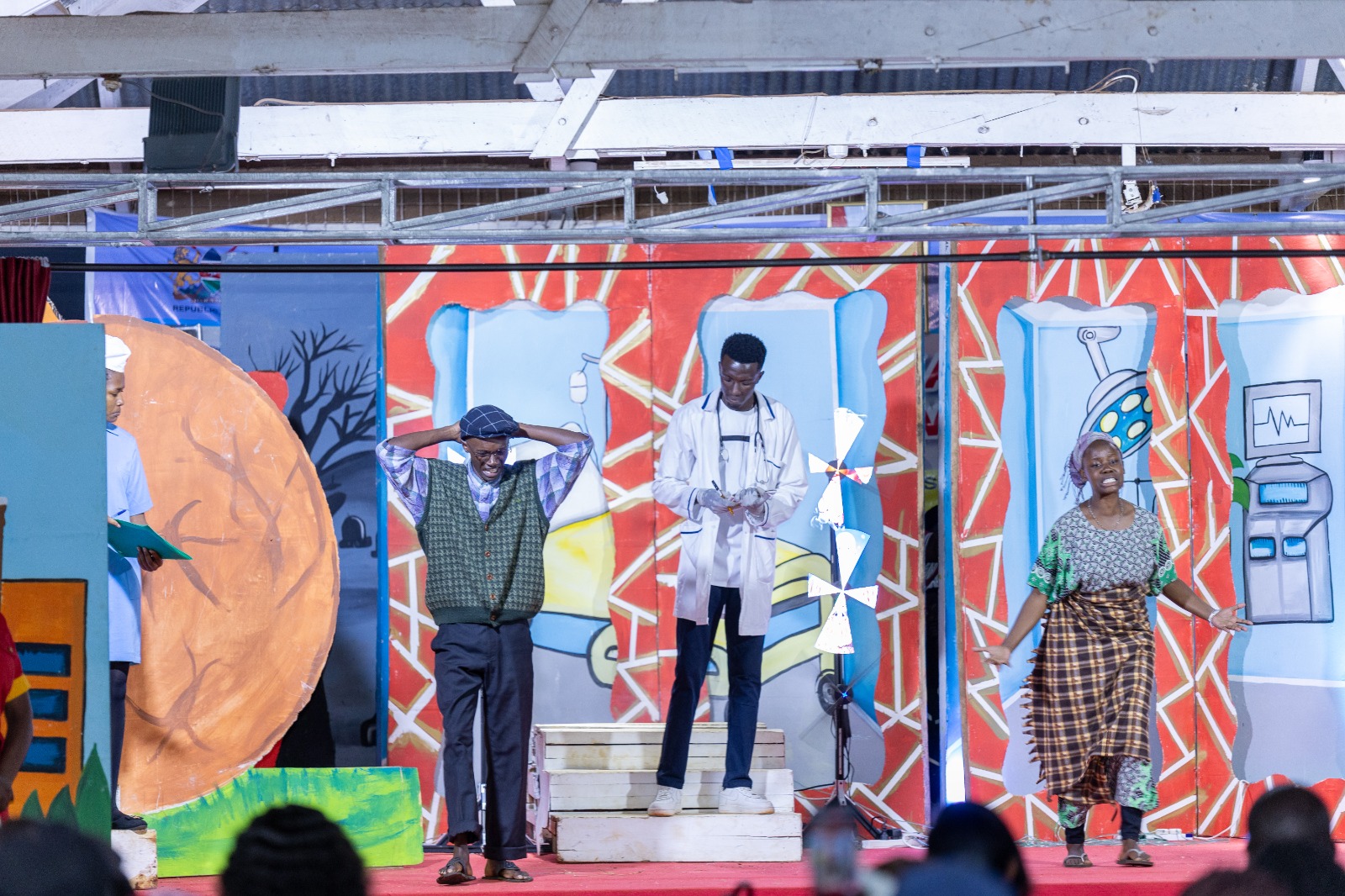
As Valentine Kenya, in her debut major role as Muthoni, clenched her fists, her face hardened into a mask of desperate determination.
Her mother Waithera, portrayed by fellow debutant Margaret Mwende, was slipping away, worn down by diabetes and the crushing weight of mounting medical bills.
In that moment, the auditorium at Kagumo TTC fell into complete silence as students from Kilimambogo Teachers Training College staged The Web, the stillness broken only by the soft sniffles of the audience.
Performed at the 64th national edition of the Kenya National Drama and Film Festival, the play was a 45-minute emotional gut punch, delivered with a raw conviction that left few dry eyes in the house.
It was not just the tragedy unfolding on stage that moved the audience, but its unsettling familiarity, a story that mirrored the quiet struggles of many ordinary families.
At its core, The Web, conceptualised by playwright Amos Barasa, explores the fragile realities of a family under pressure.
Waithera, a single mother who’s battling diabetes is haunted by past decisions, including the misuse of chama funds, which now deepen her vulnerability.
Her daughter Muthoni, a first-year student, is left scrambling for solutions while her stepfather Njoroge, played by Collins Njuguna, adds a tense layer of fractured trust and unresolved conflict.
“We did not want to start with the issue of single parenting. We wanted to start with the issues in a family that lead to a single parent. That is why we began with the conflict of Muthoni and Njoroge being kicked out of the house,” Barasa explained, pointing to a narrative shaped by consequence and emotional realism.
It is within this deep story that another theme quietly takes shape. Set against a festival themed ‘Digital Stages: Driving Kenya’s Development Through Theatre and Film’, the play weaves technology into the fabric of every day survival.
Rather than presenting it as a distant concept, the story integrates digital finance as part of lived experience, from quick USSD transactions to card payments and access to health services and clinics.
Muthoni’s search for help becomes a reflection of how financial tools are evolving from physical destinations into constant, accessible support systems.
In this way, the play aligns with the broader idea of making banking a lifestyle, changing it from a physical venue and embedding it in daily decisions and moments of crisis.
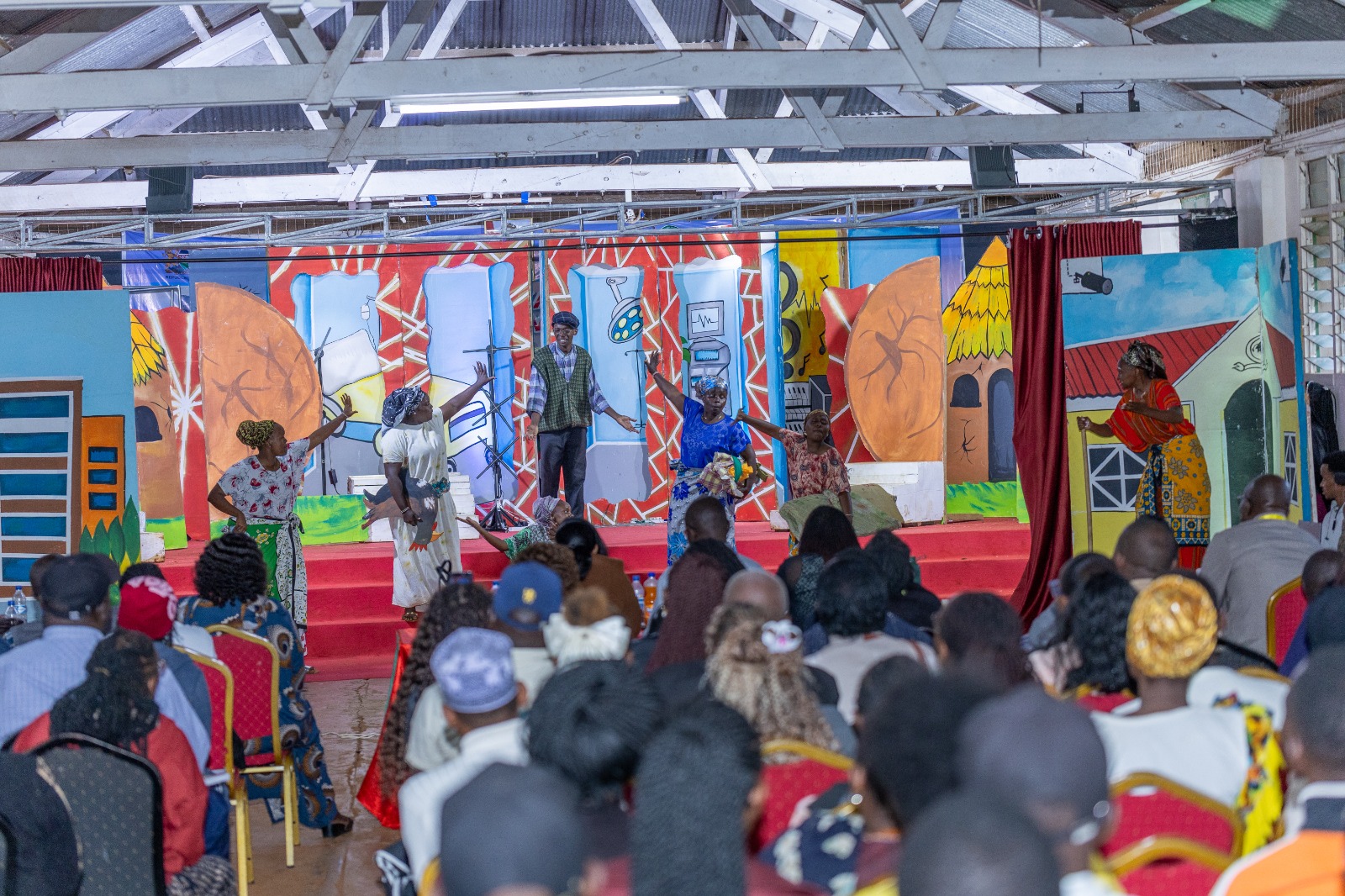 Kilimambogo Teachers Training College students present The Web, a play that moved many members of the audience to tears on April 9, 2026/ ALICE WAITHERA
Barasa said this approach was intentional and aligned with the festival’s sub-theme ‘Leveraging Technology to Make Banking a Lifestyle– From a Place You Go to Something You Do’ sponsored by Equity Bank.
“Most people are familiar with banking in a limited way but there is much more that banks offer. We wanted to show the entire ecosystem and how it fits into people’s lives,” he said.
For the cast, many of whom were stepping onto a major stage for the first time, delivering such layered material required more than technical performance. It demanded emotional immersion.
Njuguna spoke of fully inhabiting his role. “When I enter the stage, I become Njoro, not Collins,” he said, describing a process that blurred the line between actor and character.
He added a reflection that shaped his portrayal.
“Sometimes life is full of mysteries. You find people who give their all, only for things to fall apart,” he said, grounding his performance in a sense of lived truth.
Mwende’s portrayal of Waithera stood out for its raw intensity. At several points, she broke into tears on stage, a response she described as natural.
She explained that she drew from deep emotional reserves to bring authenticity to the role, allowing the character’s pain to come through without restraint.
Reflecting on her performance, she expressed both relief and ambition.
“I feel relieved but I also feel there are parts I could have done better. I know I can do more than this. I want to grow beyond just acting in college,” she said.
Director Richard Mwania highlighted the collective effort behind the production, pointing to the careful use of lighting, sound and music to heighten the story’s emotional impact.
Barasa echoed this, emphasising that theatre is inherently collaborative, shaped by multiple creative hands working toward a shared vision.
For Valentine Kenya, the experience was as much about guidance as it was about performance. She credited the directors and trainers for creating an environment that balanced support with discipline, allowing the cast to fully connect with their roles.
In the end, The Web succeeded not only because of its story but because of the honesty with which it was told.
Through a combination of compelling performances, relatable themes and subtle integration of technology, Kilimambogo Teachers Training College delivered a production that resonated deeply with its audience.
For its young cast, the performance in Nyeri signalled the arrival of new voices capable of telling powerful stories, proving that even debutants, with the right direction and conviction, can move audiences and reflect the realities of a changing world.