



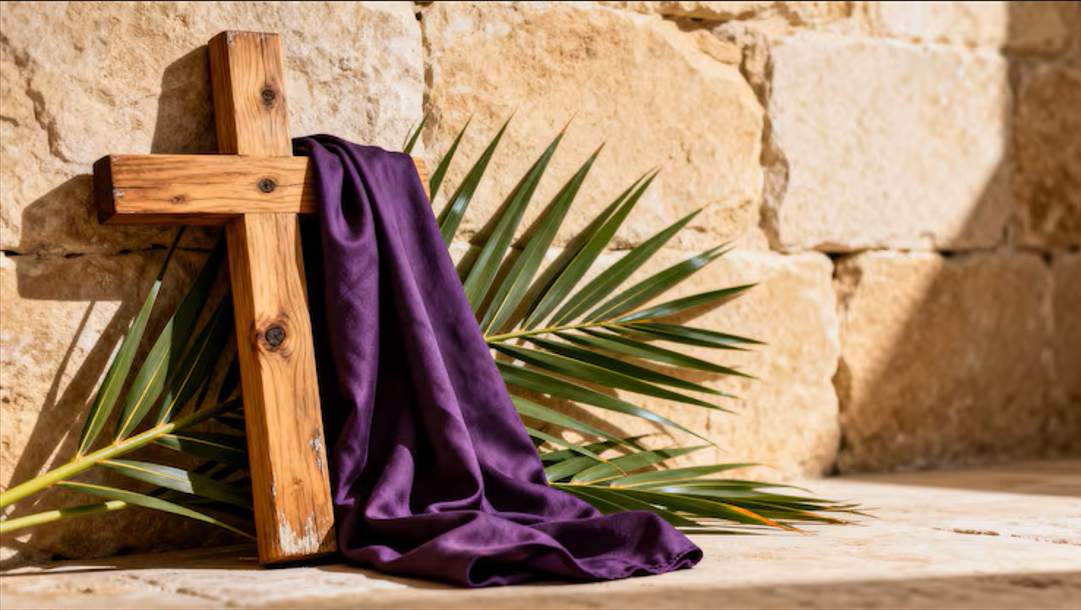
Holy Week is one of the most sacred periods in the Christian calendar, observed in the week after Palm Sunday and leading up to Easter.
According to an article by the Archdiocese of Saint Paul & Minneapolis (ArchSPM), Holy Week commemorates the final days of Jesus Christ’s life, his crucifixion, and his resurrection, forming the foundation of Christian belief.
Palm Sunday marks the beginning of the week, recalling Jesus’ triumphant entry into Jerusalem, where crowds welcomed him with palm branches, symbolising peace and victory.
This moment sets the stage for the events that follow, as Christians reflect on the shift from celebration to suffering.
Holy Monday, Tuesday, and Wednesday that follow in the Holy week are often less publicly observed but remain significant in church teachings. They highlight Jesus’ teachings in Jerusalem, the cleansing of the temple, and the growing tension that led to his betrayal.
These days prepare believers spiritually for the most solemn and important moments of the week.
The article reveals that, Holy Thursday, also known as Maundy Thursday, marks a major turning point. It commemorates the Last Supper, where Jesus shared a final meal with his disciples and instituted the practice of Holy Communion.
The day also remembers Jesus washing his disciples’ feet, a powerful symbol of humility and service. According to christian teaching, it was on this night that Judas Iscariot betrayed Jesus, setting in motion the events leading to his arrest.
Good Friday, observed the following day, is one of the most solemn days in Christianity. It commemorates the crucifixion and death of Jesus Christ.
Despite its sombre tone, the day is called “Good” because Christians believe Jesus’ sacrifice brought salvation to humanity. Across the world, including in Kenya, Good Friday is recognised as a public holiday, allowing believers time to attend church services and reflect on the meaning of sacrifice and redemption.
Many churches mark the day through services such as the Stations of the Cross, which retrace Jesus’ journey to the crucifixion. The day is often observed with fasting, prayer, and quiet reflection.
Religious scholars note that the crucifixion represents the ultimate act of love and sacrifice in Christian theology.
Holy Saturday follows as a quiet and reflective day, marking the time Jesus lay in the tomb. It is a period of waiting and contemplation, symbolising grief and uncertainty among his followers. In many traditions, churches hold an Easter Vigil on Saturday night, anticipating the resurrection.
The week culminates in Easter Sunday, the most important day in the Christian calendar. It celebrates the resurrection of Jesus Christ from the dead, which Christians believe signifies victory over sin and death.
The resurrection is central to Christian faith, representing hope, renewal, and eternal life.
As theologians often explain, “If Christ had not been raised, the Christian faith would be meaningless,” underscoring the importance of Easter in Christian doctrine.
Easter Monday, observed the day after Easter Sunday, extends the celebration.
While it holds less theological weight, it is recognised in many countries, including Kenya, as a public holiday. It provides time for families and communities to gather, reflect, and continue the celebrations of new life and hope.
In Kenya, Holy Week is widely observed, with many Christians attending church services, participating in processions, and travelling to spend time with family.
The public holidays on Good Friday and Easter Monday reflect the country’s strong Christian heritage and the cultural importance of the season.
One of the most frequently asked questions about Easter is why its date changes each year. Unlike fixed holidays such as Christmas, ArchSPM notes that Easter is a movable feast. Its date is determined by a combination of solar and lunar calendars.
Specifically, Easter is celebrated on the first Sunday after the first full moon following the spring equinox, which typically falls on March 21.
This system was established by early church leaders during the Council of Nicaea in 325 AD to standardise the celebration across the Christian world.
Because it depends on the lunar cycle, Easter can fall anytime between late March and late April. As a result, Good Friday and Easter Monday also shift each year.
Holy Week, therefore, is more than a series of religious observances. It is a profound journey from joy to sorrow and ultimately to hope.
For Christians, it serves as a time of reflection, renewal, and reaffirmation of faith values that continue to resonate deeply in Kenya and around the world.