


KENYAh hopes to exit the global financial crime grey list by April 2027 after addressing 19 of the 21 deficiencies identified by the Financial Action Task Force (FATF), Treasury Principal Secretary Chris Kiptoo has said.
This, as the government moves to strengthen investor confidence and lower the cost of international financial transactions.
Kiptoo said the country had made significant progress in addressing weaknesses in the prosecution and disruption of money laundering and terrorism financing as Nairobi steps up efforts to attract at least $5 billion (Sh649.4 billion) in foreign direct investment by 2030 through the Nairobi International Financial Centre (NIFC).
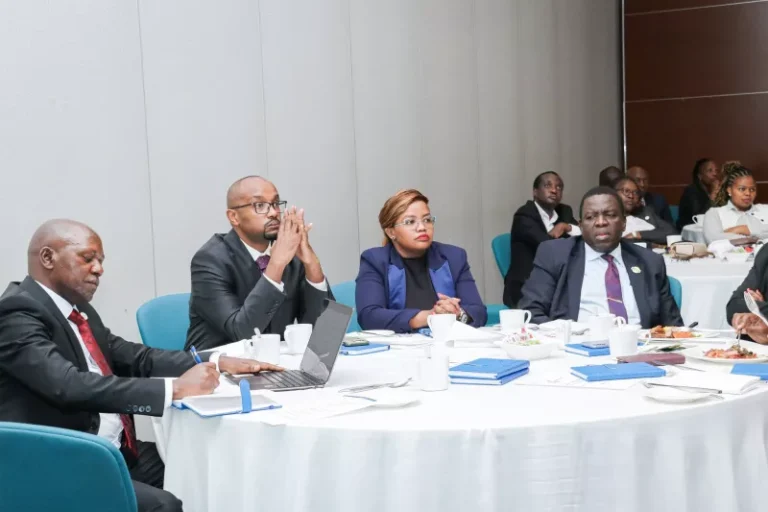
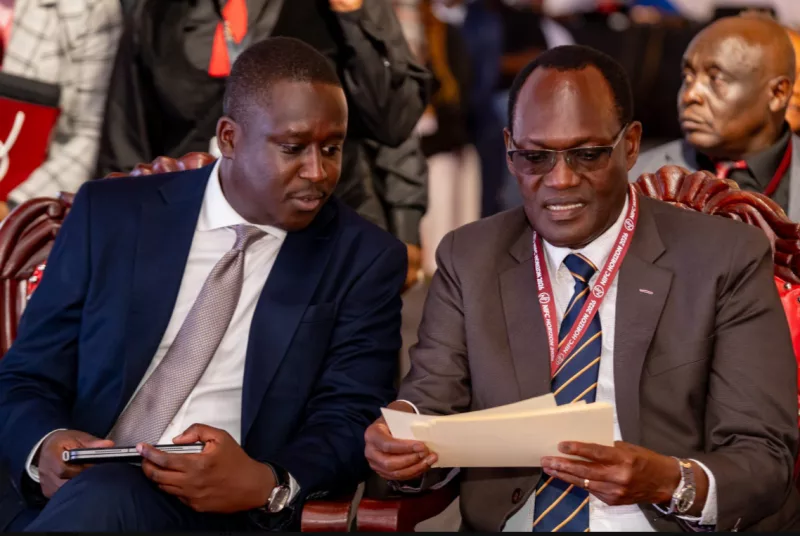
Speaking at the NIFC Horizon 2026 forum in Nairobi yesterday, Kiptoo said the government had implemented legislative and institutional reforms to address concerns raised by the global financial crime watchdog.
“Of the 21 deficiencies we were to address to get out of the grey list, we have addressed 19. And only two are remaining. We are targeting to come out of it by April next year,” he said.
Kenya was placed on the FATF grey list over weaknesses in its anti-money laundering and counter-terrorism financing framework, exposing financial institutions and businesses to increased scrutiny when conducting international transactions.
Kiptoo said the government had introduced the Anti-Money Laundering and Combating of Terrorism Financing laws of 2025, with supporting regulations being developed to strengthen enforcement.
Other interventions include strengthening the Financial Reporting Centre, the Public Benefit Organisations Regulatory Authority and risk-based monitoring of financial transactions.
He warned that continued grey listing could undermine Kenya’s competitiveness by increasing transaction costs and slowing investment deals.
“Being on the grey list does not mean financial transactions with Kenya are banned. But foreign banks, lenders and investors apply strict scrutiny to cross-border payments, which can raise transaction costs and slow down deals,” he said.
The planned exit is particularly significant as Kenya seeks to position Nairobi as a regional financial hub capable of attracting international investors, managing capital and financing businesses and infrastructure projects across Africa.
Through the NIFC, the government is targeting at least $5 billion (Sh649.4 billion) in foreign direct investment by 2030, with the centre shifting its focus from institutional development to measurable investment outcomes.
Chief executive Daniel Mainda said the ambition was to build on Kenya’s improving investment performance by strengthening the financial ecosystem through which international capital is raised, structured, managed and deployed.
“With Kenya recording approximately $3.2 billion (Sh415.6 billion) in foreign direct investment inflows in 2025, the opportunity is to build on this momentum by strengthening the financial ecosystem through which capital is raised, structured, managed and deployed,” Mainda said.
The NIFC was established to make Nairobi an internationally competitive financial centre, connecting domestic and international investors with opportunities in Kenya and the wider African continent.
Its mandate includes attracting financial services firms, facilitating investment, supporting financial innovation, promoting an enabling regulatory environment and strengthening Nairobi’s integration into global financial markets.
The centre is prioritising investment vehicles targeting technology, artificial intelligence, start-up financing and micro, small and medium-sized enterprises (MSMEs), which continue to face challenges accessing long-term growth capital.
It is also working with financial regulators to support digital assets and fintech businesses, while collaborating with the Capital Markets Authority and other stakeholders on carbon-market regulations and investment structures to mobilise climate finance.
In infrastructure, NIFC is seeking to support the proposed National Infrastructure Fund by helping structure and domicile project-specific investment vehicles to connect viable projects with domestic and international institutional investors.
Board chairman Michael Kamiru said the authority was committed to providing strategic oversight, supporting reforms and strengthening partnerships to ensure the centre delivers measurable investment outcomes.
Treasury’s investment push comes against the backdrop of improving macroeconomic indicators, although the government continues to face substantial debt-servicing and expenditure pressures.
Kiptoo said Kenya had strengthened its foreign exchange reserves from less than three months of import cover to more than six months, with reserves standing at approximately $15 billion (Sh1.95 trillion).
He also cited improved access to international capital markets following liability management operations that helped the government manage a $2 billion (Sh259.8 billion) Eurobond maturity in 2024.
Kenya issued $1.5 billion (Sh194.8 billion) in a refinancing transaction to address part of the maturing debt, helping reduce immediate repayment pressures.
“With the issuance and buyback of the $2 billion maturing Eurobond, we were able to de-risk. And that was the start of liability management,” Kiptoo said.
He added that credit rating upgrades by Moody’s and Standard & Poor’s reflected improvements in the country’s debt and liquidity position.
The Treasury PS further noted that foreign direct investment had risen from $1.6 billion (Sh207.8 billion) to $2.3 billion (Sh298.7 billion) and subsequently $3.2 billion (Sh415.6 billion), with a potential investment pipeline of $45 billion (Sh5.84 trillion).
Kenya’s capital markets have also recorded increased activity, with equity turnover in the first seven months of 2026 rising by 242.6 per cent, while bond turnover reached a record Sh2.71 trillion.
However, Kiptoo cautioned that the government still faced significant spending pressures as revenue collection struggled to keep pace with expenditure requirements.
He said revenue collection had improved from approximately Sh2.2 trillion to Sh3.2 trillion, supported by reforms at the Kenya Revenue Authority.
The government is also preparing to operationalise a Sovereign Wealth Fund and establish the National Infrastructure Fund to support commercially viable investments outside the ordinary budget.
Nairobi’s economic potential provides a foundation for the financial hub ambition. Oxford Economics’ Global Cities Index 2026 ranked the capital 327th globally among 1,000 cities and 26th in human capital.
The city’s information technology sector is projected to grow by an average 5.5 per cent annually over the next 25 years, while financial services are expected to expand by 4.1 per cent.
Industrial output is projected to exceed $38 billion (Sh4.94 trillion) by 2050, creating approximately 700,000 additional industrial jobs.
However, the $5 billion investment target will depend on Kenya’s ability to sustain regulatory reforms, strengthen governance, deepen capital markets and develop bankable projects.
Nairobi is also scheduled to host the World Alliance of International Financial Centers Extraordinary General Meeting in April 2027, offering an opportunity to strengthen its visibility among global financial centres.
Mainda said the ultimate ambition was to make Nairobi Africa’s “Capital of Capital”.
“Our ambition is to build Nairobi into Africa’s Capital of Capital, the place where global capital meets African opportunity, where funds are domiciled, businesses are scaled and the continent’s future is financed,” he said.