



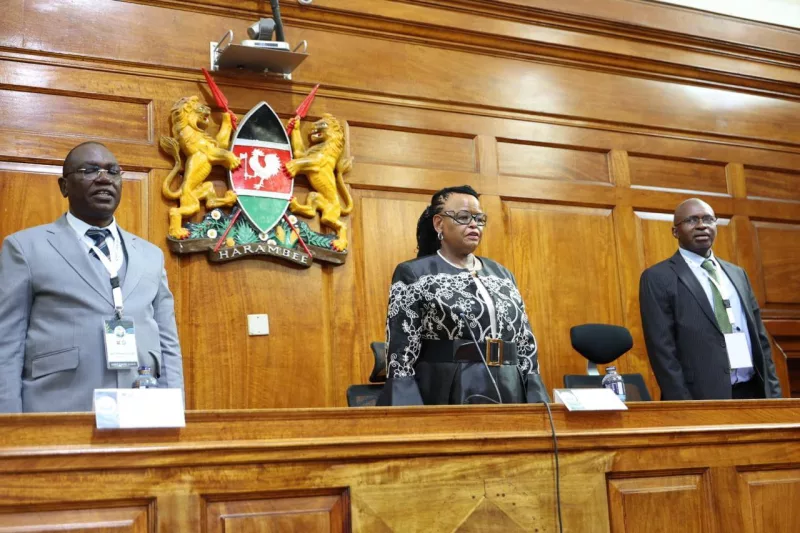
Law students from 18 universities are facing off in the annual Moot Court Competition organised by the Supreme Court, putting their legal research, reasoning and advocacy skills to the test in an exercise designed to prepare them for the demands of legal practice.
The three-day competition themed Promoting Environmental Justice, opened on Wednesday at the Supreme Court Building in Nairobi, presided over by Chief Justice Martha Koome.
The annual contest provides a platform for aspiring lawyers to engage with complex legal questions while demonstrating their understanding of constitutional and environmental law through simulated court proceedings.
Koome said the competition is an important avenue for nurturing the next generation of legal practitioners, whose training and values the justice system would depend on tomorrow.
“The strength of our justice system depends, in part, on the quality and integrity of the legal minds we nurture today,” she said.
She observed that moot court competitions extend beyond academic debate by equipping law students with practical skills in legal reasoning, research, advocacy and ethical conduct, while instilling respect for the rule of law.
For the Judiciary, she said, the exercise also strengthens engagement with legal academia and contributes to building a competent, principled and responsive legal profession.
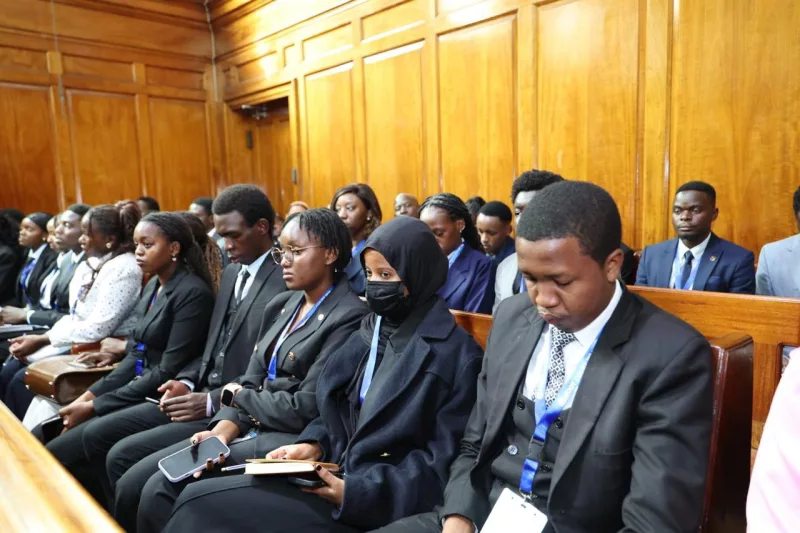
The competition is designed to strengthen legal research, oral advocacy, critical thinking and the practical application of constitutional and environmental law.
It gives participants an opportunity to examine the intersection of constitutional rights, environmental protection, public accountability and the responsibility to safeguard the interests of future generations.
Through simulated courtroom proceedings, students are expected to develop their ability to construct legal arguments, interpret applicable laws, respond to opposing submissions and defend their positions before a judicial audience.
The exercise also seeks to bridge the gap between classroom instruction and courtroom practice by exposing students to the demands of litigation, including the preparation of legal submissions and oral presentation of arguments.
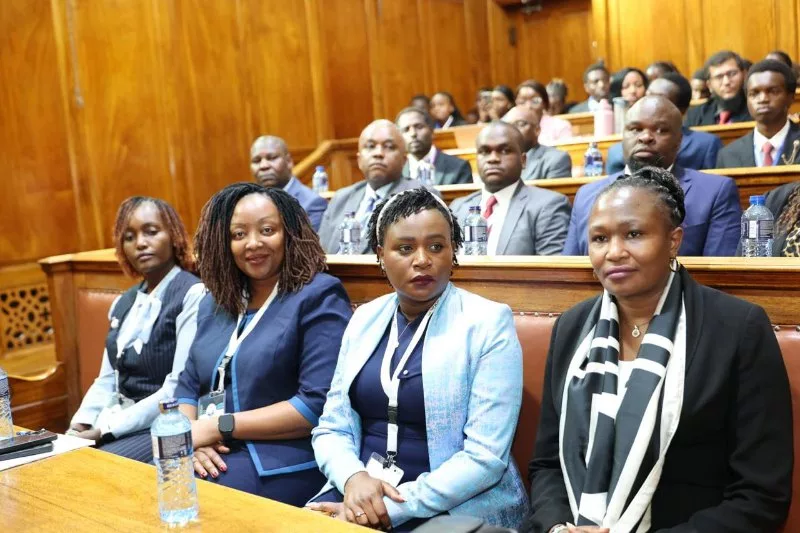
The Judiciary said the competition would provide a forum for rigorous legal argument, scholarly exchange and the promotion of excellence in advocacy.
The focus on environmental justice comes against the backdrop of growing legal and institutional questions surrounding environmental protection, accountability and the enforcement of constitutional safeguards.
The competition therefore offers law students an opportunity to interrogate how legal institutions and practitioners can contribute to addressing contemporary environmental challenges while upholding constitutional principles and the rule of law.
“I commend the participating universities, faculty and students for their commitment to advancing legal knowledge and the administration of justice,” Koome said.