
Households and businesses in Africa could pay much less for power if the continent closes a wide financing gap and exploits vast renewable energy resources.
High power costs increase the cost of manufacturing, refrigeration, irrigation and transport, forcing businesses to charge more for goods and services or operate at lower margins.
These pressures ultimately feed into consumer prices, erode household incomes and constrain job creation.
According to the International Energy Agency (IEA), the continent requires at least $240 billion (Sh31.2 trillion) annually to close the energy financing gap by 2030 and accelerate annual production of renewable power from the current eight gigawatts to a Africa Union’s target of 32.5 gigawatts.
The affordability crisis is particularly severe among poorer households.
The IEA’s 2025 report, Financing Electricity Access in Africa, found that nearly 600 million Africans lacked electricity, while about 220 million people in sub-Saharan Africa without access would struggle to afford even a basic electricity package.
The agency estimates that an additional $2 billion to $10 billion annually would be needed to close affordability gaps, depending on the level of service targeted.
The cost of generating electricity offers a potential route to relief.
The International Renewable Energy Agency’s 2025 report, Renewable Power Generation Costs in 2024, found that 91 per cent of newly commissioned utility-scale renewable projects worldwide produced electricity more cheaply than the least-cost new fossil-fuel alternative.
Solar power was 41 per cent cheaper, on average, while onshore wind was 53 per cent cheaper.
However, Africa must overcome expensive financing, inadequate transmission networks and inefficient utilities to translate cheaper generation into lower consumer bills.
The report found that financing costs accounted for much of the cost of wind power in Africa, where the weighted average cost of capital was estimated at 12 per cent, compared with 3.8 per cent in Europe.
The investment gap comes as demand for electricity rises across industries, mining, agriculture, transport and digital services, highlighting the need for more private capital, financing and infrastructure investment across Africa’s energy sector.
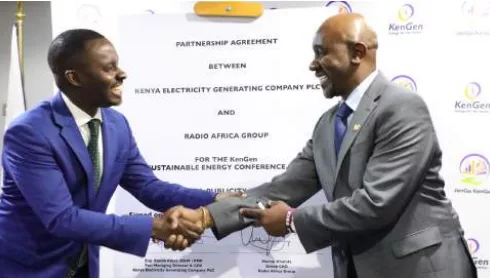
To bridge this gap, Kenya Electricity Generating Company (KenGen), in partnership with Stanbic Bank, Radio Africa Group and Kyote Network, is set to host more than 80 countries across the world for the Sustainable Energy Conference (SEC).
The third edition of the annual conference, to be held from November 24 to 28 at KenGen’s Olkaria Spa in Naivasha, is expected to bring project developers together with institutions that finance, regulate and buy electricity.
Its theme, “Powering Africa’s Green Industrial Revolution,” places the commercial uses of clean energy at the center of the discussion.
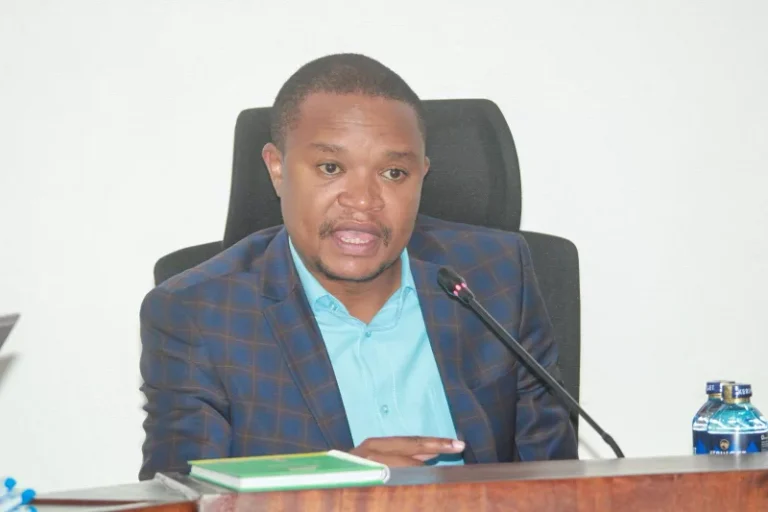
Speaking during the media launch on Thursday in Nairobi, KenGen’s Ating MD& CEO Kibet Ronoh said SEC 2026 is designed to move the green energy investment conversation from opportunity to execution.
“We have invited investors, financiers, utilities, project developers and corporates to join us on this journey, and we are confident the conference will unlock meaningful opportunities that accelerate Africa’s clean energy agenda,’’ Kibet said.
He said that the agenda will focus on investment mobilization, project development, strategic partnerships and carbon trading.
He added that discussions will connect the requirements of investors and lenders with the needs of utilities, developers and industrial customers.
“Bringing those groups together is intended to address the gap between identifying an energy opportunity and developing a project that can secure financing.”
Radio Africa Group CEO Martin Kafafa highlighted the importance of effective communication in the continent’s energy transformation and journey towards realising key generational benchmarks.
Effective communication is a vital link between investors, project developers and energy consumers. Radio Africa Group commits to deploy its services cutting across Radio, print media, digital and events as the world gathers in Olkaria for SEC,’’ he said.
Kenya is among the world’s leading countries in renewable electricity generation, with geothermal energy giving it a particular advantage.
The country’s strong renewable-energy mix has reduced its exposure to expensive fossil-fuel generation without automatically making electricity cheap for consumers.
Latest state data shows that renewables supplied nearly 90 per cent of Kenya’s electricity generation in 2025.
Geothermal accounted for 47 per cent, hydropower 21 per cent, wind 16 per cent, and solar 4 per cent.
Furthermore, Kenya is one of the few countries where geothermal supplies a substantial share of national electricity.
The IEA’s geothermal analysis identifies Kenya as one of the countries where geothermal contributes more than 10 per cent of total electricity supply.