


China has reaffirmed its push for greater Africa representation and influence in international decision-making, as pressure mounts for reforms to the global governance system.
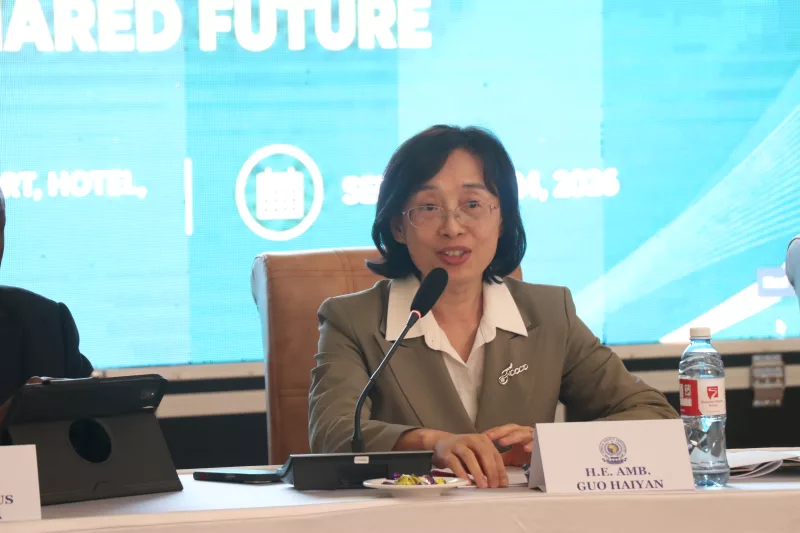
Chinese Ambassador to Kenya Guo Haiyan said Africa and China should work together to increase the voice of developing countries in the international system and push for reforms to global economic and financial institutions.
Speaking in Naivasha on Thursday at a seminar on China-Kenya cooperation, Amb Guo said developing countries should have a greater role in shaping the rules governing global affairs.
“China and Africa should serve as a staunch force in safeguarding the interests of developing countries, act as a mainstay of the multilateral system, and work to increase the representation and voice of the Global South in the international system,” she said.
The envoy also called for reforms to the international economic and financial system, including greater development financing, while urging developed countries to honour their financing commitments.
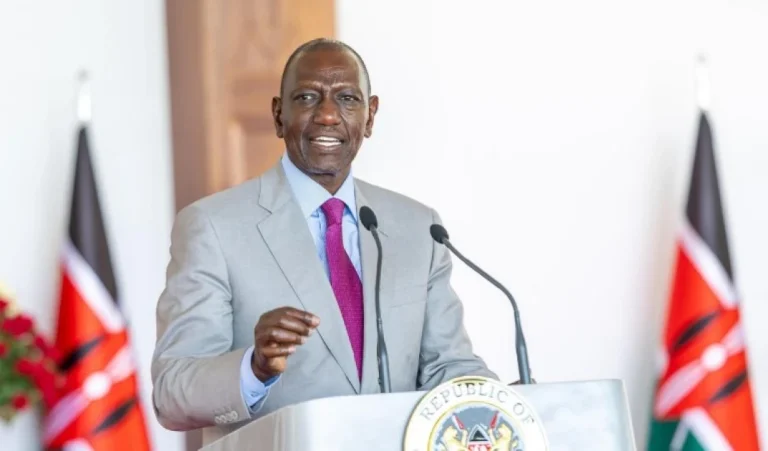
The remarks came days after President William Ruto used his address to the United Nations General Assembly to push for a stronger African voice in global affairs, including reforms to international institutions and a more equitable multilateral system.
Former African Union Commission deputy chairperson Erastus Mwencha said the global order was facing an unusually difficult period, citing trade wars, tariff escalation and disruptions to supply chains that have particularly affected developing countries.
He argued that China’s Global Development Initiative and Global Governance Initiative offered a framework for greater multilateral cooperation in a world increasingly shaped by multiple centres of power.
“The rules of tomorrow’s economy are written with Africa in the room, not for Africa from a distance,” Mwencha said.
He added that Africa’s participation should extend beyond trade and infrastructure to the rules governing climate change, technology and artificial intelligence.
Mwencha warned that AI was becoming both a development opportunity and a global governance challenge, with rules, safety standards and access to the technology being developed largely without the Global South at the table.
“AI is fast becoming a public good and a public risk in the same breath,” he said, arguing that its governance required a genuinely multilateral and multipolar approach.
Guo similarly identified technology, climate change and global development as areas where China and Africa could work together to strengthen the voice of developing countries.
He said China and Africa should also coordinate ahead of the formulation of the United Nations’ post-2030 global development agenda, which is due to begin in September 2027.
“China and Africa should strengthen policy preparation, communication and coordination to ensure that the new development agenda better reflects the common needs of the Global South,” Guo said.
Kenya has already positioned itself within several of China’s multilateral initiatives.
Ambassador Jane Makori, Deputy Director General for Asia and the Pacific at the Ministry of Foreign Affairs, said Kenya had joined the Belt and Road Initiative, Global Development Initiative, Global Security Initiative and Global Civilization Initiative in 2023.
She added that Kenya subsequently joined China’s Global Governance Initiative in December 2025.
“Kenya’s membership in the Initiatives reconfirm that Kenya and China share the political goodwill to sustain the strategic partnership for a win-win situation, maintain South-South Cooperation Principles and protect common values,” Makori said.
She added that Kenya and China “share common views on Global Governance” at the multilateral level.
The push for a stronger Global South voice is also being accompanied by economic initiatives.
Guo said China had introduced a zero-tariff policy for 53 African countries with which it has diplomatic relations, providing greater access to the Chinese market for products including Kenyan avocados.
Mwencha said such market access could help African producers move up the value chain, but argued that Africa needed to ensure that its participation in global trade translated into domestic industrialisation and value addition.
He cited Kenya’s Standard Gauge Railway as an example of infrastructure that could support greater integration into regional and international markets, provided it was used to move more value-added Kenyan products.
President Ruto has sustained his campaign for reforms that would give Africa greater representation in global institutions.
Guo also singled out Nairobi’s position as a major multilateral centre, saying China was committed to supporting the strengthening of the United Nations Office at Nairobi and helping the city play a bigger role as a hub for global multilateral affairs.