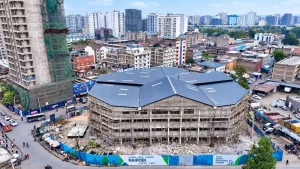
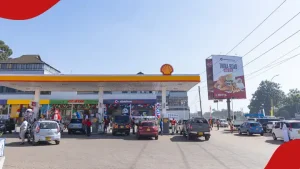



Kiosk operators and matatu traders at the Nanyuki main bus terminus have welcomed the start of a Sh60 million upgrade project, ending a 17-year wait for modern trading facilities.
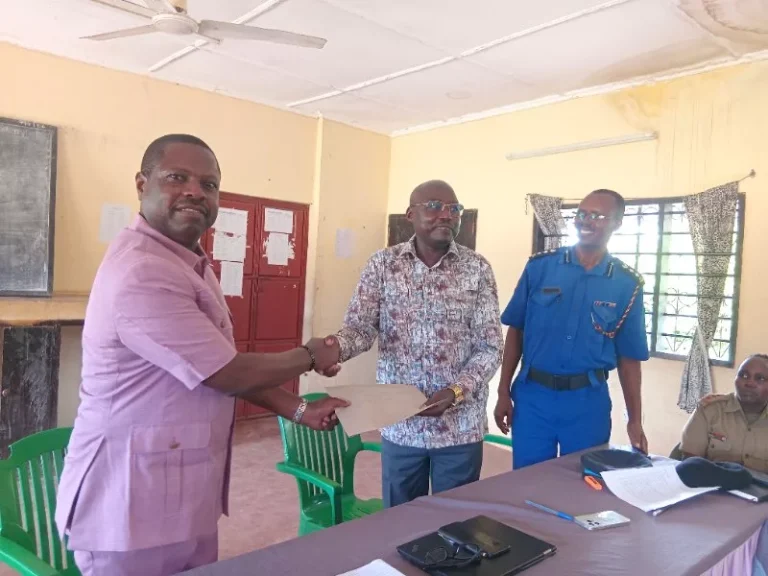
The project, which also includes improvements to the matatu stage, was commissioned by Laikipia Governor Joshua Irungu and is being funded by the World Bank through the Kenya Urban Support Programme (KUSP).
For traders who have operated for years from ageing wooden structures, the project offers a fresh start after prolonged uncertainty caused by court battles over the ownership and allocation of stalls.
Nanyuki trader Kinyua Hunja said traders had endured numerous challenges while waiting for the redevelopment, but the commencement of construction had given them renewed hope that long-standing problems would finally be resolved.
“We have had many problems while looking after our interests, but the governor has looked at our interests and now the work is beginning. I am grateful because Nanyuki will change,” he said.
The project initially began in 2009 under the defunct Nanyuki Municipal Council but stalled after some traders went to court.
The disputes dragged on for years, leaving the terminus characterised by wooden kiosks, congestion and poor working conditions for traders and public transport operators.
The new project will see 48 modern kiosks constructed alongside an ablution block, cabro paving, and other improvements aimed at transforming the busy terminus into a more organised transport and commercial hub.
The governor also outlined plans to make the stage operate as a 24-hour economic centre, with street lighting and CCTV cameras to improve security for traders, travellers and other businesses operating around the facility.
Irungu urged the contractor to prioritise local labour and suppliers, arguing that the Sh60 million investment should generate economic opportunities for residents beyond physical infrastructure.
He called for local youth to be given opportunities in areas such as masonry, window fabrication and other manual work, while local shops should benefit from supplying construction materials.
“I would want Sh20 million of the money to remain with those who will be doing manual work here,” Irungu stressed, urging the contractor to source materials and services locally wherever possible.
The governor also explained that improved security and facilities would allow traders and transport operators to work beyond normal business hours, helping Nanyuki take advantage of a 24-hour economy.
The upgraded stage is expected to accommodate nearly 100 matatus that will establish new operating bases, although construction work is likely to worsen congestion temporarily.
Laikipia East deputy county commissioner Patrick Muli urged the contractor to accelerate work to reduce disruption, saying the town was already experiencing congestion following changes occasioned by the project.
He cautioned leaders against politicising development projects, maintaining that residents should focus on the benefits of the investment rather than engaging in disputes that could delay its completion.
Muli challenged the contractor to work day and night where necessary and complete the project within the shortest possible time, noting that security arrangements and lighting would allow construction to continue beyond normal working hours.
The project is expected to be completed by February next year, although local leaders have urged the contractor to halve the planned six-month construction period because of pressure on the town’s transport system.
Old Nanyuki Bus Park chairperson Sammy Ndung’u described the redevelopment as a major relief for traders who have waited since 2009 for modern facilities.
He said the wooden structures had exposed traders to insecurity, rain, and other risks, making the upgrade long overdue.
The conclusion of negotiations between stakeholders and the withdrawal of court cases have now cleared the way for the project, with traders expressing optimism that the new facilities will provide a safer, more organised environment for business.