



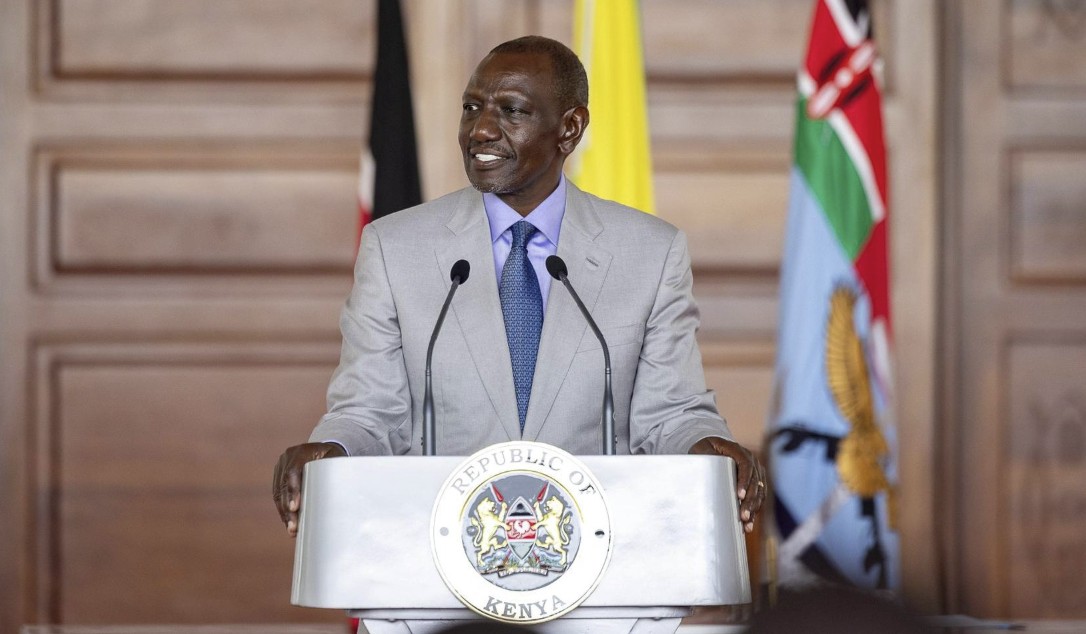
President William Ruto’s increasingly hostile rhetoric towards foreigners doing small businesses and low-paying jobs in Kenya is being presented as a defence of Kenyan workers. But we should interrogate this policy much more deeply. What if the people who will ultimately suffer most are not the Burundians, Ugandans, Rwandans or Congolese being targeted today, but Kenyans living, working and investing across the region?
That possibility deserves serious national attention. A Burundian doing mjengo in Nairobi is not responsible for Kenya’s unemployment crisis. A Rwandan running a small shop did not design our taxation system. A Congolese waiter did not accumulate Kenya’s public debt. A Ugandan mechanic did not determine interest rates, government expenditure or economic policy.
These people are convenient political targets precisely because they possess little power. When governments become unpopular, scapegoating offers an attractive political shortcut: identify a visible minority, associate it with the economic suffering of citizens and suggest that removing that minority will restore prosperity.
But Kenya must ask an uncomfortable question. What happens to Kenyans elsewhere in Africa when we begin expelling their citizens from Kenya? Thousands of Kenyans have built livelihoods across Uganda, Rwanda, Burundi, the Democratic Republic of Congo, Tanzania, South Sudan and beyond. They are bankers, teachers, consultants, engineers, traders, hotel workers, construction workers, transporters, professionals and entrepreneurs.
Some have spent years building businesses and families there. Regional integration therefore works because of reciprocity. We welcome their citizens and expect their governments to welcome ours. Destroy that understanding and retaliation becomes entirely foreseeable.
If Burundi concludes that its citizens are no longer welcome in Kenya, what prevents political pressure developing for restrictions against Kenyans in Bujumbura? If Rwanda responds similarly, Kenyan professionals and businesses there could suffer. If Uganda decides that Kenyans should surrender opportunities supposedly belonging to Ugandans, thousands of livelihoods could be endangered. And the DRC matters enormously. Kenyan banks, businesses, professionals, traders and workers have increasingly looked towards Congo as an important economic frontier.
This is why I am increasingly unwilling to accept the simplistic explanation that this policy is merely about protecting Kenyan jobs. There is another possibility that deserves examination.
Kenya’s diaspora and migrant communities have become politically significant. Kenyans working abroad support families at home through remittances. They finance businesses, educate relatives and sustain households. Many also participate vigorously in political debates through social media, community networks and financial contributions.
A substantial number want political change. Could a policy whose foreseeable consequence is retaliation against Kenyan workers and businesses elsewhere therefore have political consequences beyond immigration? That question should not be dismissed merely because its implications are disturbing.
I am not asserting, without evidence, that retaliatory harm to Kenyan migrants is the government’s secret objective. But when a government adopts a policy whose predictable consequences include jeopardising its own citizens abroad, citizens are entitled to interrogate both its wisdom and its motives.
President Ruto and his advisers cannot plausibly claim ignorance of regional reciprocity. They understand diplomacy. They understand the East African Community. They understand that migration works in both directions. They know Kenyans are working in the same countries whose citizens they now want pushed out of parts of our economy. They must therefore understand the possibility of retaliation.
That makes this far more serious than an argument about a Burundian selling tea somewhere in Nairobi. It potentially becomes an economic security question for Kenyan families.
Imagine a Kenyan who has invested his savings in Kigali suddenly confronting restrictions because Rwanda responds to Kenya’s treatment of Rwandans. Imagine a Kenyan engineer in Kampala losing an opportunity because Uganda decides jobs must now be reserved for Ugandans. Imagine Kenyan traders in eastern Congo becoming targets of retaliatory nationalism.
Who compensates them? Who restores their businesses? Who explains to their families that their livelihoods became collateral damage in a political campaign back home?
Kenya should also remember that xenophobia is remarkably difficult to control once legitimised from above. Today politicians distinguish between “Kenyans” and “foreigners.” Tomorrow somebody distinguishes between communities, ethnicities or regions. Economic frustration is converted into anger against neighbours rather than scrutiny of government.
That is politically convenient because the Burundian mason cannot explain Kenya’s Finance Act. The Ugandan mechanic cannot answer for corruption. The Congolese trader cannot explain public borrowing. And the Rwandan shopkeeper cannot account for the cost of living. Government can. That is where accountability belongs.
If foreigners are violating immigration, licensing or work-permit laws, enforce those laws individually and lawfully. If identification documents were fraudulently issued, investigate the officials and networks responsible. If particular economic sectors require lawful regulation, Parliament and the relevant agencies should regulate them constitutionally. But collective punishment and nationalist incitement are not economic policy. Nor will they manufacture political support.
A Kenyan who has spent years complaining about taxes, unemployment, corruption and declining purchasing power will not suddenly forget those problems because a Burundian waiter has been expelled.
President Ruto may believe he is redirecting anger. He may instead be exporting it. And if retaliation follows across East and Central Africa, the greatest irony will become apparent: a policy advertised as protecting Kenyan livelihoods could destroy Kenyan livelihoods beyond our borders. Perhaps that danger is unintended. But because it is plainly foreseeable, the government cannot escape responsibility merely by calling its policy patriotic.
Before Kenya travels further down this road, Parliament, civil society, business associations and regional institutions should demand answers. Because the question is no longer simply what happens to Burundians living in Kenya. It is what happens next to Kenyans living in Burundi, Uganda, Rwanda, Congo and across Africa. When a government knowingly lights the fire of economic nationalism in an interconnected region, it cannot choose where that fire will burn. And the people who ultimately get burnt may be our own.