

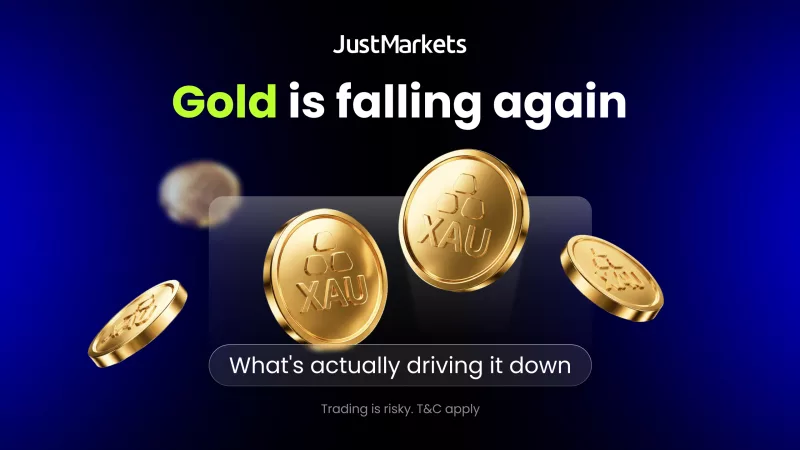
Gold’s narrative through 2026 has been far from simple. Following an unprecedented spike to above $5,595 per ounce in late January, XAU/USD has been involved in a very choppy stair-step correction since then, with the latest low near $4,024 in mid-June the lowest since late November 2025.
For traders following this pair, the question isn’t only “Is gold falling?” but also “What is behind gold’s inability to find support despite a seemingly favourable geopolitical landscape?”
Real Yields Making All the Difference
With gold providing no yield at all, the reason for trading the precious metal CFDs rather than something that offers yield becomes evident. The better-than-expected jobs report early in June and the surprisingly hot CPI readings have pushed the market to revise its Fed expectations from rate cuts to a hold and even to a possible raise. Consequently, the real yields on Treasuries have risen, and any increase in the rate decreases the attractiveness of non-yield gold.
Firming USD Adds to the Pressure
Since the XAU/USD currency pair is expressed in US dollars, an appreciating US dollar may make gold relatively more expensive to purchase in other currencies; hence, it may reduce price-sensitive physical demand for the metal. As the Dollar Index climbs past the 100 mark while yields are increasing, it creates a “twin headwind scenario”, which was one of the factors responsible for the biggest decline in gold prices on a monthly basis since 2013 in March.
Central Bank Demand: Calm on the Surface, but Underneath…
Central banks have been one of the key drivers of the rise in gold prices between 2025 and 2026. The purchases made by these central banks have roughly doubled their historical averages. The activity has recently become choppier, with some banks, such as Türkiye, reducing their positions in Q1. However, these reported numbers may underestimate actual activity, as not all purchases are known.
Geopolitical Risks Have Double Impact
In most cases, the risks of conflict and uncertainty are what drive most investors towards safe-haven assets such as gold. However, in the case of the ongoing geopolitical tensions associated with the Strait of Hormuz, the impact of the situation has been more negative than positive for the precious metal since concerns over oil-driven inflation prevent the Fed from cutting interest rates, and the latter is damaging gold much more than the positive sentiment associated with safety. This shows that the connection between gold and geopolitical risks is conditional.
Implications for Gold Trading
None of this suggests a single clear trend. Target prices from different analysts for the coming months range widely, while gold itself has proven that it can easily shift by hundreds of dollars due to a single surprise in economic data. It is precisely this volatility that makes active traders focus on gold/US dollar at the moment and underlines the importance of speed and accuracy of execution and analytics.
With JustMarkets, you can trade gold CFDs with competitive spreads from 0 pips, flexible leverage up to 1:3000, fast order execution, real-time market analysis tools, and a 24/7 multilingual support team – built for exactly these kinds of fast-moving sessions.
Risk Warning: For informational purposes only. Trading financial instruments involves significant risk and may not be suitable for all investors. Ensure you understand the risks involved and trade responsibly.