


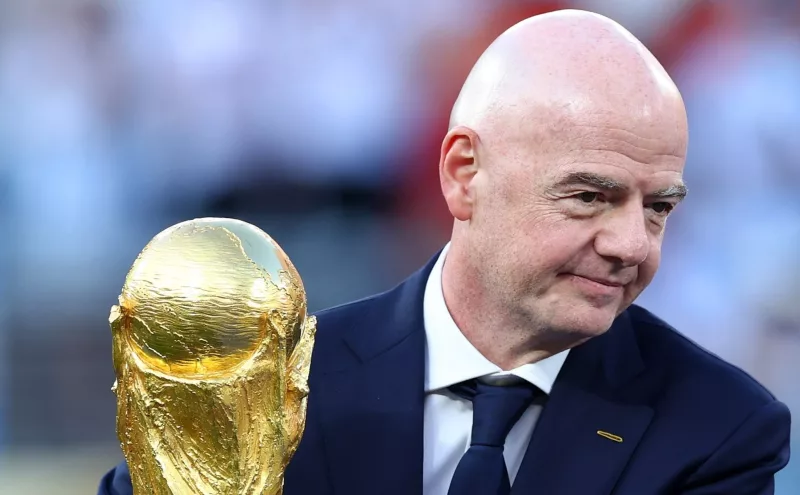
UEFA and its 55 member associations have issued a strongly worded joint statement rejecting FIFA’s proposal to sell ownership interests in the FIFA World Cup and other FIFA competitions to private investors, setting the stage for a major dispute between world football’s governing bodies.
“UEFA and its National Associations will not participate in FIFA competitions. We unanimously and unequivocally reject FIFA’s proposal to transfer ownership interests in the World Cup and other FIFA competitions to private investors.”
The statement described the World Cup as “one of football’s greatest sporting legacies” and insisted it “is not for sale”.UEFA also warned that none of its national teams would participate in FIFA competitions for as long as the proposal remains in place unless it is withdrawn entirely.
According to UEFA, the proposal was developed without meaningful consultation with member associations and would permanently change the governance of football by placing commercial returns ahead of the interests of the sport. The organization argued that allowing private investors to acquire ownership interests would subject decisions on competition formats, calendars and the future of international football to shareholder expectations rather than the game’s long-term interests.
Social Media Reacts: Skepticism and Global Confederation Dynamics
The statement triggered widespread discussion on social media, with users debating whether UEFA’s position could influence FIFA President Gianni Infantino’s plans.
One X user, Walter Huezo (@silencioso4), questioned UEFA’s strategy, writing, “What is UEFA thinking? Are they blind? Do they really believe they can bully FIFA and Infantino when he has the full political and financial backing of the United States?” He added that UEFA appeared to believe it could corner Infantino despite FIFA’s financial and political support.
The $20B Privatization Plan and Commercialization Push
The disagreement comes as FIFA seeks approval for a plan to sell a 20 percent stake in a newly created commercial entity that would manage the commercial rights to competitions including the World Cup. The proposal has drawn criticism from several football stakeholders over concerns about transparency, governance and the increasing commercialization of the sport, although FIFA has maintained that the initiative is intended to generate more funding for football development worldwide.
Lingering Frustrations from an Expanded 2026 World Cup
The latest standoff comes just weeks after the conclusion of the expanded 2026 FIFA World Cup, a tournament that generated widespread debate over the direction of global football. While the competition attracted record audiences and featured 48 teams for the first time, it also faced criticism from sections of supporters, players and football stakeholders over an expanded match calendar, player workload, congested scheduling and the growing commercial influence surrounding the tournament.