


A bill seeking to regulate fares has hit headwinds with public service vehicle operators telling the government that it will not work.
The National Transport and Safety Authority (Amendment) Bill, 2023 seeks to amend the NTSA Act, No. 33 of 2012, by introducing policy guidelines that will govern how fares payable by passengers in public service vehicles are determined across the country.
Sponsored by Kimilili MP Didmus Barasac, the bill currently before Parliament seeks to give NTSA powers to regulate fares, set review mechanisms and ensure passengers are protected from unfair charges.
It empowers NTSA to set minimum and maximum fares for public service vehicles to shield commuters from arbitrary fare hikes.
“The proposed amendments are aimed at creating a system where relevant stakeholders are involved in developing policy guidelines for public transport fares,” Barasa said.
However, matatu owners, through their lobby group—Matatu Owners Association have dismissed the proposed bill as “misguided and unlikely to work.”
“It will not work,” the association’s president, Albert Karakacha, said on Thursday, “We reject the bill. Let the government regulate fuel prices first before talking about regulating fares.”
He argued that fuel is the single biggest cost affecting public transport operations and that controlling fares without addressing fuel prices would only burden operators.
“Our market is liberalised. Let private operators compete freely and set their own prices based on market forces. Government should not interfere with pricing while fuel costs remain unpredictable,” he said.
Karakacha maintained that instead of imposing fare caps, the government should focus on stabilising fuel prices and lowering the cost of doing business, including insurance, spare parts and vehicle maintenance.
He warned that regulating fares without tackling the real cost drivers would discourage investment in the matatu industry, threaten operators’ livelihoods and ultimately affect the quality and reliability of public transport services.
If passed, public transport operators will be required to display fare details for passengers as part of measures to control unpredictable increases.
Transport Cabinet Secretary, in consultation with NTSA would be allowed to make regulations setting the maximum and minimum fares payable by passengers in public service vehicles.
The regulations would also provide a framework for reviewing fares, ensuring charges imposed on passengers are fair and reasonable.
Operators will be required to keep copies of timetables and fare tables displayed where all passengers can see them, and putting in place measures to guarantee passenger safety.
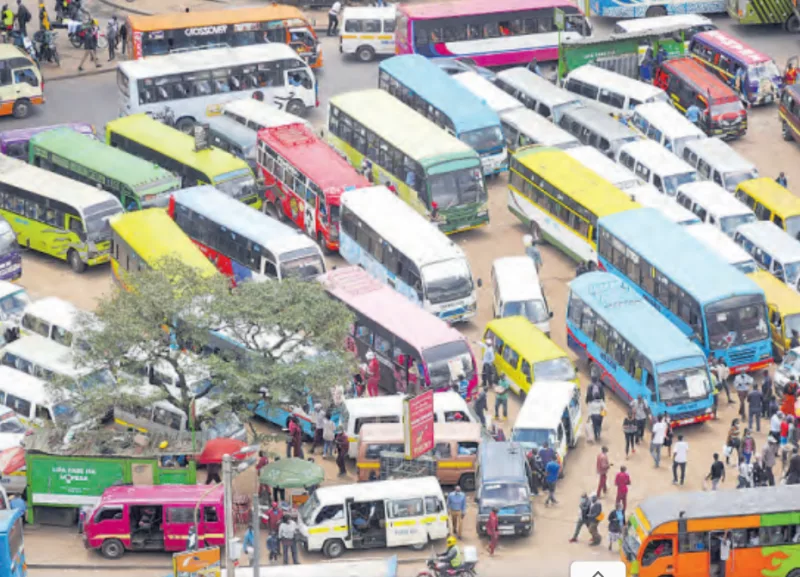
Commuters across the country are always at the mercy of PSV operators especially during rains, long holidays and peak hours.
With increased global fuel prices occasioned by the Middle East crisis fares in Nairobi for instance have increased by up to 30 per cent on different routes, with long-distance travellers also paying exorbitantly.