



Kenya’s push for electric mobility missed its 2025 five percent target of new users, according to industry players.
However, they are optimistic and say adoption is gathering pace, driven by commercial operators seeking relief from high fuel costs.
The Electric Mobility Association of Kenya (EMAK) estimates that the country’s electric motorcycle fleet is approaching 40,000 units and is expected to reach nearly 60,000 by the end of this year, underscoring the rapid expansion of the sector over the past three years.
“The biggest growth we have seen over the last three years is in the two-wheeler segment. We are not yet where we wanted to be, but we are on the right trajectory,” said Electric Mobility Association of Kenya Vice President Moses Nderitu.
This points to the widening gap between Kenya’s ambitious clean transport agenda and the realities of the market, where adoption remains concentrated in commercial fleets rather than private motorists.
Industry players say electric motorcycles, taxis, three-wheelers, and delivery vehicles are leading the transition because businesses can recover the higher upfront purchase price through significantly lower fuel and maintenance costs.
Most electric vehicles currently entering the Kenyan market are used for passenger transport, ride-hailing services and last-mile delivery, reflecting a shift towards fleet electrification rather than household ownership.
Private passenger cars, however, continue to lag. According to the association, government incentives introduced to encourage electric mobility have largely benefited buses and motorcycles, leaving electric passenger cars without comparable support.
“On the four-wheeler area, it has been lagging behind mainly because the incentives that were provided for two-wheelers and buses were not available for the four-wheelers,” Nderitu said.
Industry executives argue that targeted fiscal incentives similar to those implemented in countries such as Rwanda, Ethiopia and Ghana could significantly accelerate the uptake of electric passenger vehicles.
Beyond incentives, charging infrastructure remains another major bottleneck.
Developers say consumers continue to worry about long-distance travel and access to charging stations, making investment in charging networks critical to unlocking wider adoption.
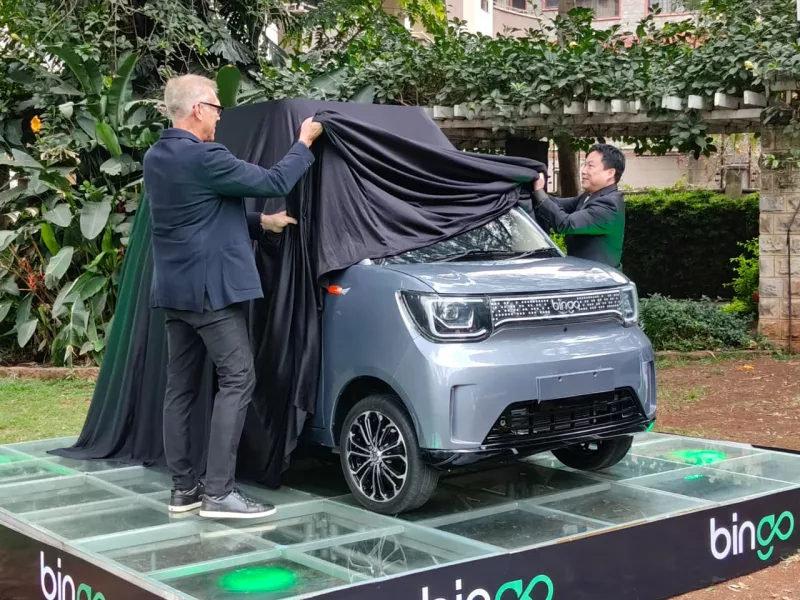
Christian Bieschin, co-founder and chief operating officer of EV manufacturer Bingo, said Kenya’s supportive policy environment, rising fuel prices and rapidly expanding ride-hailing market made it the company’s preferred African launch destination.
The company unveiled its latest range of taxi-targeted EVs, with plans to introduce its first commercial units this year before scaling to 100 vehicles by December and eventually assembling vehicles locally in partnership with Kenyan manufacturers.
Bieschin said the firm’s strategy focuses on commercial drivers because they stand to benefit most from lower operating costs.
“We’re focused on ride-hail and online taxi businesses because we want the drivers to make money,” he said, noting that lower energy costs and reduced maintenance make electric vehicles more economical than aging petrol-powered cars used by many operators.
Despite missing the government’s 2025 adoption target, industry players remain optimistic that Kenya’s electric mobility market has reached a turning point.
They argue that continued investment in charging infrastructure, broader fiscal incentives for passenger cars and greater public awareness will determine whether electric vehicles move beyond commercial fleets into the mainstream consumer market.