

The Turkana government is conducting an inspection of hygiene standards in schools to ensure good health for learners.
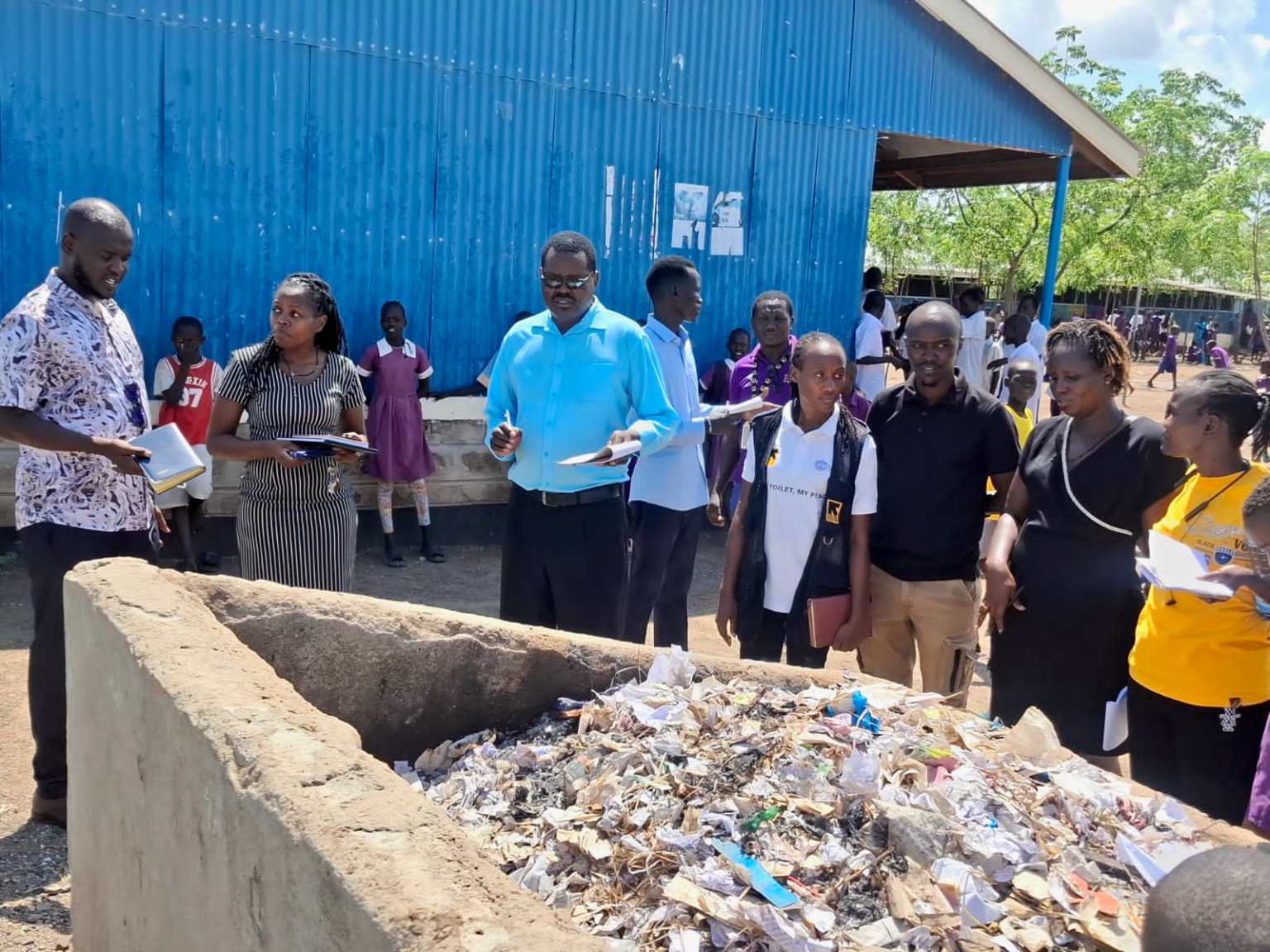
The county government, in partnership with the International Rescue Committee (IRC), carried out a Water, Sanitation and Hygiene (WASH) spot-check exercise in 10 primary and junior schools across Lokichoggio and Turkana West subcounties as part of the assessment.
The assessment is part of a wider project being implemented through the TeachWell Project, which is funded by the Lego and Grundfos foundations and covers schools supported under the programme.
The project reaches 84 schools, including 16 in Lokichoggio and 68 in Turkana West and Turkana North subcounties.
Officials are assessing the state of public health and hygiene in schools ahead of planned hygiene promotion and school health club capacity-building training for teacher patrons.
The project seeks to improve the overall wellbeing and learning environment of learners through strengthened WASH interventions.
The initiative supports school infrastructure development through construction, rehabilitation, improved water access and hygiene promotion activities.
The hygiene promotion component includes the establishment of school health clubs consisting of about 40 learners each, monitoring and evaluation of the clubs, community awareness campaigns using learners as advocates, teacher training on child hygiene practices, and the provision of environmental and cleaning supplies.
The IRC team, led by Mercy Amdanny, a WASH Officer, said the project had so far achieved better water access, construction and rehabilitation of sanitation facilities, and hygiene promotion depending on assessed needs.
Reuben Kibiego, assistant director and county WASH coordinator, said inadequate water access remains the leading contributor to poor hygiene and other public health concerns in most schools visited.
“In most of the schools we visited, lack of water appeared to be the major contributing factor to other public health concerns. Schools with running water demonstrated better hygiene practices compared to those without reliable access,” he said.
Kibiego said some teachers require additional capacity-building on hygiene best practices, as well as support with environmental health tools, to help create safer learning environments for learners.
In Lokichoggio, water shortages were identified as a major contributor to malnutrition and related health concerns.
In Naduat and Makutano, apart from water shortages, mining activities were cited as a key factor contributing to interruptions in learning.
Nancy Birech, representing the county health promotions team, said they were keen to ensure a clean and healthy learning environment for all learners in the region.