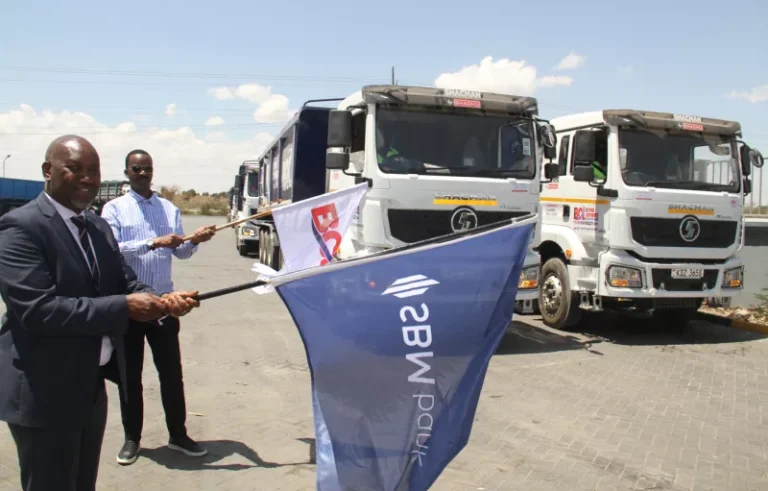




Kenyan fintech firm tabb has unveiled the country’s first large-scale fuel credit line, providing a new financing solution for fleet operators, transporters and logistics companies grappling with rising fuel costs.
The facility, launched in partnership with Galana Energies, is already operational across the company’s network of service stations in East Africa.
The initiative enables businesses to access interest-free fuel credit through partner banks, easing cash flow pressures and helping operators keep their vehicles on the road.
The launch comes at a time when escalating fuel prices have significantly increased the amount of working capital required by transport and logistics firms.
For many operators, the challenge is no longer just the cost of fuel, but the larger amount of cash needed upfront to keep fleets running before revenue is generated from deliveries and contracts.
Under the new arrangement, fleet operators and logistics companies can apply for a revolving credit line issued by partner banks through tabb’s platform.
Once approved, they can draw on the facility directly at any Galana service station across East Africa.
The supplier receives immediate payment, while the business repays the bank over an agreed period of between 30 and 90 days.
According to tabb, the model eliminates the need for informal supplier credit arrangements that have long strained relationships across the transport value chain. By ensuring suppliers are paid at the point of sale while businesses gain access to structured financing, the platform aims to create a more sustainable ecosystem for all participants.
“What we’re launching today is the clearest expression yet of tabb’s role in the market: connecting banks, suppliers and businesses so that credit flows to where it is needed, instantly and without cost,” said Don Okoth, director of Mobility at tabb.
“Suppliers get paid on the day. Businesses get the fuel they need. And the informal credit arrangements that have held this sector back begin to give way to something that actually works,” he added.
The company says the credit line effectively bridges the working capital gap that often forces operators to choose between paying for fuel and meeting other operational obligations. By allowing businesses to fuel vehicles immediately and repay once revenues are received, the facility is designed to support growth while maintaining operational continuity.
tabb chief executive officer Mesh Alloys described the partnership as a turning point in how the transport and logistics sector finances one of its largest expenses.
“I see this partnership as the inflection point where tabb’s trade credit network moves from enabling transactions to fundamentally reshaping how the entire transport and logistics industry finances its largest expense,” said Alloys.
“Credit should be a tool for growth, not a burden, and that is exactly what we are making it.”
The fuel credit line forms part of tabb’s broader strategy to build credit infrastructure for businesses across East Africa.
Beyond fuel, the company is expanding a bank-issued credit network that can be used across multiple sectors, including hardware, pharmaceuticals and retail, helping businesses access the working capital needed to grow.
As fuel prices continue to test the resilience of transport and logistics companies, the firm says the launch demonstrates that structured and accessible credit solutions can play a critical role in supporting business operations and economic growth across the region.