


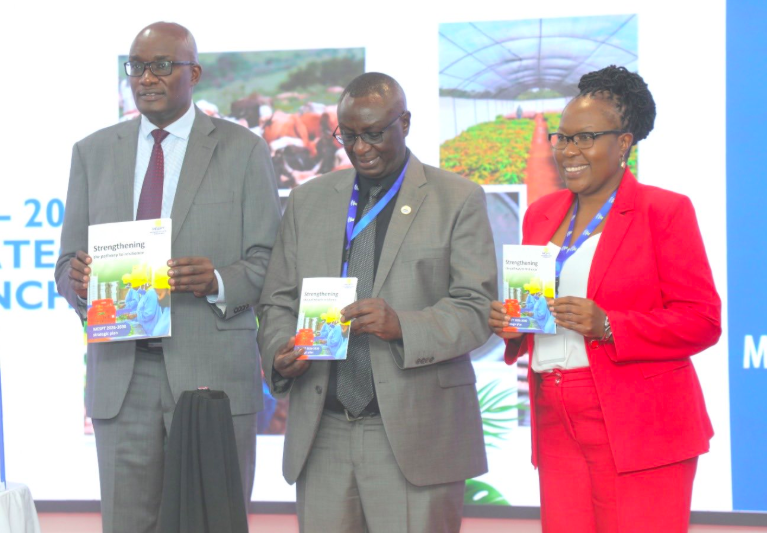
A new strategy has been unveiled to boost youth, women and persons with disabilities participation in agriculture through access to more than Sh7 billion in financing and the creation of 100,000 jobs.
The Micro Enterprises Support Programme Trust (MESPT) 2026–30 Strategic Plan, launched on Wednesday, targets 500,000 smallholder farmers, with a focus on 60 per cent women and 50 per cent young people.
Cooperatives CS Wycliffe Oparanya said micro, small and medium enterprises remain the backbone of Kenya’s economy, describing them as the country’s main engine of jobs and livelihoods.
“They contribute significantly to the national output and provide the majority of employment opportunities, especially for young people and women,” he said in remarks read on his behalf by Micro and Small Enterprise Authority director general Henry Rithaa.
Oparanya said MSMEs face persistent challenges despite their central role in the economy, including limited access to affordable finance, weak market infrastructure, high operational costs, climate shocks and limited value addition.
The plan aligns with government priorities, such as strengthening cooperatives, expanding access to finance, promoting agroprocessing and increasing opportunities for youth and women.
MESPT chief executive Rebecca Amukhoye said the organisation will focus on expanding access to affordable agri and climate-responsive finance, including wholesale lending through financial partners and promoting gender-responsive investment.
She said the programme aims to disburse Sh7.2 billion by 2030, strengthen 100 financial institutions and create 60,000 jobs through improved access to finance.
Under the second pillar, which focuses on business development and market-led growth, MESPT plans to integrate 375,000 farmers into markets, strengthen 500 MSMEs and cooperatives and create 20,000 jobs.
A further 20,000 jobs are expected under the climate adaptation pillar, which targets 375,000 farmers and promotes sustainability and resilience in agriculture.
The final pillar focuses on systems, partnerships and policy, with a goal of integrating climate priorities into county development plans by 2030.
The strategy also prioritises inclusion, targeting 60 per cent women, 50 per cent youth and expanded participation of men, with gender and social inclusion described as central to all programmes.
The new plan builds on results achieved between 2021 and 2025, during which MESPT linked more than 112,000 farmers to markets, provided more than Sh2 billion in financing and supported businesses generating sales worth Sh6.8 billion.