


Kenya’s quest for a new financing arrangement with the International Monetary Fund (IMF) is set to continue at the upcoming IMF–World Bank Group Spring Meetings in Washington in April, raising hopes in Nairobi that a fresh programme could be approved before the close of the current financial year.
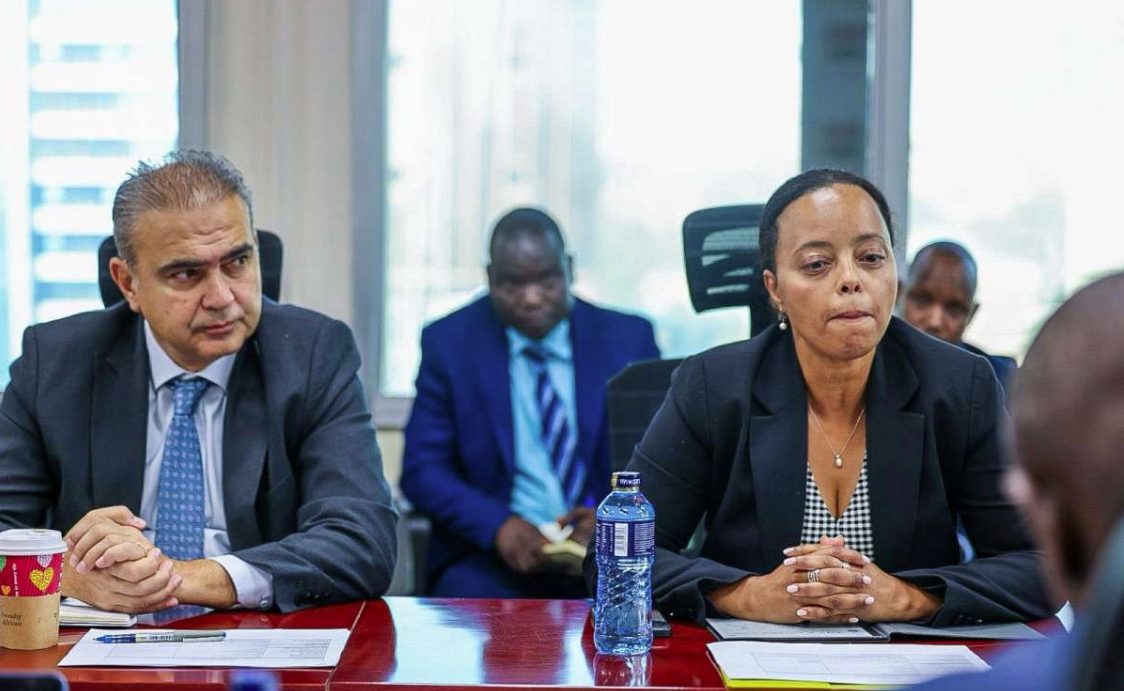
The development follows a two-week technical mission to Nairobi by an IMF staff team led by mission chief Haimanot Teferra between February 24 and March 4, where officials held extensive consultations with the National Treasury, the Central Bank of Kenya and other stakeholders on the country’s macroeconomic outlook and reform agenda.
At the end of the visit, the Fund confirmed that the talks had focused on Kenya’s recent economic developments and the policy framework underpinning the government’s request for a new IMF-supported programme.
“The IMF staff team engaged with the authorities on recent macroeconomic and policy developments and key risks, including potential spillovers from developments in the Middle East,” Teferra said in a statement released after the mission.
She added that the discussions also emphasised the need to strengthen fiscal discipline, enhance fiscal credibility and build resilience to external shocks, signalling the key pillars likely to shape the next IMF programme.
While the Nairobi mission did not culminate in an immediate agreement, officials from both sides signalled that negotiations are progressing and will move to the next stage during the IMF-World Bank Spring Meetings in April.
The Washington meetings are expected to bring together senior policymakers from around the world, including National Treasury officials and central bank officials. The international lender’s management is expected to refine the policy framework and financing structure of the proposed programme.
“If negotiations proceed smoothly, officials are optimistic the new arrangement could receive approval from the IMF Executive Board before the end of Kenya’s fiscal year in June,’’ a stakeholder who met the IMF team told the Star in confidence.
The country has been eager to secure a new program to support economic reforms and reassure investors during a time when debt-servicing costs stay high and access to international capital markets remains unpredictable.
The negotiations come nearly a year after Kenya and the IMF agreed to discontinue the ninth review of the previous financing programme under the Extended Fund Facility (EFF) and Extended Credit Facility (ECF), which had been approved in April 2021.
The programme, worth $3.6 billion (about Sh465 billion), was designed to support fiscal reforms, strengthen governance and help the country recover from the economic shock of the Covid-19 pandemic.
By late 2024, Kenya had already received about $3.12 billion under the programme, but the final tranche was never released after the review process stalled.
Instead, both sides agreed to discontinue the final review and begin discussions on a completely new arrangement.
One of the major turning points that complicated the programme’s implementation was the wave of Gen Z-led protests in June 2024, which erupted across the country over proposed tax increases contained in the Finance Bill.
Young Kenyans, who mobilised largely through social media, linked the planned tax hikes to conditions associated with IMF-backed fiscal reforms aimed at boosting government revenue and reducing Kenya’s fiscal deficit.
The protests, some of which turned violent, forced the government to withdraw several controversial tax measures that had been central to meeting IMF programme targets.
Analysts say the unrest exposed the growing political difficulty of implementing aggressive fiscal consolidation measures in a country already grappling with a high cost of living and unemployment.
The backlash ultimately undermined the government’s ability to meet some programme benchmarks, contributing to the decision to abandon the ninth review and redesign the framework under a new programme.
Mounting fiscal pressures largely drive Kenya’s interest in a new IMF programme.
Over the past decade, the country embarked on a heavy borrowing spree to finance infrastructure projects, pushing public debt to levels that have alarmed investors and multilateral lenders.
Debt servicing has since become one of the largest items in the national budget, consuming a growing share of government revenues.
The country’s total public debt currently stands at not less than Sh12 trillion, accounting for close to 70 per cent of the nation’s Gross Domestic Product (GDP).
Although Kenya has reduced its external debt, the latest data from the apex bank show that domestic loans have surged to Sh7.052 trillion as of February 20, 2026, marking the first time the figure has crossed the Sh7 trillion threshold.
This milestone was achieved in just 14 months after domestic debt surpassed six trillion in February 2025.
The acceleration stands in sharp contrast to earlier milestones: it took a full decade to reach Sh 4 trillion in December 2021, followed by roughly two years each to hit Sh5 trillion in December 2023 and Sh6 trillion the following year.
The rapid climb reflects intensified government reliance on local markets amid limited access to cheaper external financing and persistent fiscal deficits.
The IMF programme is therefore expected to play several roles, including anchoring fiscal consolidation and debt sustainability, supporting macroeconomic stability, providing policy credibility to international investors, and unlocking additional financing from development partners.
Officials say the new arrangement is also likely to emphasize governance reforms, improved public sector efficiency, and protection of social spending.
For the Kenyan government, securing a new IMF programme now requires a delicate balancing act.
On one hand, authorities must reassure lenders that they remain committed to fiscal discipline and structural reforms. On the other hand, they must avoid triggering another wave of public backlash over austerity measures.
During the latest mission, IMF staff also discussed emerging risks to Kenya’s economic outlook, including potential spillovers from geopolitical tensions in the Middle East, which could affect global energy prices, trade flows and investor sentiment.