



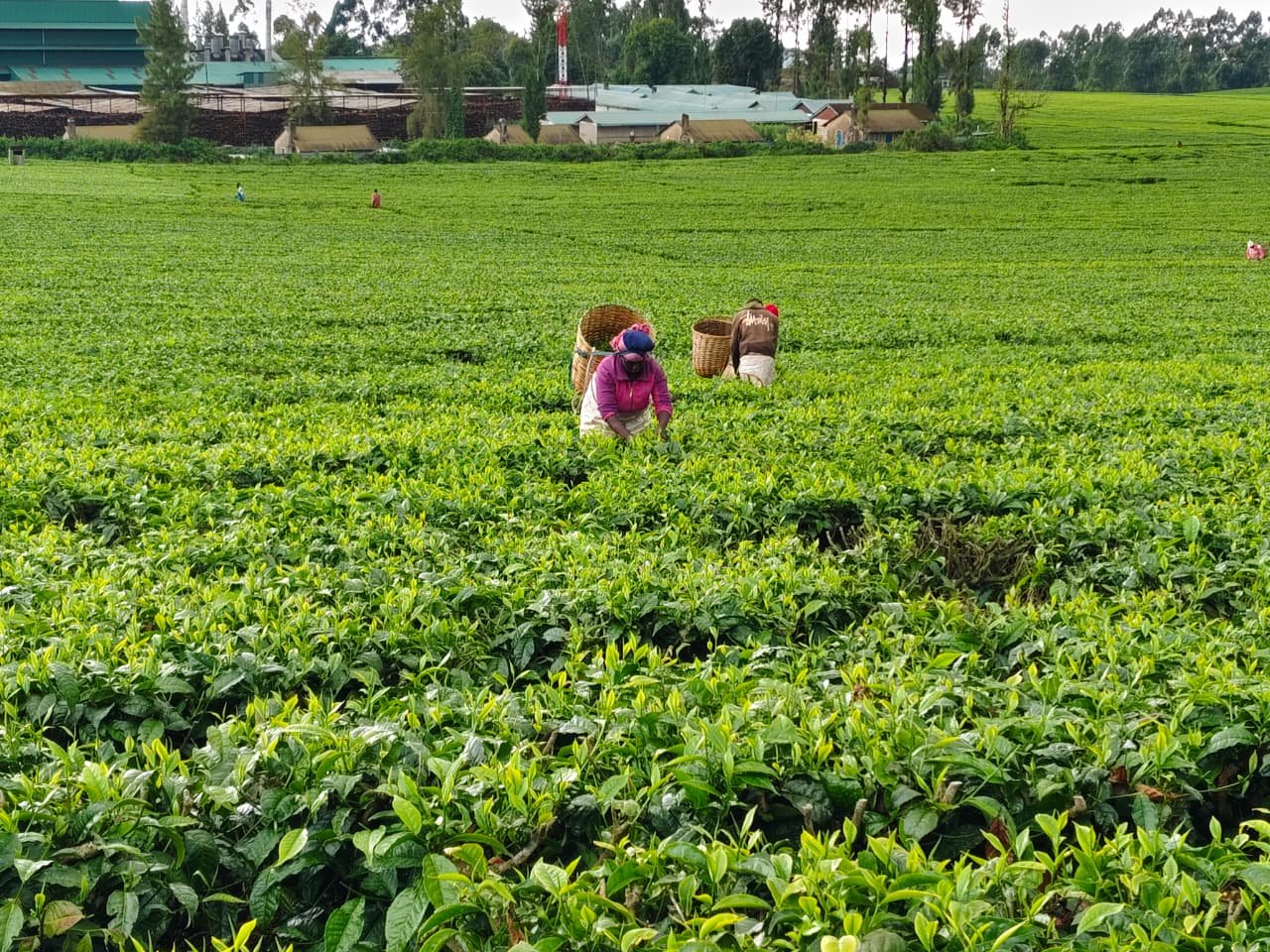
The tea sector posted a strong export performance in November 2025 despite reduced production, reflecting resilient demand in key international markets even as growers grappled with adverse weather conditions.
Exports for the month rose to 52.38 million kilogrammes, an increase of 11.93 per cent compared with 46.80 million kilogrammes shipped during the same period in 2024.
However, export volumes were slightly lower than the 53.28 million kilogrammes recorded in October, highlighting mixed performance driven by supply constraints and market dynamics.
Tea Board of Kenya (TBK) chief executive officer Willy Mutai attributed the uneven performance to prolonged hot and dry weather and depressed rainfall experienced across much of the year.
“The sector continues to feel the effects of unfavourable weather patterns, including La Niña conditions, which have suppressed overall production even as demand in export markets remains strong,” Mutai said in the Tea Industry Performance Highlights report for the month, released this week.
He added that the weather conditions are expected to persist into early 2026, further shaping production outcomes.
Tea production in November stood at 48.27 million kilogrammes, slightly higher than the 47.41 million kilogrammes recorded in November 2024 but lower than the 49.70 million kilogrammes produced in October.
At the Mombasa auction, sales volumes improved significantly. A total of 31.39 million kilogrammes of tea was sold during the month, compared with 22.26 million kilogrammes in October and 31.08 million kilogrammes in November 2024.
Absorption levels rose to 88 per cent, driven by strong winter demand in key markets, reduced supply and lower carry-over stocks from the previous year.
The improved demand supported a slight increase in prices. The weighted average monthly auction price rose to $2.27 per kilogramme, compared with $2.22 recorded during the same period last year.
Prices varied by quality, with best category CTC leaf and dust grades fetching higher returns. Smallholder factories offering higher quality teas achieved an average price of $2.52 per kilogramme, although this was lower than the $2.74 realised in November 2024.
November is traditionally a peak production month due to the short rains season. However, rainfall during the month was uneven, with much of the country experiencing unusually dry conditions while tea-growing regions recorded moderate precipitation.
In the west of the Rift, average daily precipitation reached a maximum of 52.3 millimetres in Kericho, 30 millimetres in Bomet, 37 millimetres in Kisii and Nyamira, and 111.7 millimetres in Nandi.
In the east of the Rift, rainfall of up to 43 millimetres was recorded in Kiambu, about 50 millimetres in Murang’a, Nyeri and Kirinyaga, and up to 52 millimetres in Embu and Meru, supporting marginal production gains in some regions.
Output in the east of the Rift increased by 4.05 per cent, from 13.90 million kilogrammes in November 2024 to 14.46 million kilogrammes in November 2025.
In the west of the Rift, production rose marginally by 0.9 per cent, from 33.50 million kilogrammes to 33.80 million kilogrammes over the same period.
Production performance varied across producer categories. Independent and private tea factories recorded the highest growth, with output rising by 8.74 per cent, from 12.28 million kilogrammes to 13.35 million kilogrammes.
Estate factories posted a 6.32 per cent increase, producing 12.53 million kilogrammes compared with 11.79 million kilogrammes in November 2024.
In contrast, smallholder tea factories managed by the Kenya Tea Development Agency registered a decline of 4.16 per cent, with output falling from 22.85 million kilogrammes to 21.90 million kilogrammes.
Specialty teas accounted for 1.56 million kilogrammes during the month, representing 3.23 per cent of total production. Orthodox teas dominated this segment at 99 per cent and were mainly produced by plantation and independent factories, while small quantities of green and purple teas continued to come from cottage factories.
Cumulatively, tea production for the first 11 months of 2025 declined by 7.92 per cent to 499.68 million kilogrammes, compared with 542.64 million kilogrammes during the same period in 2024.
Based on this trend, Mutai said total production for 2025 is projected at about 553 million kilogrammes, down from 598 million kilogrammes in 2024 and 570 million kilogrammes in 2023.
by ALICE WAITHERA